
Dry Ridge & Dry Verge Systems in Falkirk & Central Scotland
No more cracked mortar and slipping ridge tiles — modern mechanically-fixed dry ridge and dry verge systems that never need re-pointing.
Get my free quote
Leave three details and we’ll ring you back.
Free, no-obligation survey · Written quote · 10-year guarantee
Open Mon–Sat 9am–5pm
Rated 5 stars by local homeowners
Don’t just take our word for it — see our reviews across Google, Facebook and MyBuilder.
10-Year Guarantee
On all our workmanship
25+ Years
Experience in the trade
Family-Run
A local business you can trust
Dry ridge and dry verge costs in Falkirk — guide prices
Ridge and verge work is priced by the metre plus access, so the shape of your roof matters more than the size of your house. These ranges assume a two-storey property with room for a tower or a light scaffold at the gable.
| Job | Typical guide price | What affects it |
|---|---|---|
| Dry ridge, per linear metre | £45–£70 | Ridge profile, whether existing tiles can be reused, tower or scaffold |
| Dry verge, per verge run (5–7m) | £150–£300 | Gable height, tile profile, condition of the undercloak below |
| Whole semi — ridge plus both verges | £700–£1,200 | Length of ridge, two gables or one, access at the side of the house |
| Detached house with hips, full dry-fix | £1,100–£2,000 | Number of hip runs, roof pitch, scaffold requirement |
| Cut out and re-bed a failed ridge section in mortar, with clips | £200–£450 | Length of the run affected; often the better value on a short failure |
| Replace cracked or missing ridge tiles | from £150 | Whether the profile is still manufactured, or a reclaimed match is needed |
| Storm make-safe on a loose or lifted ridge | from £150 | Wind on the day, how much has already moved, whether a cover is needed |
| Tower or gable scaffold where the job needs it | £250–£600 | Height, ground conditions, how long the platform is required |
Guide prices only, based on 2025/26 UK cost guides and what we see across the Falkirk area. They are not a quotation. You get a fixed written price after a free, no-obligation survey, and that is the price you pay.
Show my Falkirk guide price
Pick the job and the guide range from the table above appears straight away. Leave your details and we’ll ring to book the free survey, then you get a fixed written quote — the guide range is a starting point, not the final price.
What our customers say


Recent F J Allan jobs across Falkirk and Central Scotland
Real jobs by our own team. Ask to see more from your area when we survey.
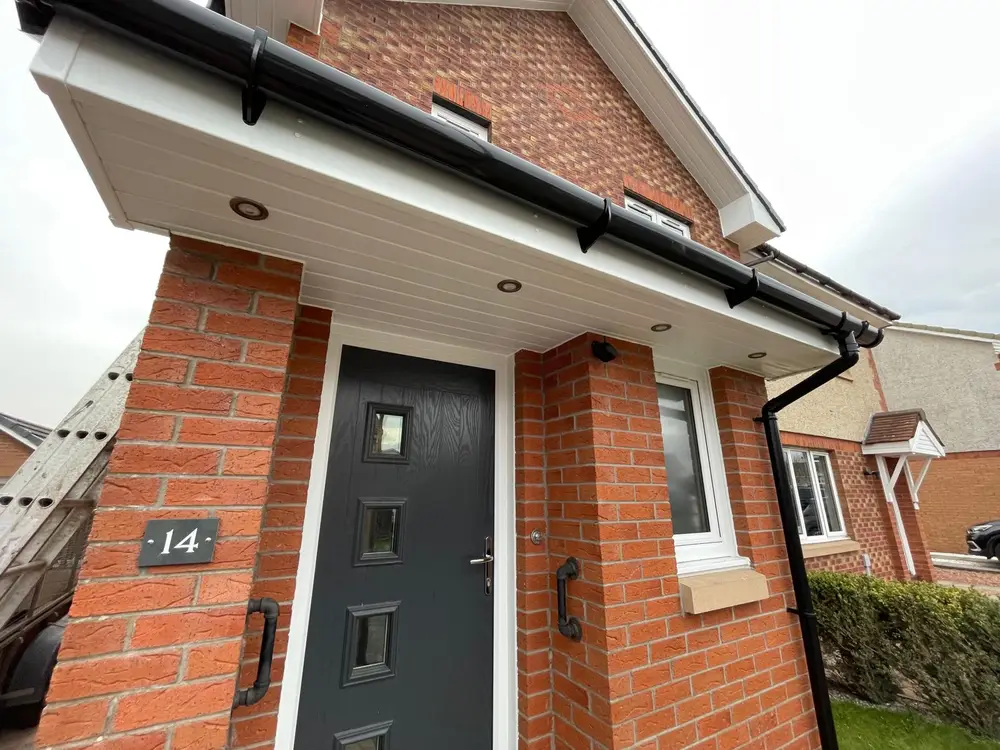
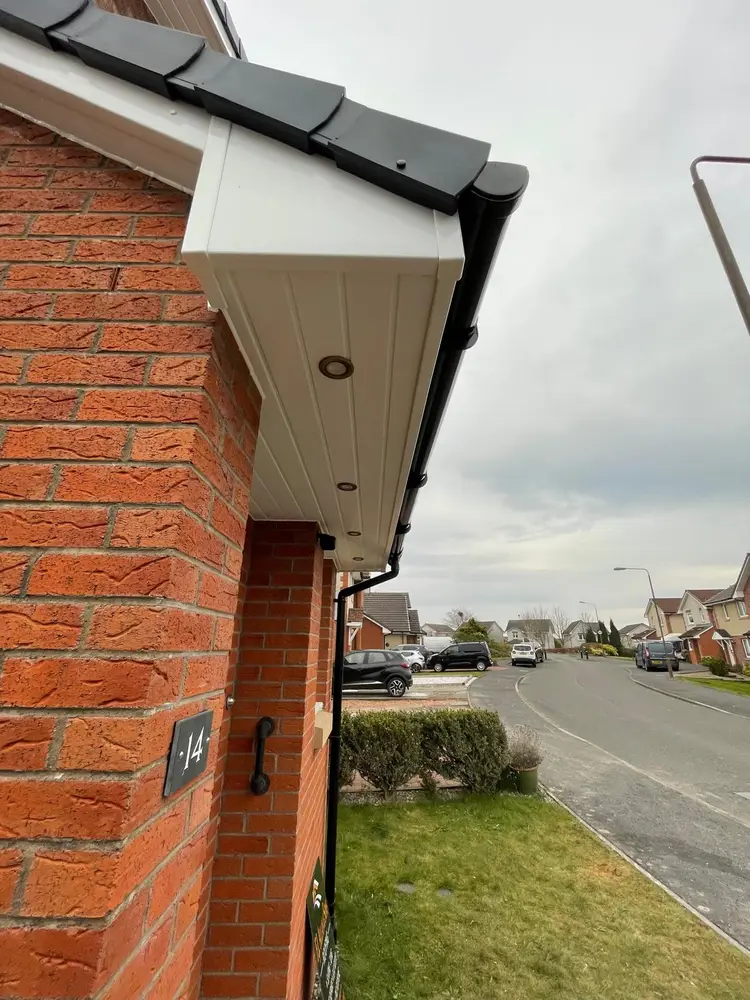
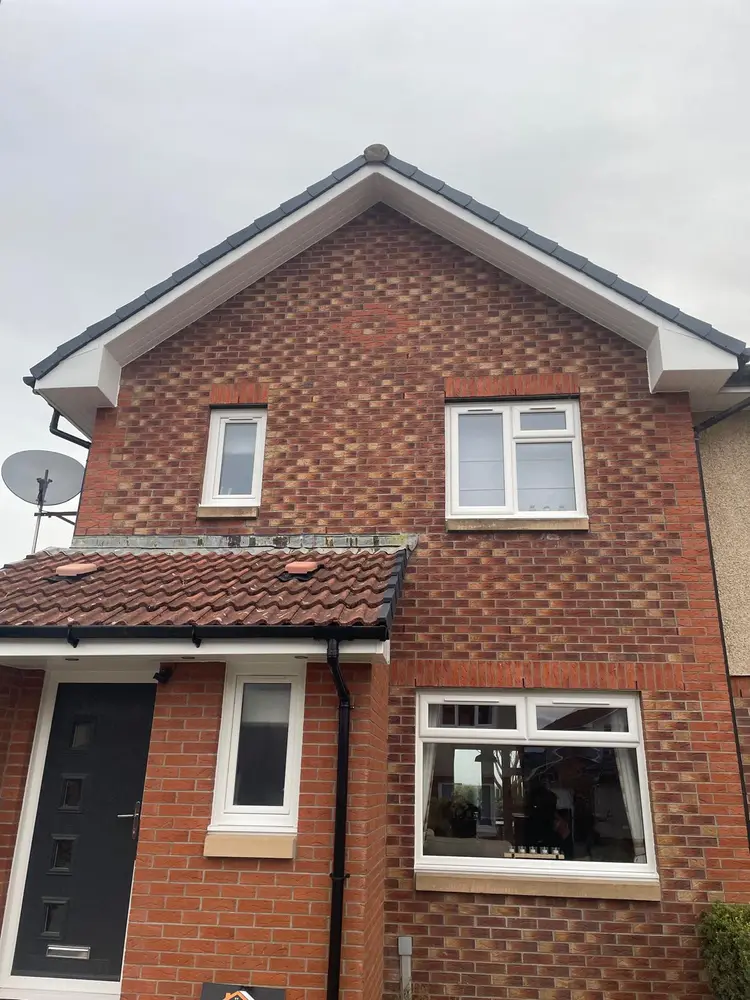
Dry Ridge & Dry Verge Systems in Falkirk & Central Scotland
The old way of bedding ridge and verge tiles in mortar has one problem: mortar cracks, washes out and lets ridge tiles slip — a top cause of leaks and call-outs. Dry-fix systems mechanically clamp each tile with no mortar at all. F J Allan & Sons fit dry ridge and dry verge across Falkirk, Stirling and the Forth Valley — a permanent, maintenance-free fix.
Our dry-fix services
Dry ridge systems
Ridge tiles mechanically fixed along the peak with a ventilated dry-ridge system — secure and mortar-free.
Dry verge systems
Interlocking clip-on caps at the gable edge that stop tiles slipping and keep birds and pests out.
Re-ridge & re-verge
Stripping tired mortar ridges/verges and re-fixing with a modern dry system.
Added ventilation
Dry ridge systems also ventilate the roof space, helping prevent condensation in the loft.
Signs you need dry-fix
Loose or slipped ridge tiles
If ridge tiles rock or have slipped, the mortar has failed — dry-fix is the lasting cure.
Cracked, crumbling mortar
Gaps in the mortar line let wind-driven rain straight in.
Birds nesting at the verge
Failed verge mortar leaves gaps that birds and pests get into.
Leaks at the roof edge
Water getting in at the ridge or gable usually means the bedding has gone.
Why choose F J Allan?
Dry-fix is what we’d put on our own homes — no mortar to crack, mechanically secure, and it ventilates the roof too. As qualified roofers we fit it right, and we’ll always tell you honestly whether re-bedding or a full dry system is the better value. 10-year workmanship guarantee.
What affects the cost of dry ridge or verge?
Priced per job:
- The run — metres of ridge and verge.
- Ridge, verge or both.
- Access and roof height.
- Whether tiles need replacing as well.
Clear fixed price after a look.
Areas we cover
We cover Falkirk and within about 20 miles — Falkirk, Grangemouth, Larbert, Stenhousemuir, Bonnybridge, Denny, Bo’ness, Polmont, Linlithgow, Stirling, Dunblane, Cumbernauld, Kilsyth, Airdrie, Coatbridge, Bathgate, Livingston and Alloa. Also see our roof repairs and conservatory roof replacement services.
Dry ridge & verge across the Forth Valley
We also cover the surrounding towns — find your local page: Grangemouth · Larbert · Stirling · Cumbernauld · Airdrie · Coatbridge · Kilsyth · Bo’ness · Linlithgow · Bathgate · Alloa · Bonnybridge · Denny · Polmont · Dunblane · Livingston.
More about dry ridge and verge in Falkirk
Open any heading for the detail: what we do here, local roof types, prices, how to check a roofer, and storm claims.
What a dry ridge in Falkirk replaces, and how it works
A dry ridge in Falkirk means the tiles running along the peak of your roof are held down by screws and clamps rather than a bed of sand and cement. We fix a timber batten along the apex, roll out a ventilated union strip that seals down onto the tiles either side, and screw every ridge tile individually into that batten through a clamp or bracket. Nothing relies on mortar staying bonded to a tile for the next twenty winters, because there is no mortar there at all.
A dry verge does the same job at the gable end, where the tiles overhang the wall. Instead of a mortar fillet sitting on a fibre-cement undercloak, interlocking caps clip over the cut edge of each tile course and screw back into the batten ends. They close the gap that starlings and wasps get into, they stop the wind catching the underside of the end tile, and they leave a neat, straight edge that does not weather to a brown streak down the gable.
Both systems come as kits made for the tile profile you already have, so this is not a re-roof. We strip the old mortar, check the battens and tile ends underneath, and refit in a day or two. The rest of your roof is untouched, which is why a dry ridge and dry verge system is usually the cheapest way to take a recurring problem off your list permanently.
Why mortar keeps failing on roofs around Falkirk
Mortar is not a bad material. It is simply the wrong material for the two most punished strips on a Scottish roof, and Falkirk gives it a harder time than most.
- Freeze and thaw. Central Scotland runs through dozens of freeze-thaw cycles between November and March. Rain soaks into a hairline crack, freezes overnight, expands, and widens the crack by a fraction of a millimetre. Repeat that fifty times a winter for fifteen years and the bed turns to sand you can rub out with a thumb.
- Wind uplift. The ridge and the verge are the two places where wind pressure on a roof peaks. Air accelerating over the apex lifts; air spilling round a gable tries to peel the end tile off. Mortar is strong in compression and weak in tension, which is exactly the wrong way round for that.
- Movement. Tiles expand and contract, and roof timbers take up and give off moisture with the seasons. Mortar does neither. The bond breaks along the joint long before the mortar itself crumbles, which is why a ridge can rock while still looking sound from the pavement.
The result is the call we get every winter: a ridge tile in the garden, a wet patch at the top of the landing wall, or daylight at the gable. If mortar has gone at one end of a run it is rarely better at the other, so we price the whole run rather than the metre that failed first. Where the covering is tired too, tiled roofing in Falkirk is the wider conversation to have.
BS 5534: why mortar alone stopped being enough in 2015
BS 5534 is the British Standard covering slating and tiling. It was revised in 2014 and the transition period ended at the start of 2015, and the change was significant: mortar is no longer accepted as the sole fixing for ridge and hip tiles. Every ridge and hip tile on new work or a re-roof now has to be mechanically fixed, verge tiles have to be double-fixed, and the fixing specification has to be justified against a wind-load calculation for the site rather than picked by habit.
Mortar itself is not banned. A bedded ridge is still allowed where it suits the look, as long as each tile also has a clip or screw doing the structural work. What is no longer allowed is what most Falkirk roofs built before 2015 have: a ridge held on by nothing but cement.
You are not obliged to upgrade an existing roof. But it matters in two ways. If we renew a ridge or verge for you, we fix it to the current standard, mortar or not. And it is a fair question to put to any roofer quoting to re-bed your ridge in mortar only: on new work, that specification would not pass.
The ventilation you get for free
Most dry ridge kits use a ventilated roll rather than a solid one, which leaves a continuous slot of around 5mm of free airflow running the full length of the apex. That is high-level exhaust ventilation, and it is the half of the equation most older Falkirk lofts are missing.
Air needs to come in low and leave high. Plenty of houses here have decent airflow at the eaves and no outlet at all at the top, particularly interwar and post-war roofs with bitumen sarking felt that cannot breathe, and lofts where the insulation has been topped up to 270mm or more without anyone thinking about where the moist air now goes.
A ventilated dry ridge will not fix a bathroom extractor venting into the loft, and it will not dry out a roof that is actually leaking. It does mean that when we are up there anyway, the ventilation comes as part of the job rather than a separate visit. If loft damp has never been properly diagnosed, start with damp and water ingress in Falkirk instead of assuming the ridge is to blame.
Concrete, clay or slate — and when repointing is still the right call
Dry ridge systems suit almost any roof. Universal kits handle the common concrete and clay ridge profiles, half-round and angled alike, and they work just as well capping a slate roof as a tiled one. If your roof has a ridge tile on it, there is a dry system that will hold it down.
Dry verge is more limited, and it is worth being straight about it. The clip-on caps are made for interlocking concrete and clay tiles, which covers most Falkirk estate housing from the 1930s onwards. They do not work on a natural slate gable or a plain-tile verge, because there is no interlock for the cap to grip and the coursing is far too fine. On those roofs the honest options are a properly bedded fillet over a new undercloak, a lead verge detail, or a GRP or aluminium verge trim. Any firm offering to clip plastic verge caps onto your slate gable has not looked at the roof. Slate has its own rules, which we cover on slate roofing in Falkirk.
Repointing also still has its place, and we will say so when it does. If the ridge tiles themselves are sound, the failure is limited to a metre or two, and the covering has a decent number of years left, cutting out and re-bedding that section with mechanical clips added is cheaper and perfectly durable. Go dry-fix when the whole run is loose, when you have already paid to have it repointed once, or when the scaffold is up for other work anyway. Everything else falls under general roof repairs in Falkirk.
Colours, timescales and storm-lifted ridges
Dry ridge kits come in black, grey, brown and terracotta, and the fixings are hidden under the tile, so from the pavement a dry ridge looks like a tidy mortar one. Verge caps are the visible part. Most people match them to the tile or pick black to tie in with the fascia and gutter run; if your fascias and soffits are due at the same time, it is worth choosing both together so the gable reads as one line rather than three shades.
On timing, a typical Falkirk semi has eight to ten metres of ridge, which is a single day including stripping the old bed and clearing up. Ridge plus both verge runs on a semi is one to two days. A detached house with hips runs to two or three. We work off a tower or scaffold depending on height, and we leave the roof watertight every night.
If your ridge or verge went during a named storm, that is usually an insurance matter rather than a maintenance one, and the distinction is whether the storm caused it or simply finished off mortar that had been failing for years. Photograph what landed in the garden before you move it, note the date, and get the roof made safe. We cover the claim side properly on storm damage roof repair in Falkirk, including the report and dated photographs a loss adjuster will want.
Dry ridge & verge FAQs
Is dry-fix better than mortar?
Yes — it can’t crack or wash out like mortar, it’s mechanically secure in high winds, and it ventilates the roof. It’s now the standard on new roofs.
Does it need any maintenance?
No — that’s the point. Once fitted, a dry ridge or verge system is maintenance-free for the life of the roof.
Can you dry-fix my existing roof?
Yes — we strip the old mortar ridge or verge and re-fix with a modern dry system on your existing tiles.
Will it stop my ridge tiles slipping?
Completely — each tile is mechanically clamped, so there’s nothing to work loose.
How much does a dry ridge system cost in Falkirk?
Budget £45 to £70 a linear metre fitted, which puts a typical Falkirk semi with eight to ten metres of ridge at roughly £400 to £700. Add both verge runs and you are looking at £700 to £1,200 for the whole gable-to-gable job. Access moves the figure more than anything else: a tower is cheap, a full scaffold on a three-storey gable is not. Ask for the price split between ridge, verge and access so you can compare quotes properly.
Is dry ridge actually better than repointing, or is it just an upsell?
It depends on how far gone the mortar is. If one short section has failed and the rest is solid, cutting out and re-bedding that part with mechanical clips added is cheaper and will last. If the whole run rocks, or you have paid to have it repointed before, you are buying the same repair twice and dry-fix ends the cycle. We will tell you which applies before you commit to anything, and we are happy to quote both.
Can you fit dry verge to a slate roof?
No, and anyone who says otherwise has not looked at your roof. Clip-on verge caps are made to grip the interlock on concrete and clay tiles, and a natural slate or plain-tile gable has no interlock and far finer coursing. On slate we either re-bed the fillet properly over a fresh undercloak, form a lead verge, or fit a GRP or aluminium trim. Dry ridge, by contrast, works fine on a slate roof with ridge tiles.
Do I need permission or a building warrant for dry ridge or dry verge in Falkirk?
For an ordinary house, no. Renewing a ridge or verge is a repair in the same material class, so it needs neither planning permission nor a building warrant from Falkirk Council. The exceptions are listed buildings and conservation areas, where changing the appearance of the roof edge can need consent, and a plastic verge cap is a visible change. If your house is listed or in a conservation area, check with Falkirk Council's planning team first — the advice is free.
Will my insurance pay for ridge tiles blown off in a storm?
Often, yes. Buildings insurance normally covers storm damage and normally excludes wear and tear, so the question your insurer will ask is whether the storm caused the loss or simply finished off mortar that had already failed. Ridge tiles lifted clean off during a named storm usually pass; a bed that has been crumbling for a decade usually does not. Photograph the damage and anything that landed below before you tidy up, and note the date.
How long does the job take, and will my roof be open overnight?
A ridge run on a Falkirk semi is a day. Ridge plus both verges is one to two days, and a detached house with hips two to three. Your roof is never left open overnight — the ridge line is either finished or temporarily covered before we leave, every day. We work Monday to Saturday, 09:00 to 17:00, and we will not start stripping a ridge if heavy rain is due that afternoon.
Dry Ridge & Verge across the whole Forth Valley
We provide dry ridge and dry verge systems in Falkirk, Grangemouth, Larbert, Stirling, Cumbernauld, Airdrie, Coatbridge, Kilsyth, Bo’ness, Linlithgow, Bathgate, Alloa, Bonnybridge, Denny, Polmont, Dunblane and Livingston, and right across Central Scotland. Wherever you are in the Forth Valley, you get the same qualified, family-run team, the same 10-year workmanship guarantee, and a clear fixed price after a free survey. See every town on our Areas We Cover page.