
Slate Roofing in Falkirk & Central Scotland
New slate roofs, re-slating and expert slate repairs — keeping Scotland’s traditional roofs watertight and looking right.
Get my free quote
Leave three details and we’ll ring you back.
Free, no-obligation survey · Written quote · 10-year guarantee
Open Mon–Sat 9am–5pm
Rated 5 stars by local homeowners
Don’t just take our word for it — see our reviews across Google, Facebook and MyBuilder.
10-Year Guarantee
On all our workmanship
25+ Years
Experience in the trade
Family-Run
A local business you can trust
Guide price: slate repairs from around £200, re-slating from £6,000 · Free, no-obligation survey and a clear fixed price
Slate roof costs in Falkirk — guide prices
These are realistic ranges for Falkirk and the Forth Valley in 2026, based on current UK cost guides and what slate work actually involves. Every roof is different, so use them as a sanity check on quotes rather than a price list.
| Job | Typical guide price | What affects it |
|---|---|---|
| Refix a few slipped slates (up to 5) | £200–£350 | Roof height and access, whether tingles or new slates are needed |
| Replace a batch of 10–20 broken or missing slates | £350–£750 | Slate size, matching reclaimed Scotch slate, ladder or tower access |
| Re-dress or renew lead flashing at a chimney | £300–£900 | Number of stacks, stepped or straight flashing, state of the back gutter |
| Partial re-slate (one elevation or a patch), per m² | £120–£200 per m² plus scaffold | How many of your slates can be re-used, sarking repairs, membrane |
| Full re-slate, 2-bed terrace or cottage | £6,000–£11,000 | Roof area, slate source, chimneys and valleys, scaffold |
| Full re-slate, 3-bed semi | £8,000–£15,000 | As above; dormers and several stacks push it to the top of the range |
| Full re-slate, detached Victorian villa | £12,000–£18,000+ | Size and complexity, reclaimed Scotch or Welsh slate against Spanish |
| Slate choice, supplied and fitted per m² | Spanish £95–£130 · Brazilian £90–£125 · Reclaimed Scotch £110–£160 · Welsh £140–£180 | Availability of matching reclaimed stock, thickness, sorting and grading time |
Guide prices only, for typical Falkirk properties. Every roof is different, so we confirm a fixed written price after a free, no-obligation survey, and all workmanship carries our 10-year guarantee.
Show my Falkirk guide price
Pick the job and the guide range from the table above appears straight away. Leave your details and we’ll ring to book the free survey, then you get a fixed written quote — the guide range is a starting point, not the final price.
What our customers say


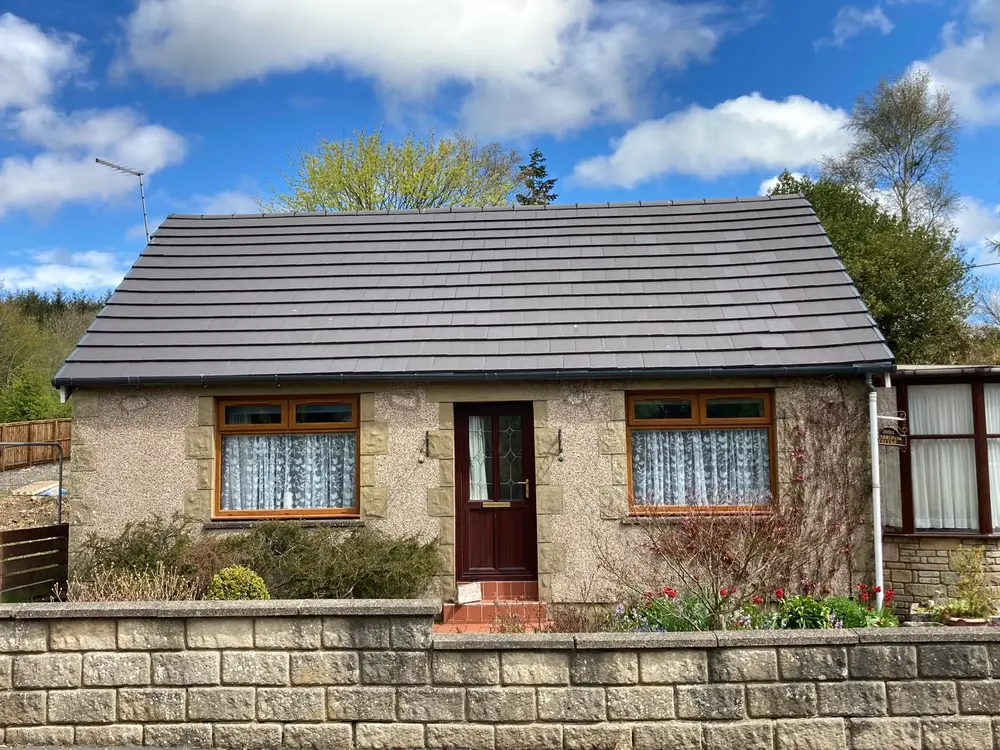
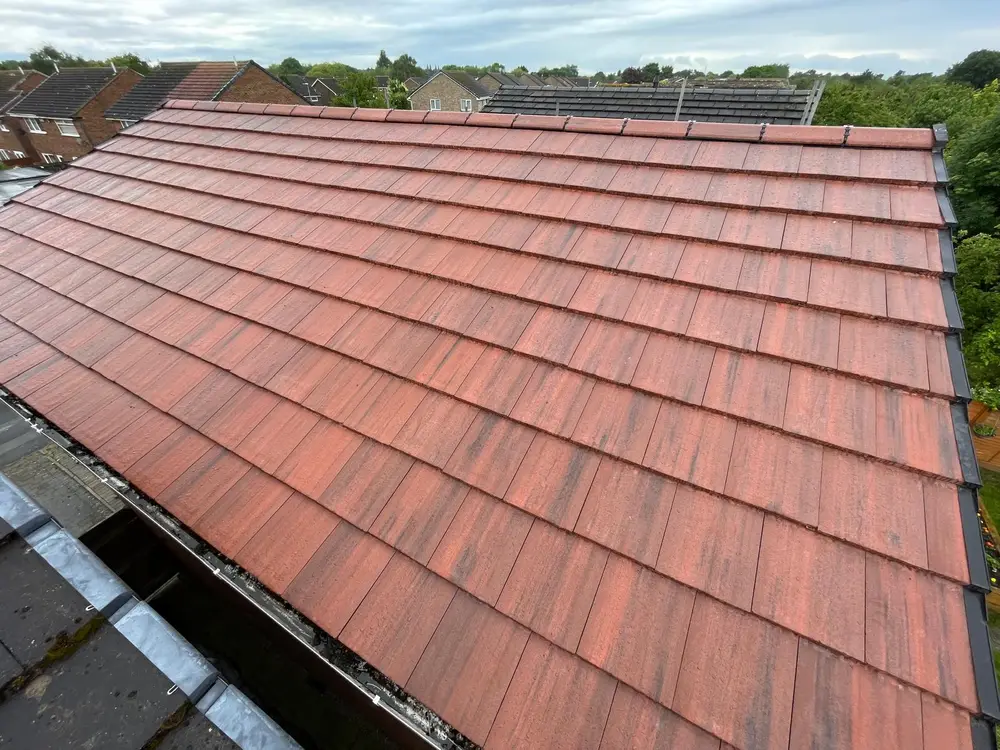
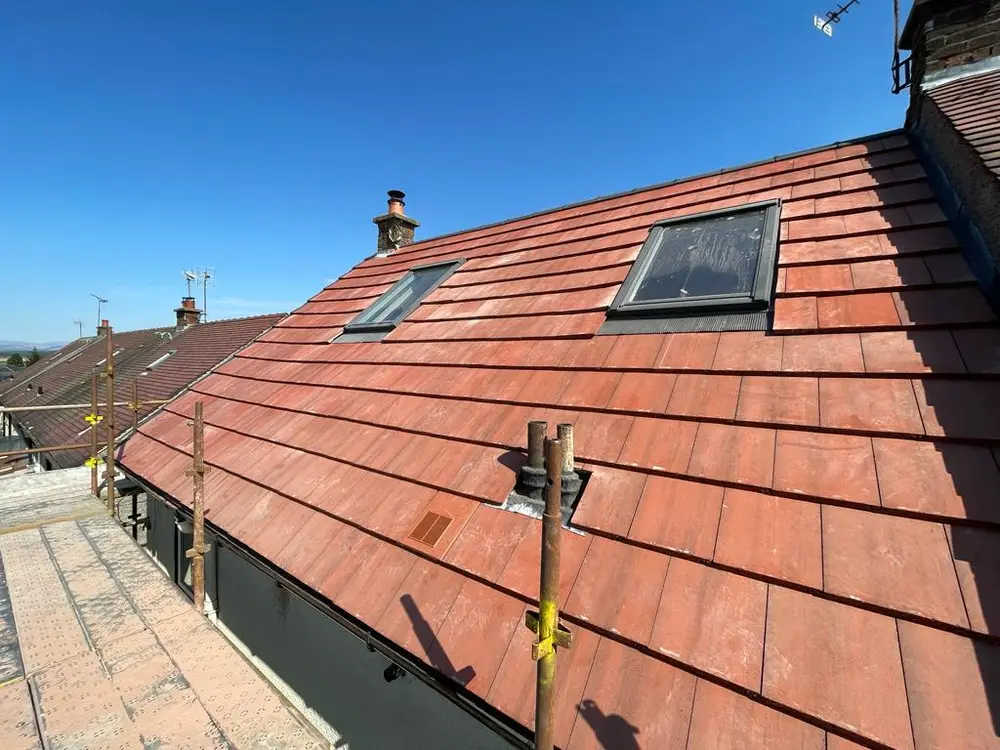
Recent F J Allan jobs across Falkirk and Central Scotland
Real jobs by our own team. Ask to see more from your area when we survey.
Slate Roofing in Falkirk & Central Scotland
Natural slate is the classic Scottish roof — beautiful and long-lasting, but only when it’s laid and maintained by people who know it. F J Allan & Sons install, renew and repair slate roofs across Falkirk, Stirling, the Forth Valley and North Lanarkshire, matching new work to the character of your home.
From a handful of slipped slates to a full roof renewal, we’ll tell you honestly what your roof needs.
Our slate roofing services
New slate roofs
Full natural or fibre-cement slate roofs, laid to last, with proper underlay, battens and ventilation.
Re-slating & roof renewal
When a slate roof reaches the end of its life we strip and re-slate it — often re-using sound slates where we can.
Slate repairs
Slipped, cracked and missing slates refixed or replaced, with matching slates sourced wherever possible.
Ridge, hips & leadwork
The details that keep a slate roof watertight — re-bedded ridges, hips and precision lead flashing.
Common slate roof problems
Slipped & broken slates
The classic cause of leaks — individual slates that have slipped or cracked, letting water past the underlay.
Nail sickness
When the old fixings rust through, slates start slipping all over the roof — usually a sign it’s time to re-slate.
Failed flashings & valleys
Lead around chimneys and in valleys is a common leak point on older slate roofs.
Sagging & damaged battens
Rotten battens or sarking under the slates need addressing during a renewal for a lasting result.
Why choose F J Allan?
Slate is a craft, and we treat it like one — the right slate, the right fixings, proper leadwork and ventilation. As qualified, insured roofers with 25+ years’ experience we’ll match new work to your existing roof and never sell you a full re-slate when a repair will do. 10-year workmanship guarantee, tidy work, honest advice.
What affects the cost of a slate roof?
Every slate roof is different. The main cost factors are:
- Repair vs full re-slate — a few slipped slates is a quick job; a full renewal is a bigger investment.
- Slate type — natural Scottish/Spanish slate vs fibre-cement.
- Roof size, pitch and access.
- Condition of the timber underneath — battens and sarking.
We give a clear, fixed price after a proper look at the roof.
Areas we cover
We cover Falkirk and within about 20 miles — Falkirk, Grangemouth, Larbert, Stenhousemuir, Bonnybridge, Denny, Bo’ness, Polmont, Linlithgow, Stirling, Dunblane, Cumbernauld, Kilsyth, Airdrie, Coatbridge, Bathgate, Livingston and Alloa. Also see our roof repairs and conservatory roof replacement services.
Slate roofing across the Forth Valley
We also cover the surrounding towns — find your local page: Grangemouth · Larbert · Stirling · Cumbernauld · Airdrie · Coatbridge · Kilsyth · Bo’ness · Linlithgow · Bathgate · Alloa · Bonnybridge · Denny · Polmont · Dunblane · Livingston.
More about a slate roof in Falkirk
Open any heading for the detail: what we do here, local roof types, prices, how to check a roofer, and storm claims.
Why a slate roof in Falkirk deserves a slater, not a general builder
Walk up from the town centre through Arnothill and you are looking at the reason a slate roof in Falkirk is worth getting right. The Victorian villas there and around Dollar Park sit inside a conservation area (Arnothill was designated in 1988, Dollar Park added in 2010), and the character the council protects is exactly what you see from the pavement: blonde sandstone, natural slate and timber sash windows. The same slate runs through the older terraces and four-in-a-block houses around the town centre, Grahamston, Camelon and Bainsford, and out towards Larbert and Polmont.
Most of those roofs are between 90 and 140 years old, and the slate on most of them is still perfectly good. What fails is everything holding it up: the iron nails, the lead, the mortar and sometimes the timber beneath. That is why slate work is a different trade from tiling. A slater has to know how to read an old Scottish roof, sort and dress reclaimed slate, and put it back so it lasts another lifetime rather than another winter.
F J Allan & Sons have been doing that for 25+ years. This part of the page covers what the cards above do not: what slate work costs in Falkirk, how Scottish slate roofs are built, how we decide between repair and re-slating with you, and what the council expects in a conservation area. If your problem is a single leak rather than the roof as a whole, our roof repairs in Falkirk page covers call-outs and small fixes.
How Scottish slate roofs are built, and why they fail from the nails down
Most of the slate on Falkirk’s older roofs came out of Scottish quarries: Ballachulish in Argyll, the Slate Islands around Easdale, and the Highland Line quarries at Aberfoyle and Luss, barely an hour up the road. Those quarries are all shut, the last at Ballachulish in 1955, so every Scotch slate laid today is a reclaimed one. That single fact drives a lot of the cost and skill in slate work.
Scottish slate was never made in neat uniform sizes. It came off the quarry face in mixed sizes and thicknesses, so slaters laid it in diminishing courses: the biggest, heaviest slates at the eaves, getting steadily smaller towards the ridge. It was fixed with a single nail per slate straight into sarking boards, a continuous deck of timber over the rafters. English roofs are usually slated onto battens with two nails per slate and nothing solid underneath; a Scottish roof is boarded because the weather here demanded it, and that sarking is a big part of why these houses are so rigid and wind-resistant.
Nail sickness is what happens when the original iron nails, usually well over 100 years old, rust through. The slate itself is sound but it has nothing holding it and slides out of position. You can spot it from the ground: slates slipping in several places at once, and a scattering of small lead or copper straps (tingles) where previous roofers have hooked slipped slates back. A handful of tingles is normal maintenance. Dozens across one roof means the fixings have reached the end and the slate needs lifted and re-laid. Our post on how long slate and tiled roofs last goes through the other things that shorten a roof’s life.
Repair or re-slate? How we make the call with you
There is no rule that says a slate roof of a certain age must be replaced. We look at four things, and we photograph what we find rather than asking you to take our word for it.
- How many slates have moved. Fewer than one in ten slipped or tingled, with the rest lying tight, usually means the fixings still have life in them. A repair is the right answer.
- The condition of the slate itself. Good Scotch slate rings when tapped and shows a clean edge. Slate that is going soft, flaking in layers or crumbling at the nail hole will not survive being lifted and re-laid, and that changes the sums.
- What is underneath. A look in the loft tells us whether the sarking boards are sound, whether there is any old felt or none at all, and whether water has been getting into the timbers.
- The leadwork and pointing. Flashings, valleys and ridge often fail before the slate does. Sometimes what looks like a tired slate roof is really a tired lead roof with good slate on it.
Roughly, a roof with fewer than 10% of slates moved and sound sarking is a repair job at a few hundred pounds. A roof with 20% or more slipped, tingles everywhere and rusty nails coming out in your hand is ready for a strip and re-slate, and patching it further is money spent on a roof that will keep failing. In between, we will often suggest an overhaul: re-laying the elevation that faces the weather, renewing the leadwork and ridge, and leaving the sound side alone.
The reason re-slating is worth it is the lifespan. Good Scottish slate comfortably outlasts the people who lay it; well over 100 years is normal, and the reclaimed slates we re-use are often on their second roof. Copper or stainless nails, a breathable membrane over the sarking and fresh lead mean the new fixings should last as long again. For most owners it is the last roof they will ever buy.
Matching slate and working in Falkirk's conservation areas
Matching is the question we are asked most, and the honest answer is that it takes effort. Scottish slate varies from the blue-grey of Ballachulish to the purplish and greenish tones of the Highland Line quarries, and it is thicker and rougher than most imported slate. For repairs we source reclaimed Scotch slate and size it to your courses so the patch disappears. For a full re-slate we grade and re-use as many of your own slates as are sound, then make up the shortfall with matching reclaimed stock.
Where reclaimed slate is not the right choice, we will tell you the trade-offs. Spanish slate is the most common new natural slate in Scotland and is good value; Welsh slate is the finest and the priciest; Brazilian slate is cheaper still but quality varies between quarries, so we are careful about which we use. The guide-price table below puts numbers on the difference.
On consent: in Arnothill, Dollar Park or the town-centre conservation area, like-for-like repair with matching natural slate needs no permission. Changing the covering, for example from slate to concrete tile or to fibre-cement, generally needs planning permission from Falkirk Council in a conservation area, and a listed building needs listed building consent for anything that changes its character, which a roof covering does. A building warrant is normally not needed to re-cover a roof in the same material, but it can be if you switch to a heavier one. We check this before we quote, so you are never left with an enforcement letter after the scaffold comes down.
Leadwork, chimneys and valleys on slate roofs
On the slate roofs we survey around Falkirk, the leak is rarely the slate. It is the junctions: the stepped flashing where a chimney meets the roof, the soakers under the slates at an abutment, the back gutter behind a stack, and the valleys where two pitches meet. Lead has a long life, often 60 to 100 years, but Victorian lead is now at or past that, and it splits along creases or lifts where the fixings have gone.
We use the right weight of lead for each detail and dress it by hand rather than relying on sealant, which is a temporary fix on a roof like this. If a chimney needs re-flashing we check its flaunching and pointing at the same time, because the scaffold is the expensive part of the job and it makes no sense to pay for it twice. See our leadwork in Falkirk and chimney repairs in Falkirk pages for the detail on each.
What to expect when you book us
Every job starts with a free, no-obligation survey, Monday to Saturday between 9 and 5. You get a fixed written price that itemises scaffolding, stripping, sarking repairs, membrane, where the slates are coming from, fixings, leadwork, ridge, waste removal and a timescale. A slipped-slate repair takes an hour or two. A full re-slate on a semi typically takes one to two weeks and a large villa two to four, weather allowing, and you stay in the house throughout. All workmanship carries our 10-year guarantee. If a storm has taken slates off, ring us first so we can make it safe, then read how we handle storm damage roof repairs in Falkirk, including the insurance report.
Slate roofing FAQs
How long does a slate roof last?
A well-laid natural slate roof can last 80–100 years or more; fibre-cement slates typically 30–50. The fixings and flashings usually need attention before the slate itself.
Can you match my existing slates?
Usually, yes — we source matching or close-match slates and re-use sound originals where we can, so repairs blend in.
Natural or fibre-cement slate — which should I choose?
Natural slate looks best and lasts longest; fibre-cement is lighter and lower cost. We’ll advise based on your home and budget.
Should I repair or re-slate my roof?
If the slates are sound and it’s just fixings or flashings, a repair is fine. Widespread nail sickness usually means a re-slate is the better long-term value.
How much does slate roofing cost per square metre in Falkirk?
For a full re-slate, budget £100–£250 per square metre all in, depending on the slate. Spanish natural slate supplied and fitted lands around £95–£130 per m², reclaimed Scotch slate £110–£160 and Welsh slate £140–£180, before scaffolding. Partial re-slating costs more per metre because the fixed costs are spread over less roof. For a typical Falkirk semi that means £8,000–£15,000, and we confirm a fixed figure after a free survey.
Where do you find slates to match an Arnothill or Camelon roof?
From reclaimed stock. No Scottish quarry has produced slate since 1955, so we buy salvaged Scotch slate from roofs being stripped elsewhere and grade it by size and thickness to suit your courses. On a re-slate your own sound slates go back on first and reclaimed slate fills the gaps. Where a whole new covering is being specified we bring Spanish and Welsh samples to the survey so you can hold them against the roof.
How long does a slate re-roof take?
A repair of a few slipped slates is an hour or two. Re-laying one elevation is usually three to five days. A full strip and re-slate on a semi takes one to two weeks, and a large detached villa with several chimneys two to four, weather permitting. You stay in the house throughout; the disruption is the scaffold and some noise, not the living space.
Will I need scaffolding for a slate repair?
Not always. Where it is safe, small repairs on a two-storey house can be done from a ladder or a mobile tower, and that keeps the price near the £200 mark. Anything involving the ridge, a chimney or more than a handful of slates, and every re-slate, needs a proper scaffold, which we include as a separate line in the quote so you can see what it costs.
Do I need permission to re-slate a house in Falkirk's conservation areas?
Not for like-for-like work. Repairing or re-slating in matching natural slate needs no consent in Arnothill, Dollar Park or the town centre. Changing the material, adding dormers or rooflights, or removing a chimney is likely to need planning permission from Falkirk Council, and on a listed building will need listed building consent. A building warrant is not usually needed to re-cover in the same material. We confirm what applies before we quote.
Will you re-use my existing slates?
Yes, wherever they are sound. On a typical Falkirk re-slate somewhere between 60% and 80% of the original Scotch slate can be lifted, checked, re-holed and re-laid. Slates that are flaking, soft or cracked go, and matching reclaimed slate replaces them. Re-using your slate keeps the roof looking right, saves money against buying a full new covering, and puts back a material that has already proved it can do a century.
Are slates blown off in a storm covered by my insurance?
Usually, yes. Storm damage is a standard peril on buildings insurance, so slates lifted by high wind are normally covered less your excess. Insurers will not pay for slates that slipped because the nails had rusted through, so the cause matters. Photograph the damage before anything is touched, ring us to make the roof safe, and we will give you a written report and fixed price for the permanent repair to send with the claim.
Slate Roofing across the whole Forth Valley
We provide slate roofing in Falkirk, Grangemouth, Larbert, Stirling, Cumbernauld, Airdrie, Coatbridge, Kilsyth, Bo’ness, Linlithgow, Bathgate, Alloa, Bonnybridge, Denny, Polmont, Dunblane and Livingston, and right across Central Scotland. Wherever you are in the Forth Valley, you get the same qualified, family-run team, the same 10-year workmanship guarantee, and a clear fixed price after a free survey. See every town on our Areas We Cover page.