
Rendering & Roughcasting in Falkirk & Central Scotland
Protect and transform your walls — traditional roughcasting (harling) and modern render that seals out damp and refreshes your home’s look.
Get my free quote
Leave three details and we’ll ring you back.
Free, no-obligation survey · Written quote · 10-year guarantee
Open Mon–Sat 9am–5pm
Rated 5 stars by local homeowners
Don’t just take our word for it — see our reviews across Google, Facebook and MyBuilder.
10-Year Guarantee
On all our workmanship
25+ Years
Experience in the trade
Family-Run
A local business you can trust
Rendering and roughcasting costs in Falkirk — guide prices
External wall finishes are priced per square metre, with scaffold and preparation costed separately because they vary so much between houses. As a rough guide, a gable on a two-storey semi is around 40 to 50m², and a whole three-bedroom semi is typically 110 to 150m².
| Job | Typical guide price | What affects it |
|---|---|---|
| Roughcast / harling, per m² | £45–£75 | Number of coats, condition of the wall, access, whether old render comes off first |
| Smooth sand-and-cement render, per m² | £40–£70 | Finish quality required, number of openings, background material |
| Monocouche or silicone thin-coat render, per m² | £70–£110 | System chosen, colour, mesh and basecoat build-up, detailing at openings |
| Lime harling on a traditional stone wall, per m² | £90–£140 | Number of coats, protection and curing time, condition of the stonework beneath |
| Patch repair to cracked or blown render (up to about 2m²) | £250–£600 | Access, matching the existing dash, whether the cause is fixed at the same time |
| One full gable, two-storey semi | £1,800–£3,500 | Whether the old coat is hacked off, finish chosen, scaffold |
| Whole three-bedroom semi, re-roughcast | £5,000–£9,000 | Removal of the existing coat, number of elevations, detailing and scaffold time |
| Scaffold for a two-storey elevation or gable | £700–£1,500 | Height, ground conditions, pavement or road licence, hire period |
| Masonry painting after curing, per m² | £8–£15 | Number of coats, paint type, preparation and cutting in |
Guide prices only, based on 2025/26 UK cost guides and what we see across the Falkirk area. They are not a quotation. You get a fixed written price after a free, no-obligation survey, and that is the price you pay.
Show my Falkirk guide price
Pick the job and the guide range from the table above appears straight away. Leave your details and we’ll ring to book the free survey, then you get a fixed written quote — the guide range is a starting point, not the final price.
What our customers say


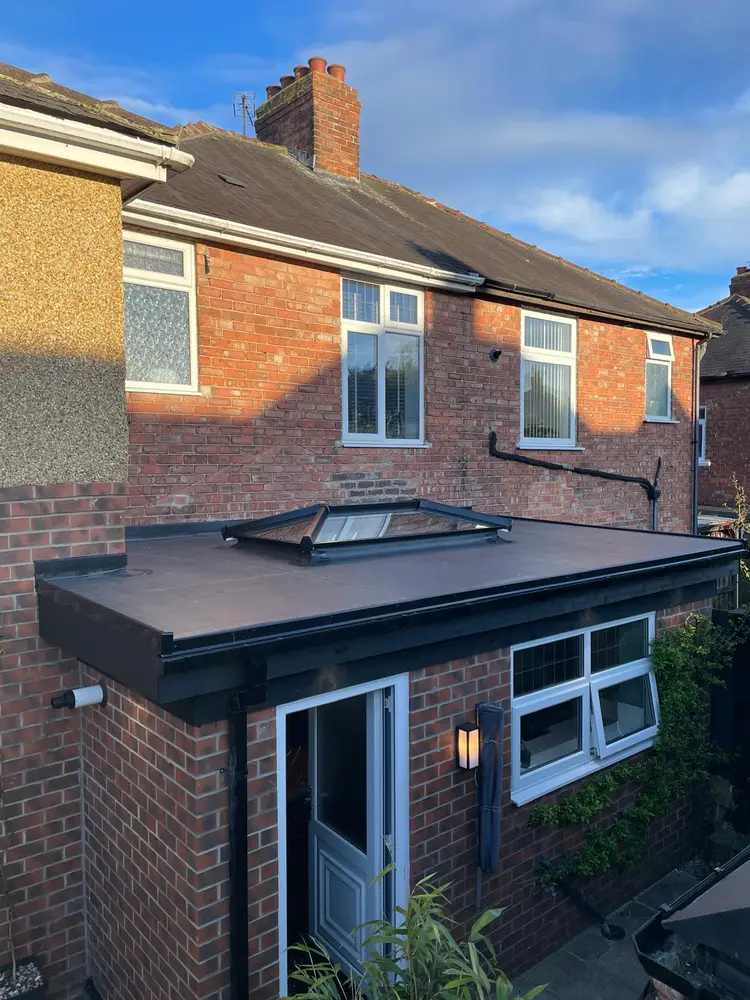
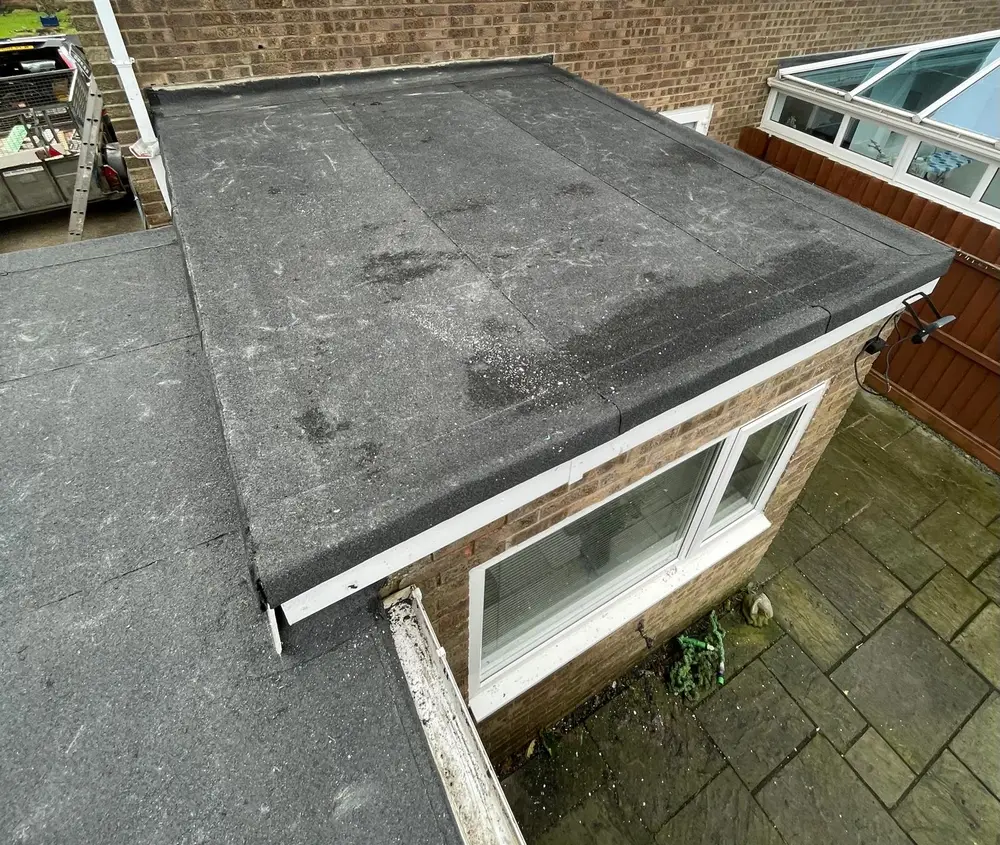
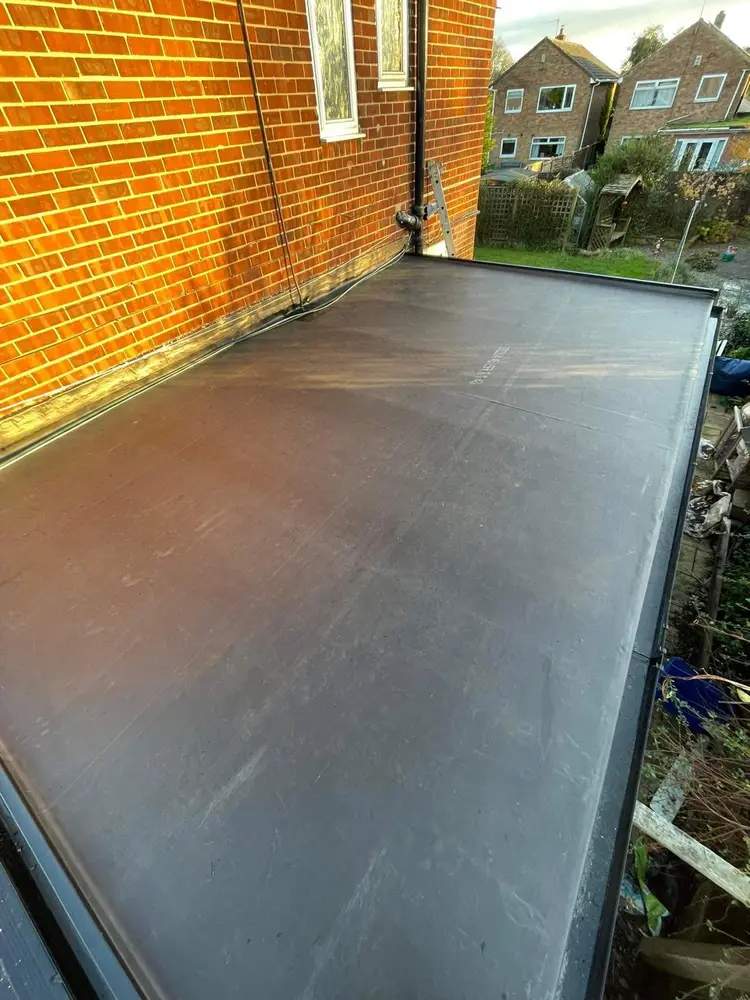
Recent F J Allan jobs across Falkirk and Central Scotland
Real jobs by our own team. Ask to see more from your area when we survey.
Rendering & Roughcasting in Falkirk & Central Scotland
Your external walls take the full force of the Scottish weather, and cracked or blown render lets damp straight into the masonry. F J Allan & Sons carry out roughcasting (harling) and rendering across Falkirk, Stirling, the Forth Valley and North Lanarkshire — protecting your walls and giving the whole house a fresh, clean finish.
Our rendering services
Roughcasting / harling
The traditional Scottish wet-dash finish — hard-wearing, weatherproof and ideal for our climate.
Smooth & silicone render
Modern through-coloured and silicone renders for a clean, low-maintenance, crack-resistant finish.
Render repairs & patching
Cutting out cracked, blown or hollow sections and re-rendering to match.
Pebbledash repair
Repairing and re-dashing tired or damaged pebbledash.
Signs your render needs work
Cracks in the render
Cracks let water into the wall behind — a direct route to internal damp.
Blown or hollow patches
If it sounds hollow when tapped, the render has lost its bond and will fail.
Staining & damp inside
Damaged render often shows up as damp on the inside of the wall.
Tired, patchy pebbledash
Discoloured or missing dash makes a house look dated and lets moisture in.
Why choose F J Allan?
A good render or harling finish is as much about weatherproofing as looks — it seals your walls against Scottish rain. We prep properly, use the right mix for your wall, and leave a clean, even finish that lasts. Clear fixed prices, tidy work, 10-year workmanship guarantee.
What affects the cost of rendering?
Priced per job:
- The area — a patch repair vs a whole elevation or house.
- The finish — roughcast vs smooth vs silicone.
- Prep needed — removing old render, treating cracks.
- Access and scaffold.
Free look, then a clear fixed price.
Areas we cover
We cover Falkirk and within about 20 miles — Falkirk, Grangemouth, Larbert, Stenhousemuir, Bonnybridge, Denny, Bo’ness, Polmont, Linlithgow, Stirling, Dunblane, Cumbernauld, Kilsyth, Airdrie, Coatbridge, Bathgate, Livingston and Alloa. Also see our roof repairs and conservatory roof replacement services.
Rendering & roughcasting across the Forth Valley
We also cover the surrounding towns — find your local page: Grangemouth · Larbert · Stirling · Cumbernauld · Airdrie · Coatbridge · Kilsyth · Bo’ness · Linlithgow · Bathgate · Alloa · Bonnybridge · Denny · Polmont · Dunblane · Livingston.
More about rendering and roughcasting in Falkirk
Open any heading for the detail: what we do here, local roof types, prices, how to check a roofer, and storm claims.
Roughcasting in Falkirk: harling, dry dash and render, plainly explained
Ask three people in Falkirk what roughcasting is and you will get three answers, because the trade uses several names for finishes that are genuinely different. The difference decides how your wall is repaired, and what it costs.
- Roughcast, or harling (wet dash). The traditional Scottish finish. Aggregate is mixed into the wet mortar and thrown at the wall in one action, so the stones are bedded through the coat rather than sitting on it. Hard-wearing, forgiving of uneven walls, and nothing for water to sit on.
- Dry dash, or pebbledash. A plain wet coat goes on first and dry chippings are thrown at the surface and tamped in. Similar from the pavement, but the stones are held only by the surface skin, so as that weathers the dash sheds in bald patches.
- Smooth sand-and-cement render. Two or three coats, trowelled flat. Clean and modern, but the least forgiving finish on an old Scottish wall: every bit of movement shows as a crack.
- Monocouche. A one-coat, through-coloured render applied thick and scraped back. No painting needed, wide colour range.
- Silicone thin-coat. A modern system over a basecoat and mesh. Flexible, breathable, dearest per square metre.
Roughcasting and harling are the same thing; which word you use depends on where in Scotland you grew up. What matters is which finish is on your house now, because a repair has to match it in texture, aggregate and colour or it will always read as a patch. Our advice post on the difference between rendering and roughcasting goes further.
Why so much of Falkirk is roughcast
Walk any street in Falkirk, Bainsford, Camelon or Denny and most of what you are looking at is roughcast. That is history, not fashion.
The interwar and post-war council building programmes across the Falkirk district used blockwork and, later, non-traditional construction that needed a weatherproof outer skin. Harling was the cheapest finish that could be thrown up by hand and then survive fifty years of Forth Valley weather. Older stone properties were harled for a different reason: rubble walls with wide joints are porous, and a lime harl took the driven rain and let it evaporate back out. The stone stayed dry because the coating breathed, not because it was sealed.
Both legacies are still on the walls today, and they fail differently. Cement roughcast on a 1950s block wall cracks and loses bond in patches. A hard cement render put onto an old stone wall in the 1970s traps moisture behind it, which is worse and needs a different answer. Working out which house you own is the first thing we do on a survey, and the reason we will not quote rendering from a photograph.
Cracks, hollow patches and the damp that follows
Render and roughcast are sacrificial layers, meant to wear and eventually be renewed. It becomes urgent when they let water in faster than the wall dries out.
Tap the wall with your knuckles. Sound render answers with a dull, solid note; a hollow, drummy sound means the coat has lost its bond and there is a void behind it holding water. It is the most useful test any homeowner can do — plenty of hollow render looks fine until the day it comes off in a sheet.
On cracks, width matters more than length. Fine crazing across an elevation is usually surface shrinkage and often cosmetic. A crack you can get a fingernail into, running diagonally from a window corner, means something is moving underneath, and re-rendering over it just gives you the same crack next winter.
What follows is predictable. Water enters the crack, sits in the void, cannot evaporate through a closed render face, and freezes. Freeze-thaw pushes more of the coat off from behind and the wet area spreads, until damp shows on the inside face — usually a cold, tide-marked patch at first-floor level rather than at skirting height, which is how you tell it from rising damp. Overflowing gutters speed it all up, so check the guttering and fascias and soffits above the wall before blaming the render alone, and if damp is already showing inside, start with damp and water ingress in Falkirk.
Patch, over-render or hack off? How we decide
There are three honest options, and one dishonest one that is very common: skimming a thin coat over failed render so it looks new for two years.
- Patch repair. Right when the failure is localised — up to about a fifth of an elevation, around a bay, or where a downpipe has leaked. We cut back to sound material with a square edge, key the masonry, build up in coats and match the dash. Be realistic about the match: even a good patch shows as a lighter square for a couple of winters, which is why many people patch and then paint the whole elevation.
- Over-render. A new system over sound existing render. Legitimate where the wall is solidly bonded throughout, and it saves the cost and mess of removal. It is only ever as good as what is underneath, so we tap-test the whole elevation before offering it, and we will not over-render a wall coated in plastic masonry paint.
- Hack off and start again. Necessary when more than about a third of an elevation is hollow, when previous repairs have left multiple layers, or when a hard cement coat is trapping moisture in an old stone wall. Dirtier and dearer, but the only route that resets the wall.
Gables are done as complete elevations rather than piecemeal, because a render line stopping halfway up a wall is both ugly and a weak point. And if the render is coming off anyway, that is the moment to sort any roof repairs in Falkirk too — the scaffold is already there, and paying for it twice is the most avoidable expense in this trade.
Older stone buildings and why lime still matters
If your house is solid stone, built before roughly 1919 and has no cavity, the wall was designed to breathe: moisture gets in during driving rain and evaporates out when the weather turns. A dense cement render breaks the second half of that cycle. Water still gets in — through cracks, at the wall head, around windows — but can no longer get out through the face, so it moves inwards. The result is damp plaster, decaying wall-head timbers and salt staining that no internal treatment will cure.
The answer on those buildings is a lime harl, not a cement one. Lime is softer, more permeable, and moves with the wall instead of fighting it. It costs more, takes longer and is a different skill — so on an older building, ask directly whether a quote is for lime or cement.
Falkirk Council maintains conservation areas across the district, and there are listed buildings well beyond the obvious town-centre ones. Re-rendering a listed building, or changing the finish or colour of one in a conservation area, can need consent — including swapping a traditional harl for a modern coloured render. The council will tell you where you stand free of charge.
Weather, curing and painting afterwards
Rendering in Scotland is as much about the forecast as the mix. Cement-based coats need to hydrate slowly, and there are two ways to ruin that. Too cold, and water in the mix freezes before it cures, permanently destroying the strength — so we do not render at or below about 5°C, or when frost is forecast overnight. Too hot or windy, and the coat dries from the face before it cures through, causing crazing and poor bond, so an exposed gable gets sheeted and damped down.
In practice that gives a comfortable season of April to October around Falkirk, with the winter months possible in mild, still weeks but never something to bank on. Anyone offering to harl your gable during a cold snap is either using an admixture they should be telling you about, or gambling with your wall.
Curing then takes time. Paint should not go near a new coat for at least four weeks, and many masonry paint makers say longer for fresh cement backgrounds. Paint too early and you seal in alkalinity and moisture, so the film blisters or leaches white salts. Use a breathable mineral or silicate masonry paint rather than a heavy plastic one. Through-coloured monocouche and silicone systems avoid the question entirely, which is part of what the extra buys. Scaffold is priced as a separate line so you can see what it costs.
Rendering & roughcasting FAQs
What’s the difference between render and roughcasting?
Roughcasting (harling) is the traditional textured wet-dash finish; render can be smooth or silicone. Both weatherproof the wall — we’ll advise what suits your home.
Will new render stop my damp?
If the damp is coming through cracked or blown render, yes — sealing the wall properly stops water getting in.
Can you match my existing finish?
Yes — we match roughcast texture and colour, or re-dash pebbledash, so repairs blend in.
How long does render last?
A well-applied render or harling finish lasts decades with little maintenance, especially modern silicone renders.
What is the difference between roughcasting, harling and pebbledash?
Roughcasting and harling are the same finish under two names: the aggregate is mixed into the wet mortar and thrown at the wall, so the stones are bedded right through the coat. Pebbledash, or dry dash, puts a plain wet coat on first and throws dry chippings at the surface, so the stones are only held by the skin. That is why pebbledash goes bald in patches as it ages while a good harl wears evenly.
How much does it cost to roughcast a house in Falkirk?
Reckon on £45 to £75 per square metre for roughcasting including labour and materials. A single gable on a two-storey semi typically lands between £1,800 and £3,500, and a whole three-bedroom semi between £5,000 and £9,000. Scaffold is usually £700 to £1,500 on top and is the item most often left out of a cheap-looking quote, so check whether it is included before you compare two prices.
Can you roughcast a house in winter in Scotland?
Not reliably. Cement-based render needs to cure above about 5°C with no frost forecast overnight, because water freezing in an uncured coat destroys its strength for good. That gives a dependable season of roughly April to October around Falkirk, with mild still spells outside it sometimes workable. We would rather push your job to spring than hand you a gable that fails in its first winter, and we will say so when the forecast is against us.
Will new roughcast cure the damp inside my wall?
Only if cracked or blown render was the way water was getting in. Renewing the coat then genuinely fixes it. But damp also comes from overflowing gutters, failed flashings, a defective wall head, bridged cavities or, on old stone buildings, a hard cement coat trapping moisture that should be evaporating out. Sealing the outside of a wall that is wet from another source makes it worse, so the survey has to find the cause before anyone talks about a finish.
Do I need permission to render or roughcast my house in Falkirk?
For a standard house, re-rendering in a similar finish is normally maintenance and needs neither planning permission nor a building warrant from Falkirk Council. It changes if the building is listed, sits in a conservation area, or if you are adding external wall insulation, which alters the thickness and appearance and brings other rules into play. Falkirk Council's planning and building standards teams answer these questions free, so ask before you order.
How long does roughcast last, and when should it be painted?
A properly applied harling coat on a sound wall lasts decades — commonly 25 to 40 years before it needs serious attention, longer if the gutters above it have been kept clear. Painted roughcast usually wants recoating every eight to twelve years in our climate. Leave new render at least four weeks before painting, longer if the weather has been cold, and use a breathable mineral or silicate masonry paint rather than a heavy plastic coating.
Rendering & Roughcasting across the whole Forth Valley
We provide rendering and roughcasting in Falkirk, Grangemouth, Larbert, Stirling, Cumbernauld, Airdrie, Coatbridge, Kilsyth, Bo’ness, Linlithgow, Bathgate, Alloa, Bonnybridge, Denny, Polmont, Dunblane and Livingston, and right across Central Scotland. Wherever you are in the Forth Valley, you get the same qualified, family-run team, the same 10-year workmanship guarantee, and a clear fixed price after a free survey. See every town on our Areas We Cover page.