
Leadwork in Falkirk & Central Scotland
Precision lead flashing, valleys and detailing — the specialist roofing craft that keeps water out where roofs meet walls, chimneys and each other.
Get my free quote
Leave three details and we’ll ring you back.
Free, no-obligation survey · Written quote · 10-year guarantee
Open Mon–Sat 9am–5pm
Rated 5 stars by local homeowners
Don’t just take our word for it — see our reviews across Google, Facebook and MyBuilder.
10-Year Guarantee
On all our workmanship
25+ Years
Experience in the trade
Family-Run
A local business you can trust
Leadwork costs in Falkirk — guide prices
Leadwork is priced by the detail rather than by the square metre, because a small piece in a difficult position takes longer than a large one on an easy slope. These ranges assume a two-storey house with reasonable access; three-storey and tenement work needs scaffold, which is priced separately.
| Job | Typical guide price | What affects it |
|---|---|---|
| Patch repair or re-dress a short section of flashing | £150–£300 | Height, whether tiles or slates must be lifted, condition of the surrounding lead |
| Renew lead flashing at a chimney or abutment | £250–£600 | Number of faces, lead code, height of the stack, access |
| Stepped flashing to an abutment wall, per metre | £40–£90 | Whether the joint needs re-chasing, wall material, pitch of the roof |
| Lead valley re-line (one valley) | £300–£800 | Valley length, code required, how many slates or tiles come off |
| Back gutter behind a chimney stack | £250–£550 | Stack width, pitch, whether the flaunching and pointing are done at once |
| Parapet or box gutter re-line | £600–£1,800 | Run length, outlets and rainwater heads, scaffold and safe access |
| Lead roof to a bay window or porch | £900–£2,500 | Area, code, number of bays and rolls, condition of the decking underneath |
| Make-safe and temporary cover after lead theft | from £150 | Area exposed, weather on the day, whether the insurer wants to inspect first |
Guide prices only, based on 2025/26 UK cost guides and what we see across the Falkirk area. They are not a quotation. You get a fixed written price after a free, no-obligation survey, and that is the price you pay.
Show my Falkirk guide price
Pick the job and the guide range from the table above appears straight away. Leave your details and we’ll ring to book the free survey, then you get a fixed written quote — the guide range is a starting point, not the final price.
What our customers say


Recent F J Allan jobs across Falkirk and Central Scotland
Real jobs by our own team. Ask to see more from your area when we survey.
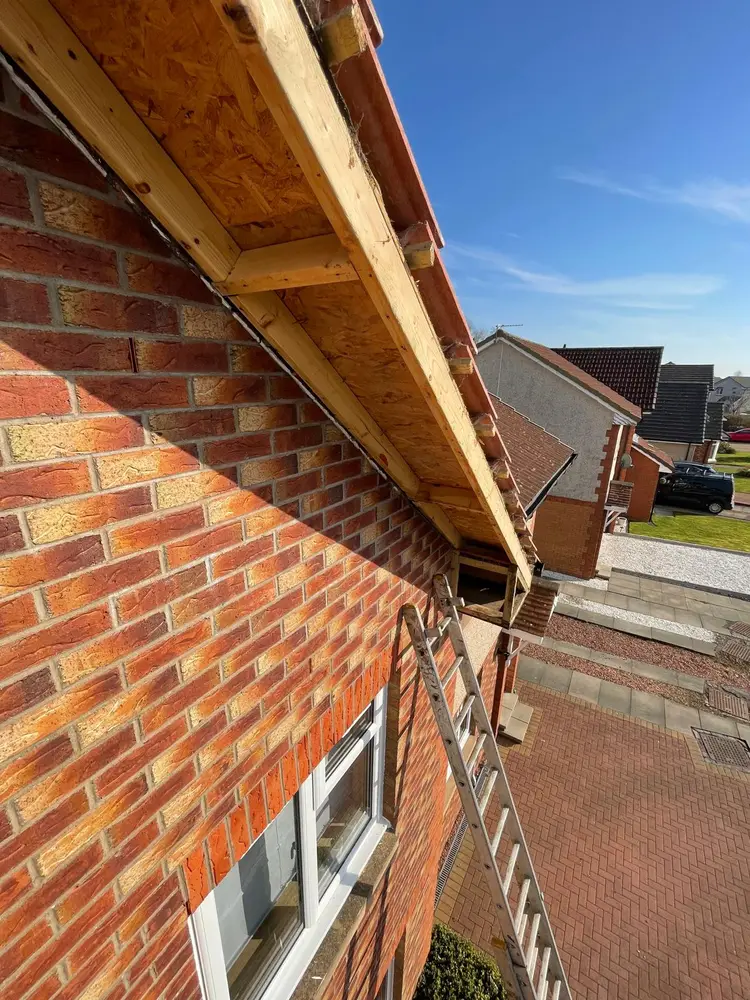
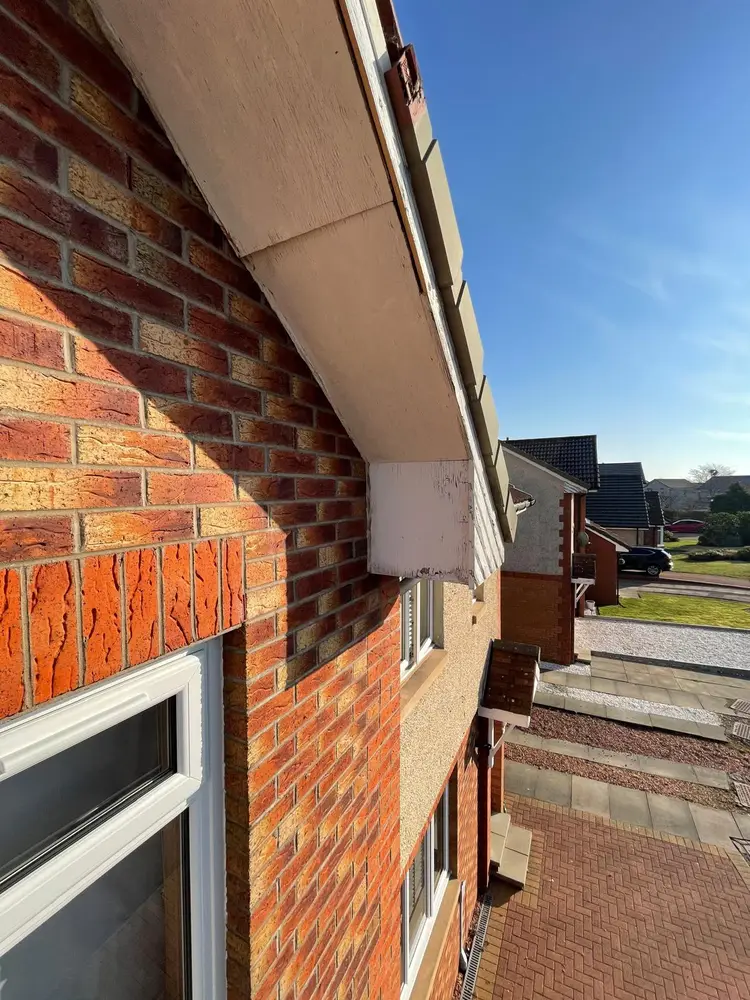
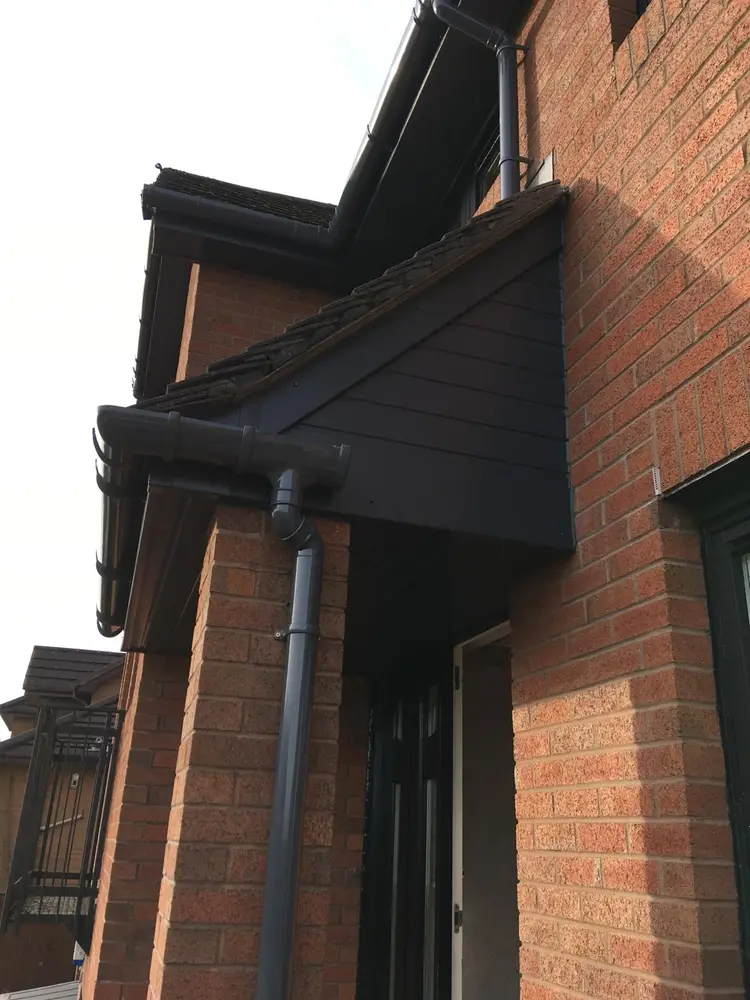
Leadwork in Falkirk & Central Scotland
Lead is how a roof stays watertight at its trickiest points — around chimneys, in valleys, and where the roof meets a wall. Done well it lasts for decades; done badly it’s the number-one cause of leaks. Leadwork is our speciality. F J Allan & Sons carry out precision leadwork across Falkirk, Stirling, the Forth Valley and North Lanarkshire.
Our leadwork services
Chimney flashing
Stripping and re-dressing the lead where the chimney meets the roof — the most common leak point, done properly.
Valley leadwork
New and repaired lead valleys where two roof slopes meet, sized and laid to carry the water away cleanly.
Abutment & wall flashing
Lead flashing where a roof meets a wall, dormer or parapet — stepped and dressed into the brickwork.
Bay, porch & box gutters
Lead roofs and linings on bays, porches and box gutters, laid to last.
Signs your leadwork has failed
Stains near a chimney or valley
Damp appearing near a stack or where roof slopes meet usually means the lead has cracked or lifted.
Cracked or lifted lead
Lead that has split, torn or lifted at the edges is letting water track underneath.
Leaks at roof junctions
Any junction — wall, dormer, chimney — is where good leadwork earns its keep, and where poor work fails first.
Why choose F J Allan?
Leadwork is a craft, and it’s the part of roofing we’re known for. The right code of lead, properly dressed and detailed, is what makes our chimney and valley repairs last where others leak. Qualified, insured roofers, 25+ years’ experience, 10-year workmanship guarantee.
What affects the cost of leadwork?
Priced per job:
- The detail — a chimney re-flash vs a full valley.
- How much lead is being renewed.
- Access and scaffold requirements.
Clear fixed price after we’ve assessed it.
Areas we cover
We cover Falkirk and within about 20 miles — Falkirk, Grangemouth, Larbert, Stenhousemuir, Bonnybridge, Denny, Bo’ness, Polmont, Linlithgow, Stirling, Dunblane, Cumbernauld, Kilsyth, Airdrie, Coatbridge, Bathgate, Livingston and Alloa. Also see our roof repairs and conservatory roof replacement services.
Leadwork across the Forth Valley
We also cover the surrounding towns — find your local page: Grangemouth · Larbert · Stirling · Cumbernauld · Airdrie · Coatbridge · Kilsyth · Bo’ness · Linlithgow · Bathgate · Alloa · Bonnybridge · Denny · Polmont · Dunblane · Livingston.
More about leadwork in Falkirk
Open any heading for the detail: what we do here, local roof types, prices, how to check a roofer, and storm claims.
Leadwork in Falkirk: where the lead actually lives on your roof
Almost every roof leak we trace in Falkirk starts at a junction, and almost every junction is detailed in lead. Leadwork is the craft of forming sheet lead to fit those awkward changes of direction, so water is carried out onto the tiles instead of into the building. It is invisible when right and expensive when wrong.
- Chimney flashings. A front apron, stepped and cover flashings up the sides, and a back gutter behind the stack. Four separate pieces on a typical Falkirk chimney, and the back gutter is where more leaks begin than anywhere else on the roof.
- Soakers. Small L-shaped pieces tucked under each individual slate or tile where a roof meets a wall, working with the stepped flashing above. Slate roofs need them. Interlocking tiles usually use a soaker-free detail instead.
- Valleys. The internal angle where two slopes meet, lined in lead over a valley board. Every drop of water from both slopes runs down it.
- Parapet and box gutters. Common on tenements, terraces and older commercial buildings, where the roof drains into a hidden lead-lined channel behind a stone or brick parapet.
- Bay and porch roofs. Small flat lead roofs over a ground-floor bay window or a front porch, laid in bays with welted or rolled joints.
Lead is used in all of these places because it stays workable in the cold, tolerates movement and outlasts anything sprayed or stuck on. It is also the part of a roof most likely to have been patched in a hurry.
Lead codes 3 to 8, and why the number on the roll matters
Sheet lead is sold by code, which is simply a measure of thickness. The higher the code, the thicker and heavier the sheet, and each code is colour-coded on the roll so there is no excuse for guessing. Using a code that is too thin is the single most common reason a piece of leadwork fails early.
- Code 3 (about 1.3mm). Light work only — soakers, small vertical cladding details. Too thin for anything exposed to water running over it.
- Code 4 (about 1.8mm). The standard for most domestic flashings: chimney aprons, stepped and cover flashings, soakers, small vertical faces. This is what belongs on the majority of Falkirk houses.
- Code 5 (about 2.2mm). Valleys, back gutters, dormer cheeks and small flat areas such as a porch roof. Anywhere water sits or concentrates.
- Code 6 (about 2.6mm). Larger valleys, parapet and box gutters, bay roofs, and exposed positions where a thinner sheet would fatigue.
- Code 7 and 8 (about 3.2mm and 3.5mm). Heavy-duty work: large flat lead roofs, church and hall roofs, and anywhere the lead is walked on.
Thickness is only half of it. Lead moves a surprising amount with temperature, so individual pieces have to stay short — around 1.5 metres for a flashing, with a lap or welt at every joint, and bay sizes rising with the code. A single eight-metre strip down a valley will split whatever the code, because it has nowhere to go. We tell you the code and the piece sizes we are using, and you can ask any roofer for the same.
Why lead fails — and it is rarely the lead's fault
Properly detailed lead outlives the roof around it. When it goes early, the cause is almost always one of these.
- Thermal fatigue. Pieces cut too long cannot move freely, so the movement concentrates at one line and work-hardens the metal until it cracks. You see a straight split, often with a rippled surface either side — the classic 1960s and 1970s failure.
- Undersized code. Code 3 or 4 used in a valley or a back gutter that should have been code 5 or 6. It tears at the fixings and dishes between supports.
- Poor fixings and no chase. Flashing pushed into a joint without being chased in and wedged with lead clips, relying on mastic to hold it. The mastic perishes, the top edge lifts, and wind-driven rain runs behind it.
- The sealant repair. Silicone, flashing tape or bituminous paint over a split. It buys a winter, traps water underneath, and makes the eventual proper repair more expensive because the lead has to be cleaned or replaced entirely.
- Theft. Still a real problem on churches, halls, older public buildings and any flat lead roof reachable from a low wall.
Because most of these show up as a damp patch indoors rather than a visible fault on the roof, diagnosis matters. A stain beside a chimney breast is usually the back gutter; one several feet from any wall is usually a valley. Our guide to what lead flashing is and why it fails walks through the symptoms, and chimney repairs in Falkirk covers the stack itself, which is often due attention at the same time.
Patination oil, white staining and the finish you should expect
New lead reacts with rainwater and forms a white carbonate on the surface. Left alone it settles into the even grey patina everyone recognises, but for the first few months that residue washes off and runs down whatever is underneath. On a Falkirk house with roughcast or sandstone below the flashing, that means white streaking down the gable.
The fix is patination oil, brushed onto every exposed face on the day the lead is fitted, before it gets wet. It is a five-minute job and a fair test of whether the work was finished properly. If new lead is left untreated and the streaks appear, the lead is fine but your wall is not.
Then look at the shape of the work. Good lead is dressed to the surface it sits on, following the tile profile and the mortar courses without wrinkles, gaps or bruising, with steps up a chimney that follow the coursing and top edges chased into a joint and wedged rather than surface-fixed.
Lead, GRP, EPDM and flashing tape — an honest comparison
We fit lead because it works, not because it is traditional. It is not the answer to everything, so here is an honest comparison.
Lead is the right choice for chimneys, abutments, valleys, parapet gutters and any junction that must absorb movement and be dressed into an irregular surface. A well-detailed flashing should see out fifty years or more.
Lead-replacement flashings — the self-adhesive aluminium and butyl composite rolls — have a legitimate place. They are lighter, cheaper and of no interest to a thief, which suits an outbuilding or a roof with a theft history. They are not, in our experience, a fifty-year product, and they depend on an adhesive bond to a clean dry surface, which is optimistic on Scottish sandstone in February.
GRP and EPDM are flat-roofing materials, not flashing materials. Either suits a bay or porch roof if designed in from the start — see flat roofing in Falkirk — but neither replaces a dressed lead upstand into a wall.
Flashing tape and sealant are emergency measures. We use them to stop water while a proper repair is booked, and we say so on the invoice. Anyone selling tape as a permanent chimney repair is selling next year’s leak.
One category where lead is not optional: listed buildings and conservation areas. Falkirk Council’s planning team will expect like-for-like lead on a listed roof, and a modern composite can need consent you will not get. The same applies to traditional slate roofs where soakers were part of the original design — see slate roofing in Falkirk.
Lead theft on churches, halls and older buildings
Metal theft has never gone away, and lead on a church, hall, school or older commercial building in the Falkirk area is still a target when scrap prices climb. It needs handling differently from a domestic flashing failure.
If lead has been stripped from a building you are responsible for, the order matters. Report it to Police Scotland on 101 and get a crime reference number, because no insurer will progress a claim without one. Photograph everything before it is touched. Then get the roof covered: the water damage over the following fortnight is usually worse than the value of the lead taken. We can make a stripped roof watertight and provide a report and dated photographs for the claim.
On the replacement, check your policy first. Many buildings policies now cap metal theft cover, exclude it after a first claim, or require forensic marking, alarms and roof-level signage to keep it. That is often the point at which a terne-coated stainless or composite alternative genuinely makes sense: almost no scrap value, so the roof stops being a target. On a listed building, agree that change with Falkirk Council before you commit.
Leadwork FAQs
Why is leadwork so important?
It waterproofs the roof’s weakest points — chimneys, valleys and wall junctions. Most roof leaks start where leadwork has failed.
How long does lead flashing last?
Properly dressed lead can last 50+ years — far longer than the cheap alternatives some fitters use.
Do you do leadwork on chimneys?
Yes — chimney flashing is one of our most common jobs, and precisely where our leadwork keeps water out for good.
Can you fix a leak at a valley?
Yes — we repair or renew lead valleys so water runs off cleanly instead of tracking into the roof.
How much does lead flashing repair cost in Falkirk?
A short patch or re-dress starts around £150. Renewing the full set of flashings on a chimney typically runs £250 to £600 depending on the height of the stack and how many faces need doing, and a lead valley re-line is usually £300 to £800. Bigger items such as a parapet gutter or a bay roof run into four figures. Access is the swing factor: the same flashing costs far more on a three-storey gable that needs scaffold.
How long should lead flashing last?
Fifty years or more if it was detailed correctly, which usually means it outlives the slates or tiles around it. Lead that fails at fifteen or twenty years has almost always been cut too long, fitted in too thin a code, or held in with mastic instead of being chased and wedged into the joint. When we survey an early failure we tell you which of those it was, because if the same mistake is repeated the new lead will fail on the same timetable.
Can you just seal the split instead of replacing the lead?
We can, and sometimes we do, but only as a temporary measure while a proper repair is booked. Sealant, silicone and self-adhesive flashing tape over a split lead sheet trap water underneath and hide the fault while it spreads. They also make the permanent repair dearer, because the residue has to be cleaned off or the piece replaced entirely. If someone quotes you tape as a permanent chimney repair, get a second opinion.
What lead code should be used on my roof?
Code 4 covers most domestic flashings — chimney aprons, stepped and cover flashings, soakers. Code 5 is the minimum for valleys, back gutters, dormer cheeks and small flat areas like a porch roof. Code 6 and above belongs on parapet gutters, bay roofs, larger flat lead and exposed positions. Ask any roofer quoting your job to state the code and the length of the individual pieces in writing; both are as important as the price.
Do I need consent for leadwork on a listed building in Falkirk?
Like-for-like repair of existing lead on a listed building normally does not need listed building consent, but changing the material or the detail usually does, and the consent is applied for through Falkirk Council. If your building is listed or in a conservation area, speak to the council's planning and conservation team before ordering anything — the advice costs nothing, and unauthorised work on a listed building is a criminal offence rather than a paperwork problem.
Is rainwater running off a lead roof safe for a water butt?
Not for anything you or your animals will drink, and not for watering edible crops. Water running off lead flashings and lead roofs picks up traces of the metal, and lead has no safe ingestion level. Using it on a lawn, a hedge or ornamental beds is fine. If you want a butt for the vegetable patch, take it from a downpipe serving a roof slope with no significant lead in the run, and never from a bay or porch lead roof.
Leadwork across the whole Forth Valley
We provide leadwork in Falkirk, Grangemouth, Larbert, Stirling, Cumbernauld, Airdrie, Coatbridge, Kilsyth, Bo’ness, Linlithgow, Bathgate, Alloa, Bonnybridge, Denny, Polmont, Dunblane and Livingston, and right across Central Scotland. Wherever you are in the Forth Valley, you get the same qualified, family-run team, the same 10-year workmanship guarantee, and a clear fixed price after a free survey. See every town on our Areas We Cover page.