
Chimney Repairs in Falkirk & Central Scotland
Repointing, flaunching, lead flashing, rebuilds and removals — stopping chimney leaks at the source.
Get my free quote
Leave three details and we’ll ring you back.
Free, no-obligation survey · Written quote · 10-year guarantee
Open Mon–Sat 9am–5pm
Rated 5 stars by local homeowners
Don’t just take our word for it — see our reviews across Google, Facebook and MyBuilder.
10-Year Guarantee
On all our workmanship
25+ Years
Experience in the trade
Family-Run
A local business you can trust
Guide price: chimney repairs from around £300 · Free, no-obligation survey and a clear fixed price
Chimney repair costs in Falkirk — guide prices
Realistic 2026 ranges for a typical two-storey Falkirk house, based on current UK cost guides and what the work actually takes. Access is the biggest single variable: the same masonry repair costs very differently from a tower than from a full scaffold, which is why we price it as its own line.
| Job | Typical guide price | What affects it |
|---|---|---|
| Repoint a chimney stack | £350–£800 | Stack size and height, lime or cement mortar, how much has to be raked out |
| Renew flaunching and reset the pots | £300–£600 | Number of pots, whether pots are re-used or replaced, access |
| Replace a cracked pot and fit a cowl | £300–£550 | Pot size and type, anti-downdraught or bird-guard cowl, condition of the flaunching |
| Cap a disused stack with vented capping | £300–£600 | Number of flues, whether a fireplace vent is fitted downstairs too |
| Re-dress lead flashing, apron and back gutter | £400–£950 | Stepped or straight flashing, state of the back gutter, slate or tile covering |
| Partial rebuild of the top courses | £900–£1,800 | How far down the decay goes, matching brick or sandstone, new flaunching and pots |
| Full rebuild of a stack from roof level | £1,800–£3,500 | Height above the ridge, matching materials, new lead throughout, scaffold duration |
| Remove a stack below roofline and make the roof good | £1,200–£2,800 | Whether it is shared, size of the roof area to be re-covered, chimney breast work inside |
Guide prices only, for typical Falkirk properties, and scaffold is usually a separate line. Every stack is different, so we confirm a fixed written price after a free, no-obligation survey, and all workmanship carries our 10-year guarantee.
Show my Falkirk guide price
Pick the job and the guide range from the table above appears straight away. Leave your details and we’ll ring to book the free survey, then you get a fixed written quote — the guide range is a starting point, not the final price.
What our customers say


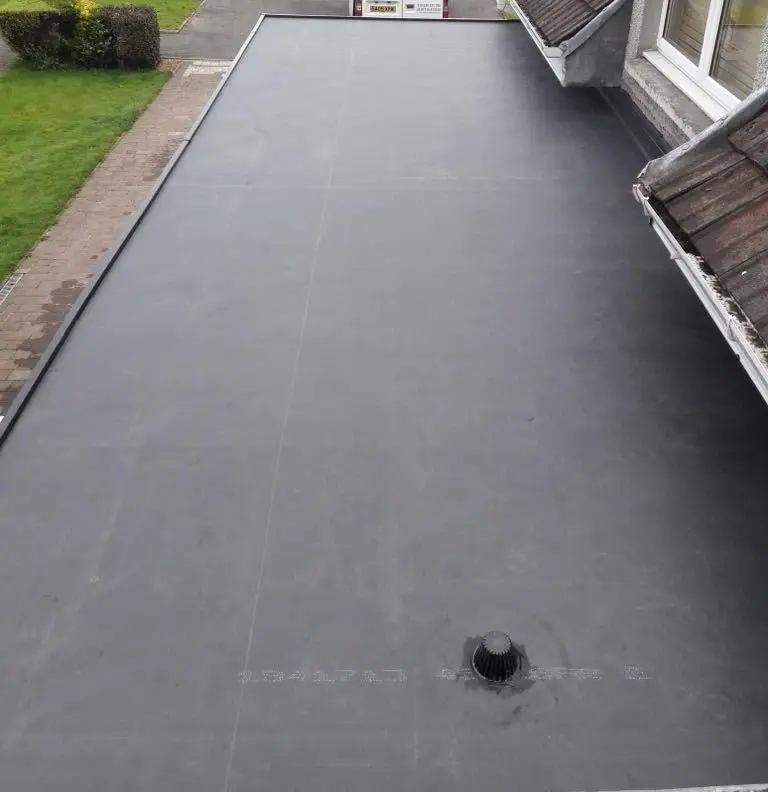
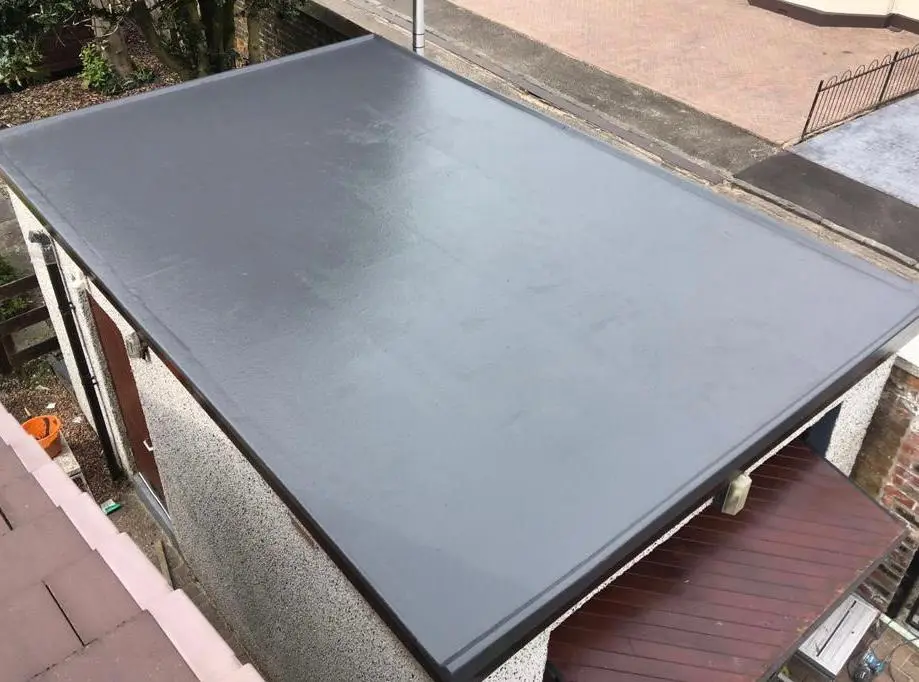
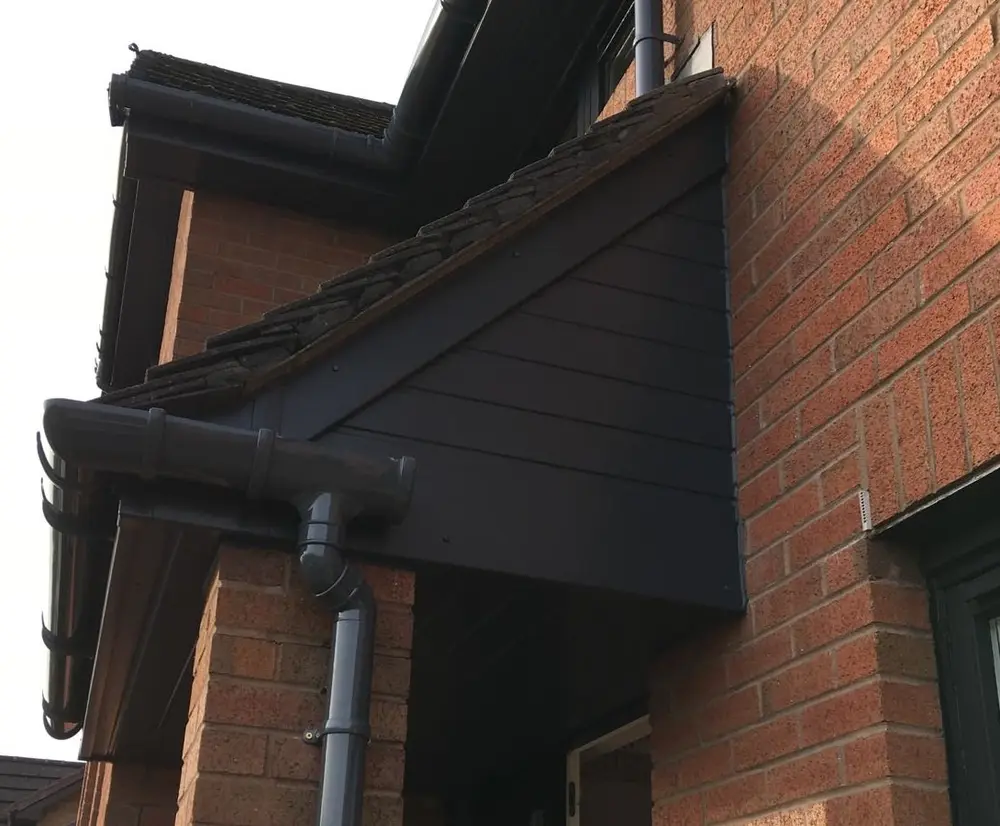
Recent F J Allan jobs across Falkirk and Central Scotland
Real jobs by our own team. Ask to see more from your area when we survey.
Chimney Repairs in Falkirk & Central Scotland
A chimney takes the full force of the weather, and it’s one of the most common places for a roof to leak. Cracked mortar, spalled brick and failed flashing all let water track down into the house. F J Allan & Sons repair, repoint and rebuild chimneys across Falkirk, Stirling, the Forth Valley and North Lanarkshire — with the proper leadwork that’s our roofing speciality.
Our chimney services
Repointing
Raking out and renewing cracked, washed-out mortar joints so wind-driven rain can’t get into the brickwork.
Flaunching & pot repairs
Renewing the mortar ‘flaunching’ that beds the pots, and replacing cracked or loose chimney pots.
Lead flashing
Stripping and re-dressing the lead where the chimney meets the roof — the number-one chimney leak point, done properly.
Rebuilds & removals
Rebuilding unsafe stacks, or taking a redundant chimney down to roof level and making the roof good.
Signs your chimney needs attention
Damp & staining
Brown staining on the ceiling or chimney breast usually means water is getting in around the stack.
Cracked flaunching
When the mortar cap around the pots cracks, water soaks straight into the top of the chimney.
Spalled, crumbling brick
Frost gets into wet brickwork and blows the faces off — a sign the pointing has failed.
Leaning or unsafe stack
A stack that’s leaning or has loose brickwork needs assessing before it becomes a hazard.
Why choose F J Allan?
Chimneys are where roofing meets masonry — and where our leadwork really counts. We seal the flashing properly, repoint with the right mortar and rebuild safely, so the leak is gone for good. Qualified, insured roofers, 25+ years’ experience, 10-year workmanship guarantee, honest advice on repair vs removal.
What affects the cost of chimney repairs?
Chimney work is priced on what’s needed:
- The repair — flashing, repointing, flaunching, rebuild or removal.
- Access — chimney height and scaffold requirements.
- Condition — how much brickwork or lead needs renewing.
You get a clear, fixed price after we’ve assessed the stack.
Areas we cover
We cover Falkirk and within about 20 miles — Falkirk, Grangemouth, Larbert, Stenhousemuir, Bonnybridge, Denny, Bo’ness, Polmont, Linlithgow, Stirling, Dunblane, Cumbernauld, Kilsyth, Airdrie, Coatbridge, Bathgate, Livingston and Alloa. Also see our roof repairs and conservatory roof replacement services.
Chimney repairs across the Forth Valley
We also cover the surrounding towns — find your local page: Grangemouth · Larbert · Stirling · Cumbernauld · Airdrie · Coatbridge · Kilsyth · Bo’ness · Linlithgow · Bathgate · Alloa · Bonnybridge · Denny · Polmont · Dunblane · Livingston.
More about chimney repairs in Falkirk
Open any heading for the detail: what we do here, local roof types, prices, how to check a roofer, and storm claims.
Why chimney repairs in Falkirk start with the weather
Most enquiries about chimney repairs in Falkirk start with a brown mark on a bedroom ceiling, or staining down a chimney breast that keeps coming back however often it is painted over. The stack is the one piece of masonry on your house with no roof over it and weather hitting all four sides at once. Everything else has a covering; the chimney has a few inches of mortar on top and whatever pointing was last done to it.
Wind-driven rain soaks the masonry from the west and south-west, and the freeze-thaw cycles we get every Forth Valley winter expand that trapped water, blowing the faces off brick or opening the joints in stone. A flue that has carried decades of solid fuel or gas also carries sulphates in its gases, and those attack the mortar from the inside — which is why so many older stacks lean slightly away from the flue that was used most.
Falkirk stacks fall into two camps. Victorian and Edwardian villas and terraces have blonde or red sandstone stacks built in soft lime mortar designed to be sacrificial and renewed. The interwar semis, four-in-a-blocks and post-war estates through Camelon, Bainsford and Hallglen have brick stacks in harder cement mortar that cracks rather than weathers. Putting modern cement pointing on a sandstone stack is one of the most reliable ways to make an old chimney worse.
Repoint, rebuild or remove: how we make the call with you
There is no age at which a chimney has to come down, and we would rather repair one than sell you a rebuild. What we look at, and photograph so you can see it yourself:
- How deep the decay goes. If the joints are open but the brick or stone behind them is sound, that is a repointing job — rake out to roughly twice the joint width, repoint properly, and the stack is good for decades.
- How much masonry has gone. Once faces have spalled and the units behind are crumbling, pointing has nothing to grip. Confined to the top few courses, that is a partial rebuild. Running the full height above the roof, it is a rebuild from roof level.
- Whether it is plumb. A stack visibly out of true, or with a horizontal crack through it, is a structural question rather than a cosmetic one.
- Whether you will ever use it. This one is yours. A working stove or open fire earns the stack its keep. A flue dead for twenty years that costs you money every few winters is a fair case for removal.
The mortar matters as much as the decision. Sandstone gets a lime-based mix that breathes and moves with the stone; brick gets a suitable cement-and-lime mix. Hard cement on soft stone traps moisture, so the stone decays instead of the mortar — the exact opposite of what pointing is for.
Flaunching, pots and capping a chimney you no longer use
The flaunching is the sloped mortar cap that beds the pots and throws water off, and it is the most neglected part of a roof. It typically lasts 20 to 30 years, and once it cracks, rain runs down the outside of the flue and saturates the stack from the inside, where no amount of pointing helps. Renewing it means cutting the old cap out, resetting or replacing the pots and forming a new weathered cap with a proper drip.
Capping an unused chimney is where we see the most avoidable damage. Cap a stack completely airtight and the flue stops breathing. Moisture from the house and the masonry condenses inside it and comes through as damp staining on the chimney breast, often months later and usually blamed on the roof. Any disused flue we cap gets a vented capping or vented cowl, and we ask you to leave or fit a vent in the fireplace opening downstairs. Vented top and bottom, the flue stays dry.
The same applies once a gas fire has been removed. Without the appliance, no warm gases dry the flue out, and a chimney that was fine for forty years can show damp within one winter. Get the stack looked at rather than waiting — flaunching, pot and ventilation all need addressing together, and it is far smaller than dealing with a saturated chimney breast later. Our post on the signs your chimney needs repair covers what to look for from ground level.
The leak is usually the lead, not the bricks
When we survey a leaking stack, the fault is at the junction with the roof far more often than in the masonry. A chimney needs four lead details to be weathertight: a front apron on the downhill side, stepped flashings with soakers tucked under the slates up each side, and a back gutter behind the stack. The back gutter is the one that catches people out — it takes water off the whole slope above the chimney, nobody can see it, and when its lead splits or its upstand is too shallow the water goes straight into the roof timbers with no sign outside at all.
What we find instead, again and again, is a cracked cement fillet smeared where the roof meets the stack, or Victorian lead that has simply reached the end of its life.
We dress lead by hand in the correct code for each detail, with proper laps and clips, and we do not rely on sealant to make a joint work. That is the same leadwork covered on our leadwork in Falkirk page, and why chimney flashing sits alongside slate roofing in Falkirk as core work rather than something we sub out.
Leaning stacks, safety and when Falkirk Council gets involved
A leaning or loose stack is a genuine safety issue. Chimney masonry that comes off a two-storey roof lands on a pavement, a car or a conservatory. If you can see a stack out of plumb, a horizontal crack, daylight through a joint, or bricks already dropped into the gutter, keep people away from the base of it and get it looked at rather than waiting for the next gale.
On genuinely dangerous masonry, Falkirk Council’s building standards service has powers under the Building (Scotland) Act 2003 to require an owner to make a dangerous building safe, and can act itself and recover the cost. That is rare, but worth knowing: a stack a neighbour has reported does not go away by being ignored.
On consent, the position is straightforward. Repairing, repointing or rebuilding like for like is maintenance and does not normally need a building warrant or planning permission. Removing a stack, or altering the roof structure to make good afterwards, may need a warrant, and in a conservation area or on a listed building any change to the roofline visible from the street is likely to need consent from Falkirk Council. We check what applies to your address before we quote rather than after.
Tenement stacks, shared costs and storm-damage claims
If you own a flat in a tenement or four-in-a-block, the stack is almost certainly not yours alone. Under the Tenements (Scotland) Act 2004, parts of the building serving more than one flat — the roof, and normally the stack itself — are scheme property under the Tenement Management Scheme, unless your title deeds say otherwise. What that means in practice:
- A repair can be agreed by a majority of the flats, one vote per flat. You do not need everyone to say yes.
- The cost is normally shared equally between the flats, so a stack serving four flats is a quarter each — even if only one flat’s flue runs up it.
- Owners must be given notice of the decision, and there is a route to recover a share from an owner who will not pay.
- Your individual flue and fireplace remain yours. The stack fabric is the shared part.
What actually gets a close to agree is evidence. We survey the stack, photograph what is wrong, and give you one written quote broken down per flat to circulate to neighbours or hand to a factor. That is usually enough to turn a stalled conversation into a booked job.
A storm is different again. Storm damage is normally covered less the excess, but insurers will not pay for a stack that simply decayed, so the cause is what the claim turns on. Photograph everything before it is moved, ring us to make it safe, and we will provide a written report and fixed price for your claim — more on our roof repairs in Falkirk page, with the towns we reach listed on the areas we cover.
Chimney repair FAQs
Why is my chimney leaking?
Most chimney leaks come from failed lead flashing where the stack meets the roof, cracked flaunching at the top, or perished pointing. We find which and fix it.
Should I repair or remove my chimney?
If you still use it, we’ll repair it properly. If it’s redundant and costing you in repairs, taking it down to roof level and making good can be the better option — we’ll advise honestly.
Do you do the leadwork yourselves?
Yes — lead flashing is core roofing work and one of our specialities, which is exactly why our chimney repairs last.
Is scaffolding needed for chimney repairs?
Often, yes, for safe access to the stack. We’ll include any access in your fixed price so there are no surprises.
How much do chimney repairs cost in Falkirk?
Most chimney work starts around £300. Repointing a stack typically runs £350–£800, renewing flaunching and resetting pots £300–£600, and re-dressing the lead flashing and back gutter £400–£950. A partial rebuild of the top courses is usually £900–£1,800 and a full rebuild from roof level £1,800–£3,500. Scaffold is priced separately because access varies so much. We confirm a fixed written figure after a free survey.
How do I know if my chimney stack is dangerous?
Look for a stack visibly out of plumb, a horizontal crack running through the masonry, bricks or mortar dropping into the gutter, daylight showing through a joint, or a pot that has shifted. Any of those means keep people and cars away from the base of it and get it inspected. Falkirk Council's building standards service can require a genuinely dangerous stack to be made safe, so it is not something to leave over a winter.
Who pays for the chimney on a tenement or four-in-a-block?
Normally all the flats do. Under the Tenements (Scotland) Act 2004 a stack serving more than one flat is usually scheme property, so a majority of the flats can agree the repair and the cost is shared equally between them unless your title deeds say otherwise. That holds even if only one flat's flue is in use. We provide one written quote broken down per flat, with photographs, so you can circulate it to neighbours or a factor.
Do I need permission to remove a chimney in Falkirk?
Repairing or rebuilding like for like is maintenance and does not usually need a building warrant or planning permission. Removing a stack is different: it can need a warrant depending on what it does to the roof structure and how the roof is made good, and in a conservation area or on a listed building a change to the roofline visible from the street is likely to need consent from Falkirk Council. In a shared building your neighbours have a say too.
Should I cap my chimney now the gas fire has gone?
Yes, but it must be vented. Sealing a disused flue completely airtight is the classic cause of damp staining appearing on a chimney breast a few months later, because moisture in the flue has nowhere to escape. We fit a vented capping or vented cowl at the top and recommend a vent in the fireplace opening downstairs, so a slow draught keeps the flue dry. Once a gas appliance is removed the flue also stops being warmed, so get the flaunching checked at the same time.
Will my insurance cover a chimney damaged in a storm?
Usually, yes. Storm damage is a standard peril on buildings insurance, so a stack or pots brought down by high wind is normally covered less your excess. What insurers will not pay for is masonry that simply decayed over decades, so the cause is what the claim turns on. Photograph everything before it is moved, call us to make it safe, and we will give you a written report and a fixed price for the permanent repair to submit with the claim.
Chimney Repairs across the whole Forth Valley
We provide chimney repairs in Falkirk, Grangemouth, Larbert, Stirling, Cumbernauld, Airdrie, Coatbridge, Kilsyth, Bo’ness, Linlithgow, Bathgate, Alloa, Bonnybridge, Denny, Polmont, Dunblane and Livingston, and right across Central Scotland. Wherever you are in the Forth Valley, you get the same qualified, family-run team, the same 10-year workmanship guarantee, and a clear fixed price after a free survey. See every town on our Areas We Cover page.