
Flat Roofing in Airdrie
We install, repair and re-cover flat roofs in EPDM rubber, GRP fibreglass and felt for homes across Airdrie and the wider area — quality work from qualified, local roofers.
Get my free quote
Leave three details and we’ll ring you back.
Free, no-obligation survey · Written quote · 10-year guarantee
Open Mon–Sat 9am–5pm
10-Year Guarantee
On all our workmanship
25+ Years
Experience in the trade
Family-Run
A local business you can trust
Flat roof costs in Airdrie — guide prices
Brackets for the flat roof jobs we are asked to price most in Airdrie and the surrounding villages. Figures include stripping, new trims and outlets, lead or GRP upstands where the roof meets stone, and disposal.
| Job | Typical guide price | What moves the price |
|---|---|---|
| Repair a failed upstand, split or blister | £150–£450 | Stone abutment work, access through a close, deck condition |
| Tenement rear extension or back-shop roof, 20–30 m², EPDM | £1,800–£3,400 | Lead upstands to sandstone, outlets, back-court access |
| Four-in-a-block porch or rear roof, about 10 m², GRP | £900–£1,600 | Junctions with render on two or three sides, deck |
| Single garage roof, about 18 m², torch-on felt | £1,200–£1,800 | Deck boards, trims, number of outlets |
| Estate kitchen extension, about 25 m², EPDM | £2,000–£3,200 | Sagged deck replacement, abutment flashing, rooflights |
| Same extension converted to a warm deck | £3,000–£4,900 | Insulation depth, raising the upstand and sill above |
| Miners' row rear extension, about 15 m², EPDM | £1,300–£2,200 | Structural deck repairs, low eaves height, access |
Guide prices only, based on 2025/26 UK cost guides and our own recent work in North Lanarkshire. Every roof is surveyed free with no obligation and you receive a fixed written price, which is the price you pay.
Show my Airdrie guide price
Pick the job and the guide range from the table above appears straight away. Leave your details and we’ll ring to book the free survey, then you get a fixed written quote — the guide range is a starting point, not the final price.
What our customers say


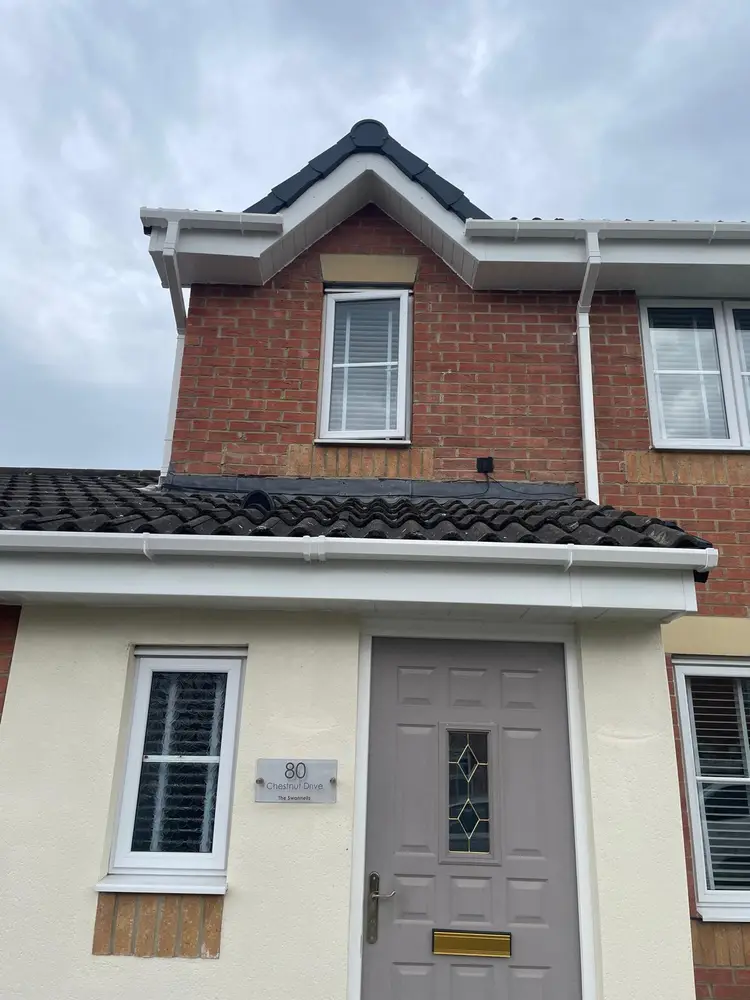
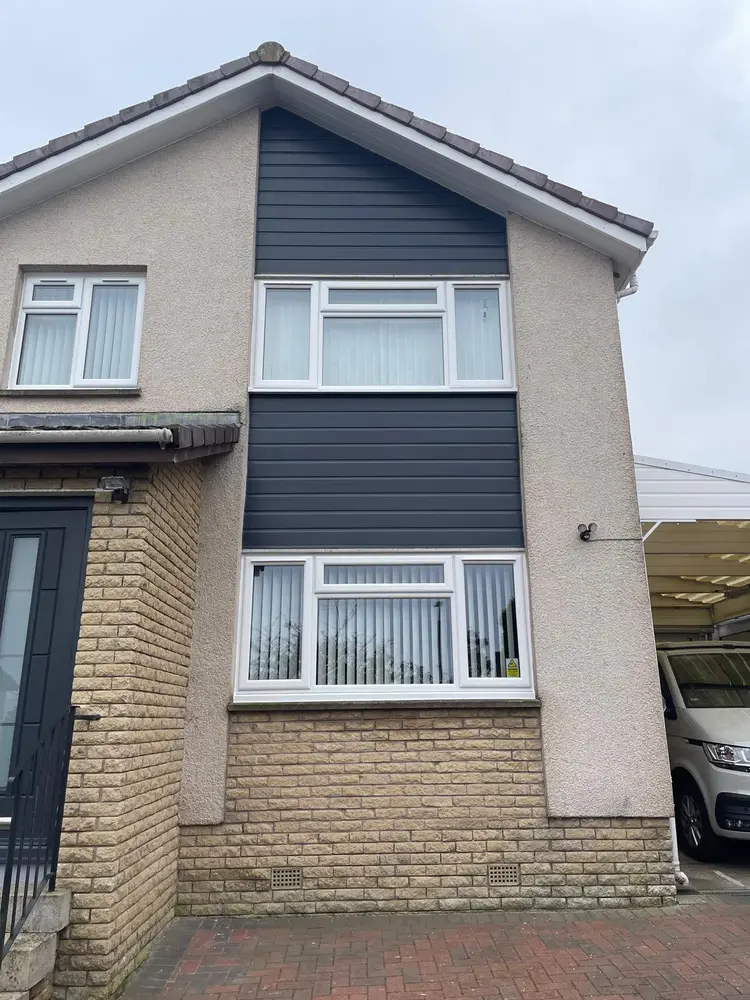
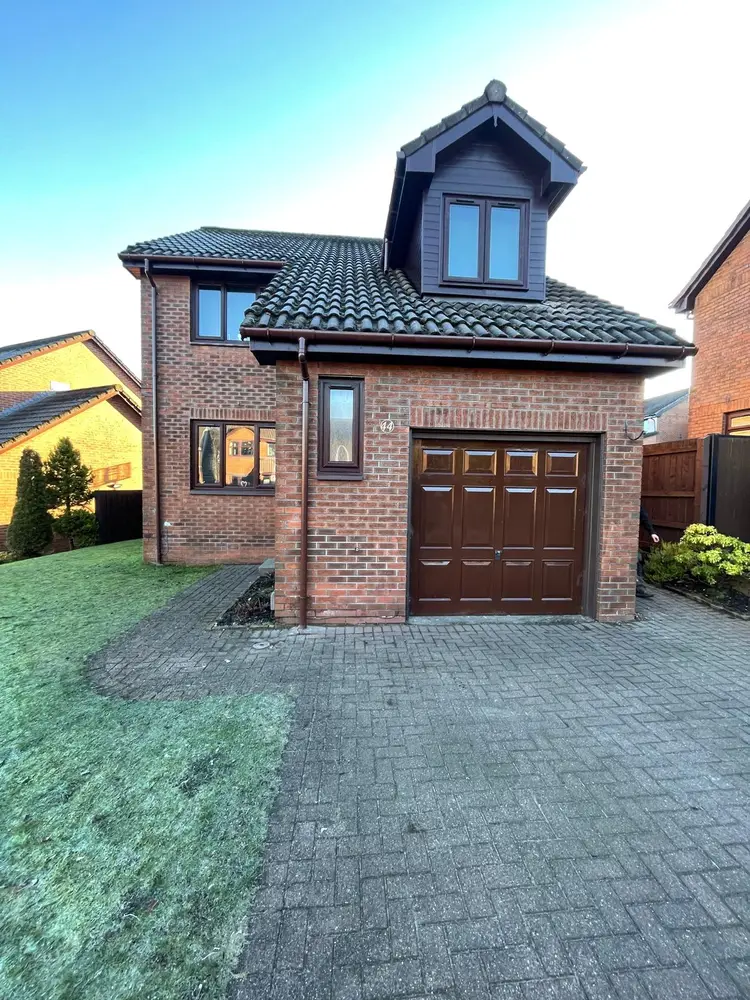
Recent F J Allan jobs across Falkirk and Central Scotland
Real jobs by our own team. Ask to see more from your area when we survey.
Flat Roofing in Airdrie
Right on our doorstep, Airdrie is full of older houses and tenements that we know inside out. We install, repair and re-cover flat roofs in EPDM rubber, GRP fibreglass and felt in Airdrie and the surrounding towns and villages, to a standard that lasts through a Scottish winter. As a qualified, insured, family-run team with 25+ years’ experience, we give clear fixed prices, tidy work and a 10-year workmanship guarantee.
For the full detail on our flat roofing work, see our main flat roofing service.
Flat roof systems we fit
We match the system to the roof, not the other way round.
EPDM Rubber
A single seamless sheet of rubber with no joints to fail — durable, flexible and typically lasting 30+ years. Our most popular flat-roof choice.
GRP Fibreglass
A seamless, hard-wearing fibreglass finish that’s ideal for balconies and walk-on roofs, with a neat, modern look.
Torch-on Felt
A modern high-performance felt in multiple layers — a cost-effective, reliable option done properly with heat-welded seams.
Warm-Deck Insulation
We can upgrade a cold flat roof to a warm-deck build-up, cutting heat loss and condensation on habitable rooms below.
Flat roof problems we fix
Ponding & poor drainage
Standing water that never clears points to falls that are too shallow — we correct the build-up so water runs off.
Splits, blisters & cracks
Old felt goes brittle and splits; we patch where sensible or re-cover for a lasting fix.
Failed seams & upstands
Most flat-roof leaks start at joints, upstands and where the roof meets a wall — exactly where good detailing matters.
Leaking flashings
Failed lead or trims around the edges and abutments let water track in; we re-dress and seal them properly.
Why Airdrie chooses F J Allan
We’re qualified, insured roofers who fit flat roofs day in, day out — not a general builder having a go. That means the right system, proper falls, heat-welded or bonded seams and clean edge detailing, so your flat roof stays watertight through a Scottish winter. Clear fixed prices, tidy work, and a 10-year workmanship guarantee.
Areas we cover
As well as Airdrie we cover the surrounding area — nearby: Coatbridge · Cumbernauld · Plains · Caldercruix. See our full flat roofing service, our roof repairs in Airdrie, or conservatory roof replacement in Airdrie. Not sure if we reach your street? Give us a call.
More about a flat roof in Airdrie
Open any heading for the detail: what we do here, local roof types, prices, how to check a roofer, and storm claims.
Flat roof prices in Airdrie
People searching for a flat roof in Airdrie usually want a number before they want a sales visit, so here is the honest position. A small roof, such as a porch, a single garage or the rear extension on a tenement, starts from around £1,200 when it is stripped to the deck, re-boarded where necessary and re-covered with new trims and outlets. Minor repairs start from around £150. Beyond that, the price scales with area and system: torch-on felt supplies and fits across North Lanarkshire at roughly £50–£80 per m², EPDM rubber at £70–£110 per m² and GRP fibreglass at £90–£140 per m², with a warm-deck insulation upgrade adding £40–£70 per m².
Airdrie has two pricing quirks worth knowing about. First, many of its flat roofs are on the rear of sandstone tenements and four-in-a-blocks, where the roof meets stone walls along two or three sides and the upstands have to be dressed in lead or a compatible GRP detail; that stonework abutment is skilled work and it adds to the price. Second, access is often through a common close and a shared back court, which affects how materials come in and whether a tower or scaffold is needed. Both appear as clear lines on our quote rather than being buried in the total.
The table further down sets out realistic brackets for the jobs we are asked to price most often in Airdrie. For repairs to the pitched slate roof above a tenement, rather than the flat section, our roof repairs in Airdrie are priced separately.
Rain, height and frost: what an Airdrie flat roof has to survive
Airdrie stands on high ground east of Glasgow, and it pays for the view. Rainfall tends to be higher than in the Forth Valley towns, winters are colder, and frosts come earlier and last longer. That combination is hard on flat roofs in a specific way: water sits, freezes, expands in every hairline crack, thaws and does it again, often dozens of times in a season. Old felt cannot take it. Modern systems can, and here is what to expect from each on a firm deck with proper falls:
- Torch-on felt: 10–15 years, up to 20 for high-performance polyester grades; typical material guarantees of 10–15 years.
- GRP fibreglass: 20–30 years, laid on a new board deck; typical material guarantees of 20–25 years. A good choice for back-shop roofs that get walked on.
- EPDM rubber: 30–50 years, with the membrane itself commonly guaranteed for 20 years by the manufacturer. It stays flexible well below freezing, which is exactly what an Airdrie winter demands.
Our 10-year workmanship guarantee applies on top of the material guarantee whichever system you choose.
What ends an Airdrie flat roof early is standing water above all, because it is standing water that freezes. Shallow falls, blocked outlets and decks that have sagged into hollows are the usual causes. Moss thrives in the wet climate and holds the surface permanently damp, particularly on north-facing back-court roofs shaded by three storeys of tenement. Snow lying on the roof and melting from underneath tests every upstand. We design for all of it: falls of at least 1:80, oversized outlets where we can, and upstands taken well above the level snow or ponding could reach. Our article on how long a flat roof lasts covers the maintenance side.
Cold roof to warm roof: condensation, insulation and the North Lanarkshire warrant
A flat roof over a habitable room in Airdrie faces condensation from two directions. Inside, cooking, drying washing and showers put moisture into the air; outside, the cold climate keeps the deck cold for months. In a cold-roof construction, where the insulation, if any, sits between the joists with the covering on the deck above, that moisture condenses on the underside of the deck unless the void is thoroughly cross-ventilated. Most 1960s–80s kitchen extensions and many tenement back-shop roofs have no ventilation worth the name, so the timber rots slowly and the ceiling stains in cold weather. It looks like a leak; it is not one, and re-covering the roof without changing the construction will not stop it.
A warm roof solves it by moving the insulation above the deck. The old covering is stripped, a vapour control layer goes down, rigid insulation boards go over it, and the EPDM or GRP is laid on top of the insulation. The deck stays at room temperature so there is nothing cold for moisture to condense on, no void to ventilate, and the room beneath holds its heat. The finished roof sits 100–150 mm higher, which on a tenement rear extension means the upstand into the stone wall and any window sill above have to be looked at carefully.
On the regulatory side, replacing a flat roof covering like-for-like in Scotland normally does not need a building warrant. Upgrading the insulation to current standards, altering the structure or roofing a new extension may do, and for Airdrie the authority is North Lanarkshire Council. Tenement roofs sometimes also fall under a common repairs process through a factor. We explain which applies at the survey and, where it is close, a call to the council’s building standards team settles it before we start.
Airdrie's flat roofs: tenement back-shops, four-in-a-blocks and estate extensions
Airdrie’s flat roofs come with the town’s history. Around the centre and along the older streets, the sandstone tenements have single-storey rear extensions, back-shops and wash-house roofs that were felted decades ago and are shared, in ownership and in leaks, between several flats and often a ground-floor shop. The four-in-a-block homes built between the wars and after have flat-roofed porches and rear extensions where the roof meets rendered or stone walls on more than one side. On the post-war estates such as Gartlea, Petersburn and Cairnhill, the flat roofs are the classic kitchen extensions and detached garages of the 1960s to 1980s, nearly all in felt and long past their best. In the surrounding villages, from Plains and Caldercruix to Chapelhall and Glenmavis, the old miners’ rows have been extended to the rear with flat-roofed kitchens and bathrooms that were built cheaply and are now failing.
Each type has a characteristic weak point. On tenement back-shops it is the upstand where the roof meets the sandstone, where sealant has been used in place of lead and the stone itself has weathered behind it; proper leadwork in Airdrie is the fix, not another tube of mastic. On four-in-a-blocks it is the junction with render, which cracks and lets water behind the flashing. On estate extensions it is ponding from shallow falls and sagged chipboard decks. On the village rows it is usually everything at once, because the roof was never built to last. We have seen all of them and we price each on what it actually needs.
Repair or replace: reading the roof and the ceiling below
Before we go up a ladder in Airdrie we look at the ceiling. A single brown ring in the middle of the room points to a split or a pond directly above. A stain that starts at a wall and spreads inwards points to a failed upstand or flashing along that edge, which on a tenement back-shop nearly always means the sandstone abutment. A stain that appears in cold spells but not after rain, with black mould in the corners, points to condensation rather than a leak. Getting this right first saves the customer from paying for a roof repair that cures nothing.
On the roof, the survey follows the water: outlets and gutters, then falls read from tide marks and moss lines, then every lap, seam and upstand, then the cappings and flashings, then the deck walked from end to end for softness. A firm deck with one clear fault and reasonable drainage gets a repair, typically £150–£450. A deck that gives, or a covering already patched several times, gets a recommendation to re-cover, because a repair on that roof is a season’s grace at best.
We put the findings in writing with photographs and a fixed price for whichever route we recommend, and if the roof will honestly take another couple of winters with a modest repair, that is what we quote. If water is coming through right now, our guide to what to do about an emergency roof leak covers the first hour, and we prioritise leaks during our hours, Monday to Saturday 09:00–17:00.
Who pays for a shared roof in Airdrie, and what insurance covers
This is the question we are asked most in Airdrie, because so many of its flat roofs belong to more than one household. The answer starts with your title deeds, which may set out exactly who owns the roof and in what shares. Where they do not, or where they are unclear, the Tenements (Scotland) Act 2004 applies a default scheme: the roof is treated as a common part, the cost of maintaining it is shared between all the owners in the building, normally in equal shares, and a decision taken by a majority of owners is binding on the rest. The top-floor flat does not pay for the roof alone, and neither does the flat whose ceiling happens to be leaking. A ground-floor shop is an owner like any other. Where a factor manages the building, they will usually run the process; where there is no factor, one owner has to take the lead, and a single written survey and quote covering the whole roof makes the conversation far easier. We provide exactly that.
Insurance follows the same logic. Sudden damage, such as a storm lifting the covering or a chimney head falling onto the back-shop roof, is a buildings insurance claim less the excess, and on a tenement the common policy, if there is one, is the place to start. Gradual failure of an old felt roof is wear and tear and is not covered. Take dated photographs, get temporary cover on to prevent further damage, keep receipts, and use a report that describes the roof honestly. Our storm damage roof repairs in Airdrie include making the roof safe first so the claim can be assessed without the damage getting worse.
Flat Roofing FAQs — Airdrie
Do you provide flat roofing in Airdrie?
Yes — we cover Airdrie and the surrounding towns and villages. Call for a free, no-obligation quote and a clear fixed price.
How long does a flat roof last?
A modern EPDM rubber or GRP fibreglass flat roof, installed properly, typically lasts 25–30+ years — far longer than old-style felt.
EPDM vs felt vs fibreglass — which is best?
EPDM rubber is our go-to for most roofs (seamless, long-lasting, great value); GRP fibreglass suits walk-on areas and balconies; modern felt is a solid budget option. We’ll advise on the best fit.
Can you repair my flat roof or does it need replacing?
If the deck is sound and the damage is localised we’ll repair it. If the covering is at the end of its life we’ll be honest and recommend a re-cover.
Why does my flat roof keep leaking?
Most flat-roof leaks come from failed seams, upstands or flashings rather than the middle of the roof. We trace the true source and detail it properly.
How much does a flat roof cost in Airdrie?
Repairs start from around £150 and a small re-cover from around £1,200. A tenement back-shop roof in EPDM typically runs £1,800–£3,400, a 25 m² extension £2,000–£3,800 depending on system, and a warm-deck conversion adds £40–£70 per m². Stone abutments and close access push prices towards the upper end.
Who pays for roof repairs in a tenement in Scotland?
Your title deeds first. Where they are silent, the Tenements (Scotland) Act 2004 makes the roof a common part, shares the cost between all owners, usually equally, and lets a majority approve the work so it binds everyone. The top-floor owner does not pay alone. One survey and one quote for the whole roof keeps it simple.
Can I claim on insurance for storm damage to a flat roof?
Yes, if the damage was sudden: wind lifting the covering, or debris falling on it. You pay the excess and the insurer covers the rest. Gradual wear of an old felt roof is excluded. On a tenement, check the common policy first. Photograph the damage, get temporary cover on, and ask us for a written report.
Is it safe to walk on a flat roof?
GRP laid to a walk-on grade is designed for it. EPDM takes occasional light foot traffic for maintenance if you stay off the edges and avoid frost and heat. Old felt cracks underfoot and should not be walked on at all. If a back-shop roof is used for access we can fit walkway pads or specify GRP.
How long does it take to replace a flat roof on an extension?
A 25 m² extension roof is usually two to three days in EPDM or GRP, and a day longer as a warm deck. Tenement back-shop roofs take two to four days depending on access and lead detailing. GRP and EPDM need dry weather above about 5°C, so winter work is booked around the forecast.
Is a building warrant needed in Airdrie to re-cover a flat roof?
Not for a like-for-like re-cover in Scotland. Adding insulation to current standards, altering the structure or roofing a new extension may need a warrant from North Lanarkshire Council, and tenement work may go through a factor's common repairs process. We tell you which applies at the survey.
Can a new flat roof be laid over the existing one?
Only when the existing covering is a single dry layer, firmly bonded to a deck that does not move, with room at the upstands and edges for the extra height. GRP always needs a new deck. Airdrie back-shop roofs have usually been patched for decades, so we normally strip them rather than trap the moisture underneath.