
uPVC Fascias & Soffits in Stirling
We replace tired, rotting timber roofline with clean, maintenance-free uPVC fascias, soffits and bargeboards for homes across Stirling and the wider area — quality work from qualified, local roofers.
Get my free quote
Leave three details and we’ll ring you back.
Free, no-obligation survey · Written quote · 10-year guarantee
Open Mon–Sat 9am–5pm
10-Year Guarantee
On all our workmanship
25+ Years
Experience in the trade
Family-Run
A local business you can trust
Fascias and soffits Stirling — guide prices
Stirling roofline costs more than the Forth Valley average when the house is tall, on a slope or carries decorative timber, and about the same as everywhere else on the estates. These are 2026 guide ranges from our own work and the national cost guides.
| Job | Typical guide price | What moves it up or down |
|---|---|---|
| Cap over sound timber fascia, per metre | £45–£85 | Only where the survey proves the timber dry |
| Full uPVC fascia replacement, per metre | £80–£150 | Rafter-end repairs, board depth, height |
| Fascia and soffit together, per metre | £100–£165 | Soffit width, vented boards, moulded detail kept |
| Plain uPVC bargeboards, per metre | £90–£160 | Gable height, dry verge fitted at the same time |
| Decorative bargeboard remade in treated timber, per metre | £130–£250 | Pattern complexity, painting, scaffold |
| Fascias and soffits, two-storey estate semi | £1,000–£2,000 | Front and back, one or two gables |
| Full roofline with gutters, three-storey villa | £3,000–£5,500+ | Scaffold, decorative timber, cast-iron-effect gutters |
Guide prices only. Scaffold and timber replication are itemised separately. You get a fixed written price after a free, no-obligation survey, and that is the figure you pay.
Show my Stirling guide price
Pick the job and the guide range from the table above appears straight away. Leave your details and we’ll ring to book the free survey, then you get a fixed written quote — the guide range is a starting point, not the final price.
What our customers say


Recent F J Allan jobs across Falkirk and Central Scotland
Real jobs by our own team. Ask to see more from your area when we survey.
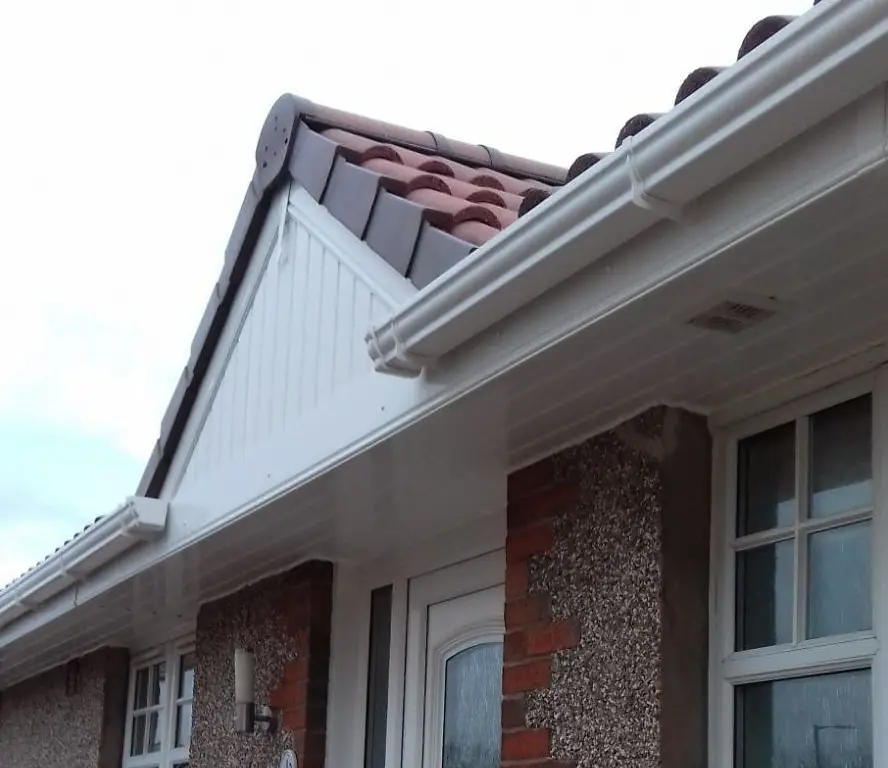
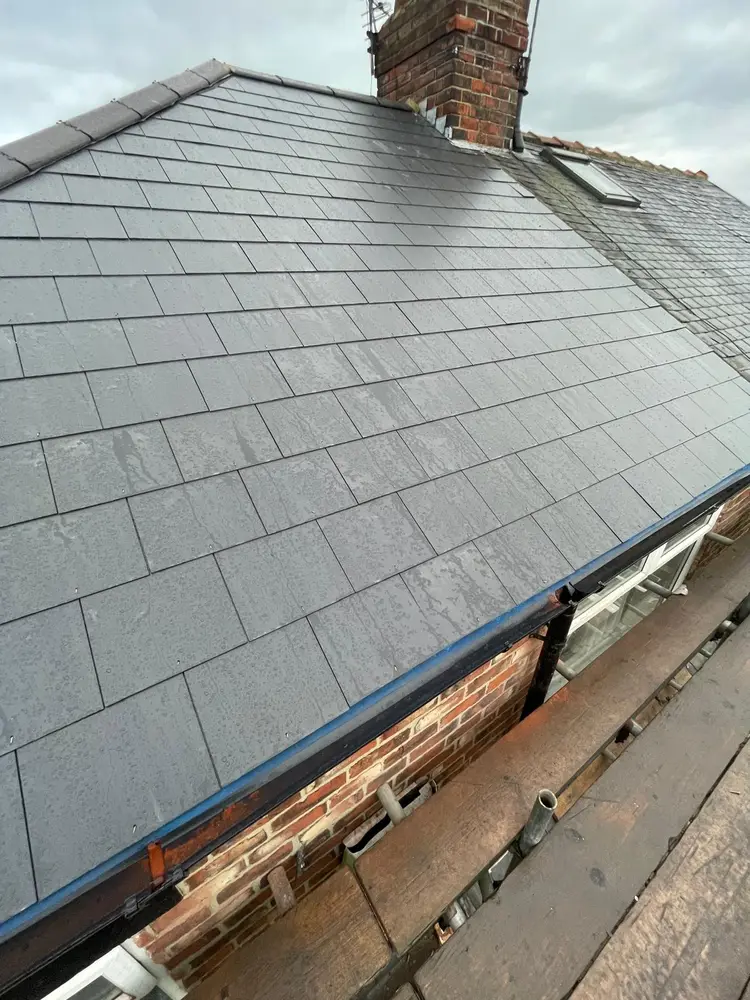
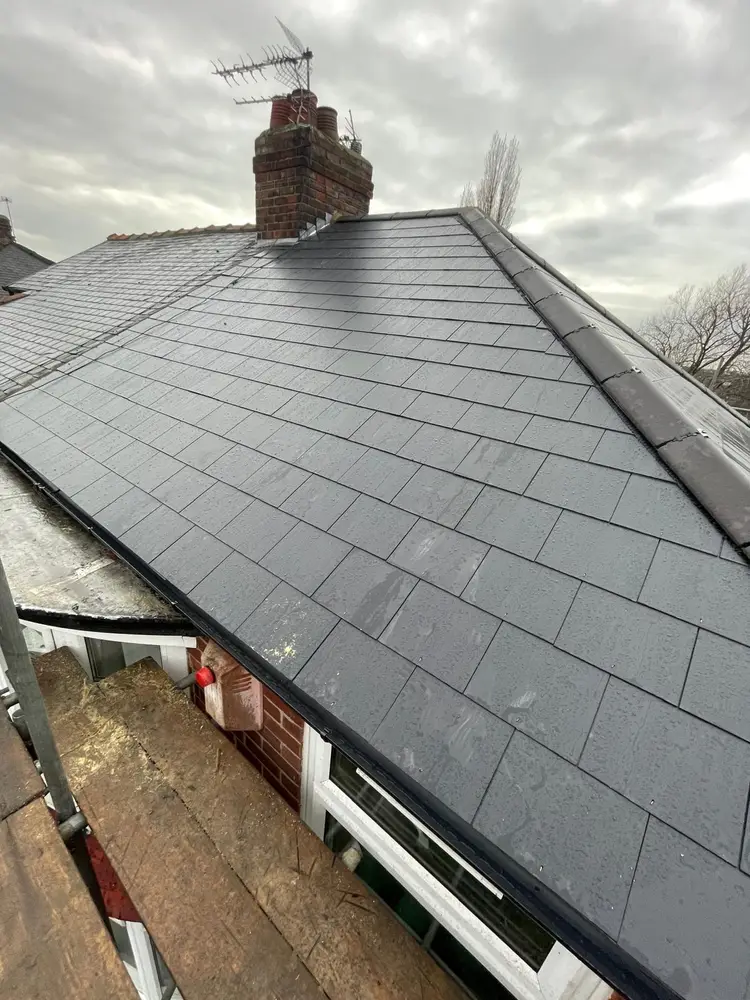
uPVC Fascias & Soffits in Stirling
Stirling’s period stone properties and modern estates all take a battering from the weather off the Ochils. We replace tired, rotting timber roofline with clean, maintenance-free uPVC fascias, soffits and bargeboards in Stirling and the surrounding towns and villages, to a standard that lasts through a Scottish winter. As a qualified, insured, family-run team with 25+ years’ experience, we give clear fixed prices, tidy work and a 10-year workmanship guarantee.
For the full detail on our upvc fascias & soffits work, see our main upvc fascias & soffits service.
Our roofline services
Fascias
The board along the roof edge that carries your guttering — replaced in low-maintenance uPVC in your choice of colour.
Soffits
The underside board that closes off the eaves — in vented or solid uPVC to keep the roof breathing and pests out.
Bargeboards
The angled boards at the gable ends — renewed to protect the roof edge and sharpen the look of the house.
Cladding & dry verge
uPVC cladding for gable apex and dry-verge systems for a neat, mortar-free finish that won’t crack and fall.
Signs your roofline needs replacing
Rotten or soft timber
Flaking paint and soft, crumbling boards mean the timber is holding water — and so is the roof edge behind it.
Peeling paint & staining
If you’re repainting the fascias every couple of years, uPVC ends the cycle for good.
Sagging gutters
Gutters pulling away often mean the fascia behind them has rotted and no longer holds the brackets.
Birds & pests in the eaves
Gaps in failed soffits let birds and pests into the roof space — vented uPVC closes them off.
Why Stirling chooses F J Allan
We don’t just cap over old timber and hope — where boards have rotted we replace them, so the new roofline is sound as well as smart. Qualified, insured roofers, tidy work, colour-matched uPVC, and a 10-year workmanship guarantee. 25+ years keeping Forth Valley roofs weathertight.
Areas we cover
As well as Stirling we cover the surrounding area — nearby: Bridge of Allan · Dunblane · Bannockburn · Causewayhead. See our full upvc fascias & soffits service, our roof repairs in Stirling, or conservatory roof replacement in Stirling. Not sure if we reach your street? Give us a call.
More about fascias and soffits in Stirling
Open any heading for the detail: what we do here, local roof types, prices, how to check a roofer, and storm claims.
Fascias and soffits in Stirling: villa timber and estate plastic
Ask for fascias and soffits in Stirling and the first thing we want to know is which Stirling. In King’s Park, on the Back Walk and along the older streets of Bridge of Allan, the roofline is part of the architecture: deep painted fascias, wide soffits with moulded edges, and bargeboards cut into patterns a joiner spent a day on in 1890. Out in Cornton, Broomridge, Bannockburn, Cambusbarron and Torbrex the roofline is a plain board carrying a plastic gutter, and its only job is to keep water out and look tidy.
The faults follow suit. The villas suffer from paint failure at the joints, rot behind the gutter where a rhone has dripped for twenty years, and bargeboard ends that have gone spongy where they meet the eaves. The estate houses suffer from original softwood that was thin to begin with, and from first-generation uPVC caps nailed over that timber in the 1990s that are now lifting. We treat the two as different jobs with different materials, and the quote reflects that rather than applying one rate per metre to every house in the city.
Decorative bargeboards: keep the pattern or lose the painting?
Stirling has more ornamental timber at the eaves than any other town we cover, and it raises a question plain uPVC cannot answer. A shaped or fretted bargeboard cannot be reproduced in a standard uPVC board; the profile is flat and the pattern is lost. So on a villa with a detail worth keeping we offer three routes. The first is to repair the existing board, splicing new treated timber into the rotten ends, priming and painting, and keeping the original. The second is to replicate the pattern in new pressure-treated timber, which costs more than uPVC but resets the clock for decades. The third is plain uPVC on the rear and side elevations nobody sees, with the timber detail kept on the front. Most owners of King’s Park villas choose a mix, and we price each elevation so you can decide.
On a listed building, or on a street-facing elevation in the King’s Park or Old Town conservation areas, Stirling Council may expect timber to stay timber, and a switch to uPVC may need consent. Like-for-like repair does not. We raise this at survey so it is settled before the quote, not after the boards are off.
Strip or cap: how we decide on a Stirling roofline
The decision is made with a screwdriver, not from the pavement. At survey we push a blade into the fascia at every gutter bracket, at every joint and along the bottom edge where water sits, and we do the same to the soffit where it meets the wall. Firm timber the full length means a cap over the existing board is honest and cheaper: a 9mm uPVC facing fixed through to the old board, with new gutter brackets screwed through both. Soft timber anywhere means the boards come off, because a cap over rot only hides it while the rafter ends behind keep rotting and the gutter brackets slowly lose their grip.
Once the old boards are down we replace any rafter feet that have gone, fix a full-thickness 16mm to 18mm fascia and a 10mm soffit, and put the gutter back on solid timber. Our quotes state which method applies to which elevation, so if you are comparing prices you are comparing the same job. A cheap Stirling roofline quote is usually a cap, and it is worth asking the question directly.
Finishes for stone, finishes for render
On a sandstone villa white uPVC can look stark against warm stone, which is why woodgrain foils in golden oak or rosewood are popular in King’s Park and Bridge of Allan: from the street they read as painted timber. On the roughcast and rendered estate houses white remains the natural match for white windows, with anthracite grey gaining ground where owners have moved to grey windows and doors. Black is the quiet choice on a whinstone or dark stone house because it disappears into the shadow line under the slates.
Whatever the colour, we match gutters, downpipes, corner trims and joint covers from the same range so the shades agree, and we can supply cast-iron-effect black guttering to sit on a woodgrain fascia where the original rhones were iron. Foiled colours cost more per board than plain white and carry a shorter manufacturer colour guarantee, and both facts appear on your quote.
Roof-space airflow, eaves combs and damp at the wallhead
Victorian roofs in Stirling were built to breathe through their slates and never had eaves vents; once the sarking is felted or the loft is insulated, condensation follows unless air is let in low down. We fit vented soffit boards with insect mesh along the length of the eaves, or a hidden over-fascia vent where a moulded soffit is being kept, and we make sure the insulation stops short of the eaves so the air can get past. Eaves combs along the top of the fascia stop jackdaws and starlings nesting under the first slate course, a common problem on the older, deeper eaves.
When roofline fails the damage lands on the wall below. A gutter that has dropped because its fascia has rotted pours down the stonework and shows indoors as a stain high on a bedroom wall, often mistaken for a roof leak. Our damp and water ingress service in Stirling traces it properly, our article on the signs your fascias and soffits need replacing lists what to check from the garden, and where the rhone itself is at fault see our guttering service in Stirling.
Tall houses, sloping streets: access, timescales, waste and guarantee
A good deal of Stirling’s older housing is three storeys and stands on a slope, so access decides both the method and part of the price. Towers work on level ground around a two-storey semi; on a three-storey villa on a gradient we scaffold the elevation and price it as its own line. Expect one to two days for a semi, three to four for a villa with decorative work, and longer if the bargeboards are being remade in timber. All the old boards, gutters and offcuts leave with us.
The 10-year workmanship guarantee covers what we do: boards fixed to sound timber, ends and corners sealed, gutters running true. The board colour itself is guaranteed by the manufacturer, and we give you that document. Where the survey shows slipped slates or failed lead alongside the roofline, we photograph it and quote it separately under roof repairs in Stirling, and the full service and price detail sits on our fascias and soffits page for Falkirk and the Forth Valley.
uPVC Fascias & Soffits FAQs — Stirling
Do you provide upvc fascias & soffits in Stirling?
Yes — we cover Stirling and the surrounding towns and villages. Call for a free, no-obligation quote and a clear fixed price.
How long does uPVC roofline last?
Quality uPVC fascias and soffits last 25–30+ years with virtually no maintenance — no rot, no repainting.
Should I replace fascias when I get a new roof?
It’s the ideal time — the scaffolding’s up and the roof edge is exposed, so doing both together saves money and gives a fully sealed result.
Do you replace the timber or just cap over it?
Where the timber has rotted we replace it. ‘Capping over’ sound timber is fine, but we never hide rot behind new plastic.
Can I have vented soffits?
Yes — vented soffits keep the roof space ventilated, preventing condensation and timber problems in the loft.
How much per metre for fascias and soffits on a Stirling semi?
On a two-storey estate semi, full-replacement uPVC fascia runs £80 to £150 per metre and fascia with soffit together £100 to £165 per metre, giving £1,000 to £2,000 for front and back without new gutters. A cap over sound timber is £45 to £85 per metre. Villas cost more per metre because of height, scaffold and detail, and we price each elevation separately.
Can uPVC copy the pattern on my villa's bargeboards?
No, not convincingly. Standard uPVC bargeboard is a flat profile and cannot be cut into the scallops and piercings on a Victorian villa. Where the detail matters we repair the original timber or remake it in pressure-treated timber to the same pattern, and use plain uPVC only on elevations that are not seen. We quote both so you can weigh cost against appearance.
Is aluminium roofline worth it over uPVC or painted timber?
Aluminium is the longest-lasting of the three and holds its colour, but it costs two to three times the price of uPVC and is mostly used on commercial buildings and very exposed sites. Painted timber suits listed and conservation-area frontages where the council expects it. For the majority of Stirling homes, quality uPVC fixed to sound timber is the sensible balance of cost and life.
Do I need to replace the rhones when the fascias are done?
Not always. Cast iron rhones that are sound come down, get cleaned and primed, and go back up on new brackets fixed into the new board. Tired uPVC gutter usually does not refit cleanly and is cheaper to renew while the tower is up. We quote the roofline with and without new guttering so you can see the difference.
How long will uPVC roofline last on an exposed Stirling roof?
Twenty-five to thirty years is a fair expectation for branded uPVC fixed with enough pins into sound timber, and westerly exposure does not shorten that much. What does shorten it is a cap over rotten wood or brackets in soft timber. Our 10-year workmanship guarantee covers the fixing; the manufacturer separately guarantees the board itself.
Does white uPVC go yellow, and does woodgrain fade?
Modern white boards are UV-stabilised and guaranteed against yellowing, usually for ten years. Woodgrain and coloured foils carry a shorter colour guarantee and will soften in tone over many years on a south-facing elevation, though they do not peel. Dirt and algae streaks on any colour are surface grime and wash off with warm soapy water.