
Roofers in Edinburgh — Roof Repairs, Conservatory Roofs & Roofline
Family-run roofers with 25+ years’ experience, covering west Edinburgh and the West Lothian approaches from the Falkirk side. Free survey, fixed written price.
Get my free quote
Leave three details and we’ll ring you back.
Free, no-obligation survey · Written quote · 10-year guarantee
Open Mon–Sat 9am–5pm
10-Year Guarantee
On all our workmanship
25+ Years
Experience in the trade
Family-Run
A local business you can trust
Roofers in Edinburgh — Roof Repairs, Conservatory Roofs & Roofline
Roofers in Edinburgh are not in short supply, so here is why a firm based 25 miles to the west might still be the right call for your roof. F J Allan & Sons is a family-run roofing contractor from the Falkirk and North Lanarkshire area. We work east along the M9 and M8 into west Edinburgh and the West Lothian approaches: Corstorphine, South Queensferry, Kirkliston, Ratho and Newbridge on the city side, and Winchburgh, Broxburn, Livingston, Linlithgow and Bathgate on ours. We have no Edinburgh office and will not pretend otherwise; what we have is more than 25 years of roofing in the same weather, on the same stone and slate.
Everything on this page is our own trade: slate and tiled roofs, flat roofs in EPDM, GRP and felt, chimneys and leadwork, fascias, soffits and guttering, storm damage, water ingress and warm tiled conservatory roofs, where being a roofer rather than a window company changes how the new roof meets the house. You get a free, no-obligation survey, a fixed written quote and a 10-year workmanship guarantee. Our reviews stand at 5.0 on Google and Facebook and 4.95 from 164 reviews on MyBuilder. Hours are Monday to Saturday, 09:00 to 17:00, with quick call-outs inside those hours.
Roof leaking in Edinburgh right now?
We offer fast call-outs across Edinburgh for urgent leaks and storm damage — a temporary make-safe today and a permanent fix booked in.
Roof problems we fix
Whatever’s letting the water in, we’ve repaired it hundreds of times.
Slipped, cracked & broken tiles
We refit or replace slipped, cracked or missing tiles and slates and check the area for hidden damage.
Leaking lead flashing
Failed flashing around chimneys, dormers and roof junctions re-dressed with proper leadwork that lasts.
Cracked & loose ridge tiles
Ridge and hip tiles re-bedded and re-pointed where the mortar has cracked and washed out.
Flat roof leaks
Splits, failed joints and worn edges on felt, EPDM or GRP flat roofs patched or re-covered.
Blocked & failed valleys
Valleys cleared and re-lined so water runs to the gutter, not into the roof.
Chimney leaks & repairs
Cracked flaunching, spalled brick and failed pointing repaired, re-pointed and re-flashed.
Storm & wind damage
Lifted tiles and torn flashing made safe fast, then fully repaired — often insurance-friendly.
Leak tracing & damp
We find the true source of a leak rather than guessing, so it’s fixed once, not patched repeatedly.
Roofing costs in Edinburgh — guide prices
Guide figures for typical jobs in west Edinburgh and the West Lothian approaches. Two things move Edinburgh prices more than elsewhere: height and access on stone tenements, and the consent position on listed and conservation-area buildings, which can dictate natural slate and cast iron rather than cheaper alternatives.
| Job | Typical guide price | What moves the figure in Edinburgh |
|---|---|---|
| Roof repair: slipped slates, small leak, flashing patch | £150–£500 | Storeys and access, slate match, whether a tower or scaffold is needed |
| Clear and repair a lead-lined parapet or valley gutter | £200–£800 | Length, hopper and outlet condition, patch repair against a new lead bay |
| Gutter clean on a bungalow or semi; cast iron rhone joint repair | £80–£140 clean; £100–£300 per repair | Leaf and moss load, blocked downpipes, height; tenement rhones priced per elevation |
| uPVC fascias, soffits and guttering, full roofline on a semi | £1,000–£4,000 | Rotten timber, ventilated soffits, colour; painted timber may be required in a conservation area |
| Flat roof re-cover: garage, extension or dormer in felt, EPDM or GRP | £1,200–£5,000 | Area, deck condition, wind-rated trims and fixings, warm-deck upgrade |
| Warm tiled conservatory roof | from £5,000; most 3.5 m x 4 m roofs £7,000–£10,500 | Size, glazed panels, frame condition, building warrant fee (we apply for you), conservation checks |
| Chimney: repoint, re-flaunch, cans and cowls | £300–£1,500 | Stack size and number of cans, scaffold, partial rebuild, listed status |
| Full re-roof, three-bed semi | £4,500–£9,000 in concrete tile; £8,000–£15,000 in natural slate | Roof area, slate source, chimneys and valleys, leadwork, scaffold |
Guide prices only, drawn from 2025/26 UK cost guides and our own recent work in West Lothian and the Forth Valley. Scaffold is itemised separately, and on a tenement the total is shared between the owners. You get a fixed written price after a free, no-obligation survey, and that is the price you pay.
Show my Edinburgh guide price
Pick the job and the guide range from the table above appears straight away. Leave your details and we’ll ring to book the free survey, then you get a fixed written quote — the guide range is a starting point, not the final price.
What our customers say


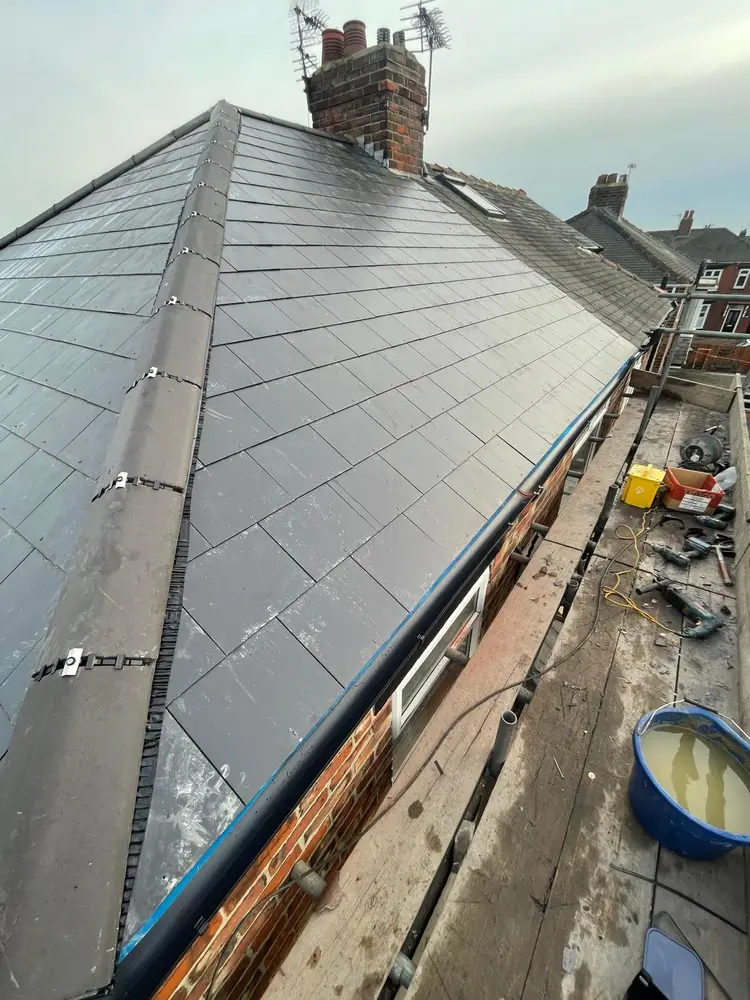
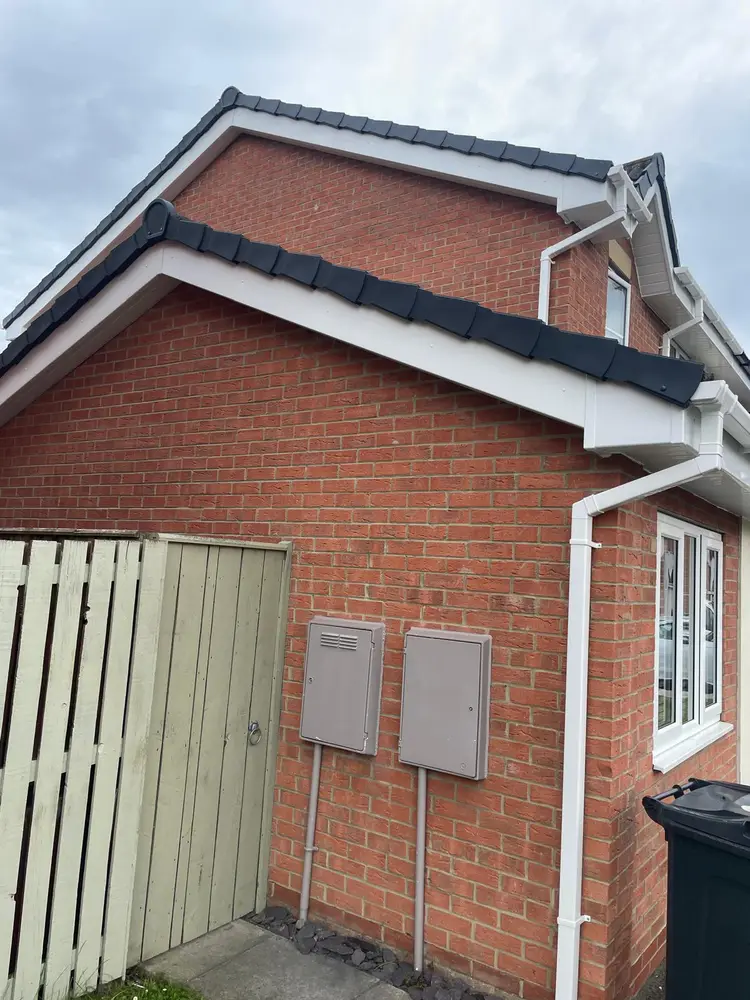
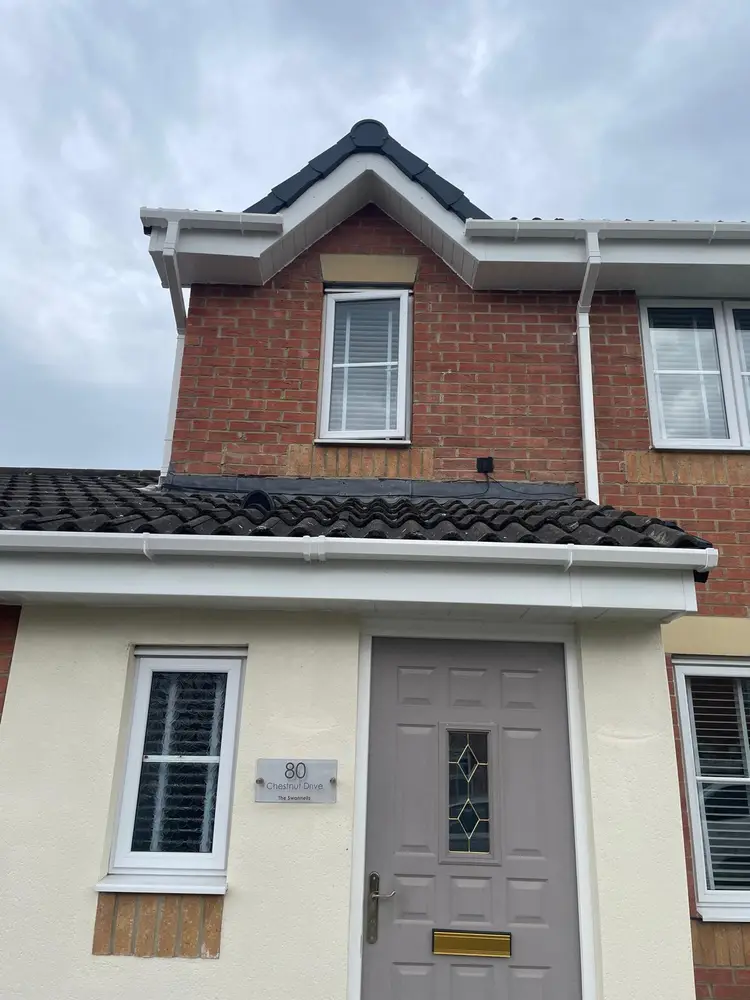
Recent F J Allan jobs across Falkirk and Central Scotland
Real jobs by our own team. Ask to see more from your area when we survey.
Why Edinburgh chooses F J Allan
We’re qualified, insured roofers — not a handyman with a ladder. Proper leadwork, the right materials, and repairs that last through a Scottish winter. Clear fixed prices, no call-out gimmicks, tidy work, and a 10-year workmanship guarantee. 25+ years keeping Edinburgh area roofs weathertight.
Areas we cover around Edinburgh
Kirkliston, Ratho, Newbridge, South Queensferry, Corstorphine, Broxburn, Winchburgh, Livingston, Linlithgow, Bathgate
More about roofing work in Edinburgh
Open any heading for the detail: what we do here, local roof types, prices, how to check a roofer, and storm claims.
Conservatory roof replacement in Edinburgh
Edinburgh’s conservatories sit mostly on the 1930s bungalows of Corstorphine and the estates of Kirkliston, Winchburgh, Broxburn and Livingston, and most were built in the 1990s and 2000s with polycarbonate or plain glass roofs. On the east coast the problem is less the heat than the cold: an east wind or a haar rolling in off the Forth takes the room out of use for most of the year. A warm tiled roof, insulated and plastered inside with lightweight tiles outside, turns it into a room you can heat like any other, and it can be fitted to an older conservatory if the frames and base are sound, which our survey checks first.
A solid roof on a glazed conservatory needs a building warrant. We prepare and submit it to the City of Edinburgh Council or West Lothian Council and itemise the fee. In a conservation area we also check whether the change needs planning consent before you commit. Prices start from around £5,000, and you are buying from roofers rather than a window company with a showroom, so the roof-to-wall detail is done properly. Our guide to building regulations for conservatory roofs in Scotland has the detail.
Roof repair in Edinburgh
Roof repair in Edinburgh is often a lead job before it is a slate job. Georgian and Victorian buildings drain into lead-lined gutters behind stone parapets and into lead valleys between slopes, and when a hopper blocks with leaves or a lead bay splits, the water has nowhere to go but inside. Add slates slipped by an easterly, chimney flashings lifting and skews letting water behind the stone, and you have most of what we are called to on the older stock. On the bungalows and estates west of the city it is cracked tiles, ridge mortar and gutters.
We trace the leak from the roof down, not from the stain up, then quote a fixed price. Small repairs start from around £150 and there is no call-out fee. If it is raining in, we make the roof safe first and photograph it for your insurer. Call-outs run Monday to Saturday, 09:00 to 17:00; our note on what to do about a roof leak covers the meantime.
Flat roof in Edinburgh
Flat roofs in Edinburgh range from lead flats and platforms on tenement roofs, through the garages behind the Corstorphine bungalows, to the 1960s and 1970s maisonettes of Sighthill and Wester Hailes and every extension since. The east coast adds a factor Glasgow lacks: wind uplift. A flat roof here needs fully bonded or mechanically fixed membranes, proper edge trims and fixings rated for the exposure, or the first winter gale peels it back.
We fit EPDM rubber where the roof is large and simple, GRP fibreglass where it is small and detailed, and torch-on felt where budget rules. Where the roof covers a room we recommend a warm-deck upgrade at the same time, because the cold bridging and condensation that follow a cold roof are common complaints in Edinburgh flats. Garage and extension re-covers start from around £1,200; a tenement platform is measured, priced per square metre and shared among the owners. Our piece on how long a flat roof lasts explains the choice of system.
Slate roof in Edinburgh
Edinburgh is a slate city, and much of it is Scotch slate laid in diminishing courses on sarking boards, with Ballachulish and other West Highland slates common on the older stock. Because so much of the city is a conservation area or listed, and the Old and New Towns are a World Heritage Site, the expectation on most of these roofs is like-for-like natural slate rather than a cheaper substitute. That is not a hardship: reclaimed Scotch slate, Welsh slate and good Spanish slate all have their place, and we will tell you which suits the roof and the consent you need.
The failures are the same as everywhere: rusted nails, worn lead and slipped slates after wind. We repair, re-slate an elevation or re-slate the whole roof, and we handle the lead at the same time. A re-slate on a three-bed semi typically runs £8,000 to £15,000; a large villa more. We are happy to work from a conservation officer’s brief.
Tiled roof in Edinburgh
Tiled roofs in Edinburgh belong to the twentieth century: the interwar bungalow belt through Corstorphine and Carrick Knowe, the post-war estates at Clermiston and Sighthill, and the 1960s to 1980s housing of Livingston, Broxburn and Bathgate. Concrete tiles from those years are reaching 60 to 90 years old together, going porous and mossy, with ridge and verge mortar washed out by wind-driven rain. On the exposed approaches around Ratho, Kirkliston and Winchburgh, tiles lifted in gales are a regular call.
A few cracked tiles or a ridge re-bed is a small repair from around £200. A full re-roof means strip, breathable membrane, new battens, new tiles and a mechanically fixed dry ridge and verge, which matters more on the east coast than anywhere. A three-bed semi in concrete interlocking tiles runs £4,500 to £9,000. Where an older slate roof was tiled over in the past and you want it back to slate, we can do that too, subject to structure and consent.
Fascias and soffits in Edinburgh
Fascias and soffits in Edinburgh are mostly a bungalow and estate job. Stone tenements and villas usually finish in a stone eaves course or skew with the rhone fixed to the stone or a small timber fillet, so there is often no fascia to replace. The 1930s bungalows and later estates west of the city, and the West Lothian towns, are the opposite: timber fascias and soffits that have soaked up decades of overflow and are now soft at the joints and behind the downpipes.
We fit uPVC fascias and ventilated soffits after stripping the old timber, never over it, and we check the rafter feet and sarking edge before anything new goes on. In a conservation area we will tell you if painted timber is expected instead of plastic. A full roofline with new guttering on a semi starts from around £1,000. Our guide to the signs your fascias and soffits need replacing helps you judge how urgent it is.
Guttering in Edinburgh
Guttering in Edinburgh comes in two kinds. On the stone city it is cast iron rhones and hoppers, often shared along a terrace and often above a pavement, where one failed joint stains the stonework and one blocked hopper floods a top-floor flat through the parapet gutter behind it. Cast iron can be repaired, re-jointed and painted rather than replaced, and in conservation areas that is usually what is expected, with cast-effect aluminium as the accepted alternative. On the bungalows and estates it is uPVC that has sagged, split or filled with moss and leaves from the trees Edinburgh is generous with.
A gutter clean on a bungalow or semi starts from around £80, joint repairs and bracket refixes are small fixed-price jobs, and replacement runs are quoted per metre in uPVC, seamless aluminium or cast iron. Damp high on an inside wall is nearly always the rhone or parapet gutter above it, not the ground, as our guide to how blocked gutters cause damp explains.
Chimney repairs in Edinburgh
Edinburgh’s chimneys are part of the skyline for a reason: the Georgian terraces and Victorian tenements carry long ranges of stacks, each with a row of cans serving several flats. Frost, east wind and a century of weather leave pointing soft, flaunching cracked and cans loose, and the lead where the stack meets the slates is one of the commonest leak points on any older roof. A loose can over a busy pavement is also a hazard the council will act on if the owners do not.
We repoint and re-flaunch, replace cans, fit cowls, cap and vent disused flues, and renew the lead aprons and back gutters. On a house the work starts from around £300; on a shared stack it is a common repair, itemised for the owners to split. Where a stack must come down or be rebuilt we check the consent position first, since a listed building or a conservation area can change what is allowed.
Edinburgh's roofs: Georgian stone, tenement stairs, the bungalow belt and the east wind
Edinburgh’s roofs are older, higher and more regulated than most. The Georgian New Town drains into lead gutters behind stone parapets, with lead flats between the slopes and chimney stacks in long ranges. The Old Town piles storeys onto a hillside. The Victorian tenements of Marchmont, Bruntsfield, Dalry, Gorgie and Leith, built in local sandstone under Scotch slate, are where a large share of the city’s owner-occupiers live, and each shares a roof, a set of rhones and a stack with the rest of the stair. West of Haymarket the city changes: villas in Murrayfield, the 1930s bungalow belt of Corstorphine and Carrick Knowe, post-war Clermiston and Sighthill, 1970s Wester Hailes, and then the new-build growth at the Gyle, Kirkliston, Winchburgh and Livingston.
Consent sits over a lot of it. The Old and New Towns are a World Heritage Site, dozens of neighbourhoods are conservation areas and thousands of buildings are listed, so like-for-like natural slate, lead and cast iron are the expectation rather than the exception, and changing materials can need listed building consent or planning permission on top of any building warrant. We will tell you where that line falls before you spend money.
Then there is the weather. Edinburgh gets roughly 700 mm of rain a year, well under Glasgow’s, but it arrives sideways on a North Sea wind, with salt-laden haar in summer and hard frost in winter. Wind-driven rain finds gaps at skews, parapets and ridges that a westerly never would, uplift tests every verge and flat-roof edge, and frost opens joints in stone and mortar. Roof details here have to be fixed down, not just laid, and storm damage after an easterly is a large part of our winter work.
Common repairs on an Edinburgh stair: the 2004 Act, the council and what we bring
If your flat is in a tenement, the roof is common property whether or not your deeds spell it out. The Tenements (Scotland) Act 2004 supplies a default Tenement Management Scheme wherever the titles are silent. The roof and its supporting timbers are scheme property; a repair is agreed by majority, one vote per flat, either at a meeting on 48 hours’ notice or by consultation round the stair; and the cost is divided equally unless the largest flat is more than one and a half times the floor area of the smallest, when it is divided by floor area. Any one owner can instruct emergency work to stop damage or protect safety without a vote, and the others still share the bill. Written notice to every owner, including absentee landlords, is part of doing it properly.
Edinburgh has a particular history here. Many stairs have no factor and run their own common repairs, and the council’s old statutory notice system, under which it organised repairs and billed owners, ended after 2011. Its replacement, the City of Edinburgh Council Shared Repairs Service, offers advice rather than project management and can use section 50 of the Housing (Scotland) Act 2006 to pay a missing share when an owner cannot be traced or will not pay, recovering it later. The independent Under One Roof website is the best free guide to all of this.
What we bring is the paperwork that makes a majority possible: a survey report with photographs you can put through every door, a single itemised written quote that separates essential repair from optional upgrade, a fixed price that does not change once the stair has voted, and a willingness to attend the meeting or deal with your factor if you have one. Where the job is slate, our slate roofing page explains how we survey and price a shared roof.
How we cover west Edinburgh from West Lothian, and how to pick a roofer for an Edinburgh roof
Our base is in the Falkirk and North Lanarkshire area and our daily patch runs east along the M9 and M8 through Linlithgow, Bo’ness, Bathgate and Livingston. From there Broxburn, Winchburgh, Kirkliston, Newbridge, Ratho, South Queensferry and Corstorphine are a short drive on, and that is the part of Edinburgh we cover. Morningside, Leith or Portobello are better served by a firm on that side of the city, and we will tell you so rather than waste your time. We work Monday to Saturday, 09:00 to 17:00, and in those hours we get to leaks quickly; we do not claim round-the-clock cover because we do not provide it. You can see our patch on the areas we cover page and the work itself in our gallery.
Edinburgh roofs ask a few extra questions of any roofer you are considering:
- Have they worked on listed or conservation-area buildings, and will they put the consent position in writing?
- How will they reach a parapet gutter or a four-storey stack safely: tower, scaffold or rope access, and is it in the quote?
- Is the company on Companies House under the same name as the quote, and can they show a current public liability certificate?
- Does the written quote itemise materials, slate source, lead code, access, disposal, warrant fees, VAT and payment terms?
- Are the reviews on platforms they do not control, and is the guarantee in writing? Ours is 10 years on workmanship.
- Will they attend an owners’ meeting or deal with your factor?
Our fuller guide to choosing a roofer covers the rest, and why choose us sets out what we commit to on every job.
Roofing FAQs — Edinburgh
What should a roof repair cost in Edinburgh?
On a house you can reach from a ladder, refixing slipped slates or tiles starts from around £150 and rarely passes £500. Lead work at parapets, valleys and chimneys runs £200 to £900 depending on length. Tenement repairs cost more because of height and access, but the bill is shared across the stair. We do not charge by the hour or for coming out; you get a fixed written price after a free survey.
Do you really cover Edinburgh from the Falkirk side?
West Edinburgh and the approaches, yes: Corstorphine, South Queensferry, Kirkliston, Ratho and Newbridge on the city side, and Winchburgh, Broxburn, Livingston, Linlithgow and Bathgate in West Lothian, where we already work every week. We are about 25 miles west and have no Edinburgh office. For the south and east of the city a local firm will usually be quicker, and we will tell you that on the phone rather than take the job.
Our stair has no factor. How do we get the roof fixed, and who pays?
Under the Tenements (Scotland) Act 2004 the owners can decide by majority, one vote per flat, and everyone shares the cost, equally or by floor area if the flats differ a lot in size. Nominate one owner to deal with us and we will supply a report and an itemised quote you can circulate. If an owner cannot be found or will not pay, ask the City of Edinburgh Council Shared Repairs Service about paying the missing share under the Housing (Scotland) Act 2006.
Do I need consent to re-slate or change the roof on a listed or conservation-area building?
Like-for-like repair with matching natural slate normally needs no consent. Changing the material, altering dormers, removing a chimney or swapping cast iron for plastic on a listed building needs listed building consent, and in a conservation area may need planning permission. A building warrant is separate and depends on the structural work involved. We tell you what applies before you commit, but the consent itself is the owner's to obtain.
Are there any grants for roof repairs in Scotland?
Not for most owners. There is no national grant for roof repairs or conservatory roofs. Councils must offer advice under their scheme of assistance and can help with missing shares in tenements, Care and Repair services support older and disabled owners, and occasional heritage schemes fund particular conservation areas for a limited period. Anyone offering a free roof is selling, not granting. If something applies to your address, we will say so.
Can you put a new roof on an old conservatory in Edinburgh, and does it need a warrant?
Yes, if the frames and base are sound, which our free survey checks before we quote. A warm tiled roof on a conservatory built in the 1990s or 2000s is routine work. Converting glass or polycarbonate to a solid roof does need a building warrant from the City of Edinburgh Council or West Lothian Council, and we prepare and submit that for you. In a conservation area we also check the planning position first.