
Storm Damage Roof Repairs in Falkirk & Central Scotland
Lost tiles, torn flashing or a leak after a storm? Fast emergency call-outs to make your roof safe — then a full repair, often covered by your insurance.
Get my free quote
Leave three details and we’ll ring you back.
Free, no-obligation survey · Written quote · 10-year guarantee
Open Mon–Sat 9am–5pm
Rated 5 stars by local homeowners
Don’t just take our word for it — see our reviews across Google, Facebook and MyBuilder.
10-Year Guarantee
On all our workmanship
25+ Years
Experience in the trade
Family-Run
A local business you can trust
Storm damage repair costs in Falkirk — guide prices
Storm work splits into two bills: getting the roof safe today, and putting it right properly. Make-safe is deliberately kept modest because it is temporary, and most insurers reimburse it. These ranges assume a two-storey house with reasonable access.
| Job | Typical guide price | What affects it |
|---|---|---|
| Emergency make-safe and temporary cover | from £150 | Area exposed, wind on the day, whether the insurer wants to inspect first |
| Dated photographs and written damage report for your insurer | Included with our repair quote | Standalone reports where we are not doing the work are quoted separately |
| Replace 1–5 slipped or missing slates or tiles | £150–£350 | Whether the profile is still made or a reclaimed match is needed; access |
| Refix or re-bed a storm-lifted ridge run | £200–£450 | Length affected; a dry ridge conversion is often better value on a long run |
| Re-dress or renew lead flashing lifted by wind | £250–£600 | Length, lead code, height of the stack or abutment |
| Re-secure or patch lifted felt on a flat roof or garage | £150–£450 | Area lifted, condition of the decking beneath, whether water has got in |
| Chimney pot re-bed and flaunching after storm movement | £300–£500 | Stack size, number of pots, whether repointing is needed at the same time |
| Replace a storm-damaged fascia, soffit or gutter section | £200–£600 | Run length, height, whether the timber behind has rotted |
| Remove a redundant or dislodged TV aerial or dish | £80–£200 | Position on the roof, how it is fixed, access |
Guide prices only, based on 2025/26 UK cost guides and what we see across the Falkirk area. They are not a quotation. You get a fixed written price after a free, no-obligation survey, and that is the price you pay.
Show my Falkirk guide price
Pick the job and the guide range from the table above appears straight away. Leave your details and we’ll ring to book the free survey, then you get a fixed written quote — the guide range is a starting point, not the final price.
What our customers say


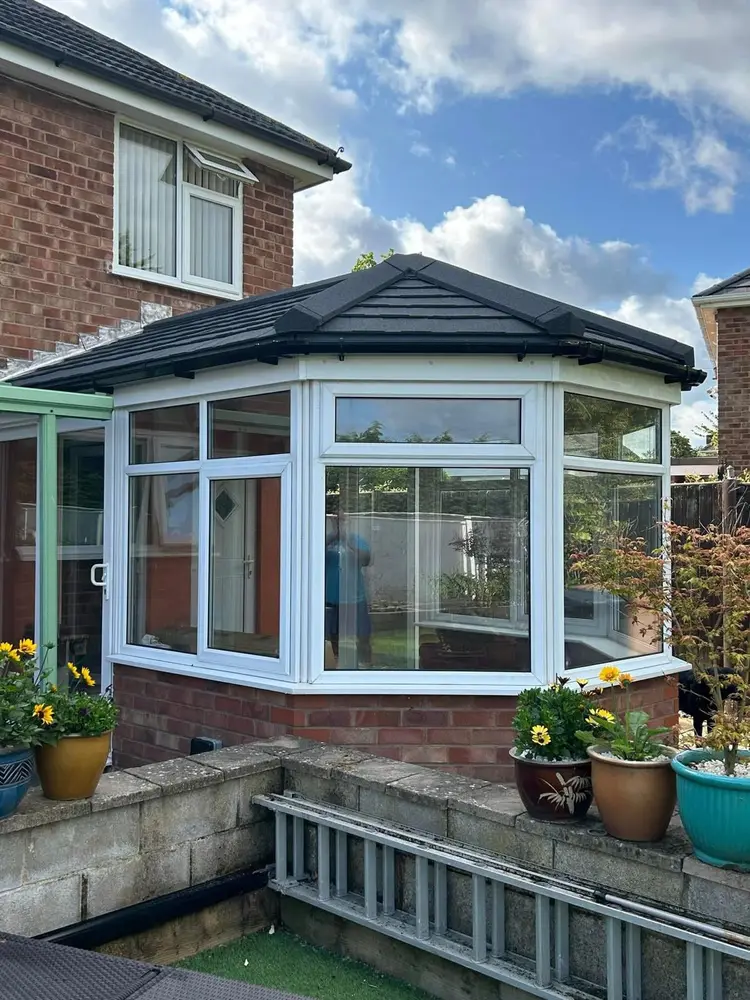
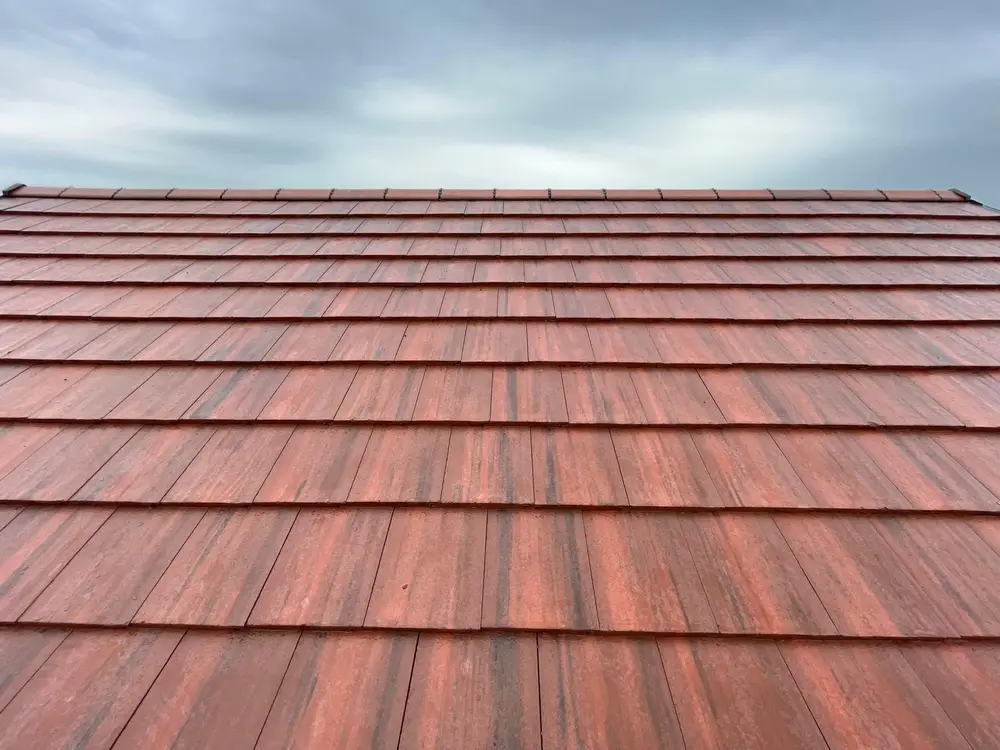
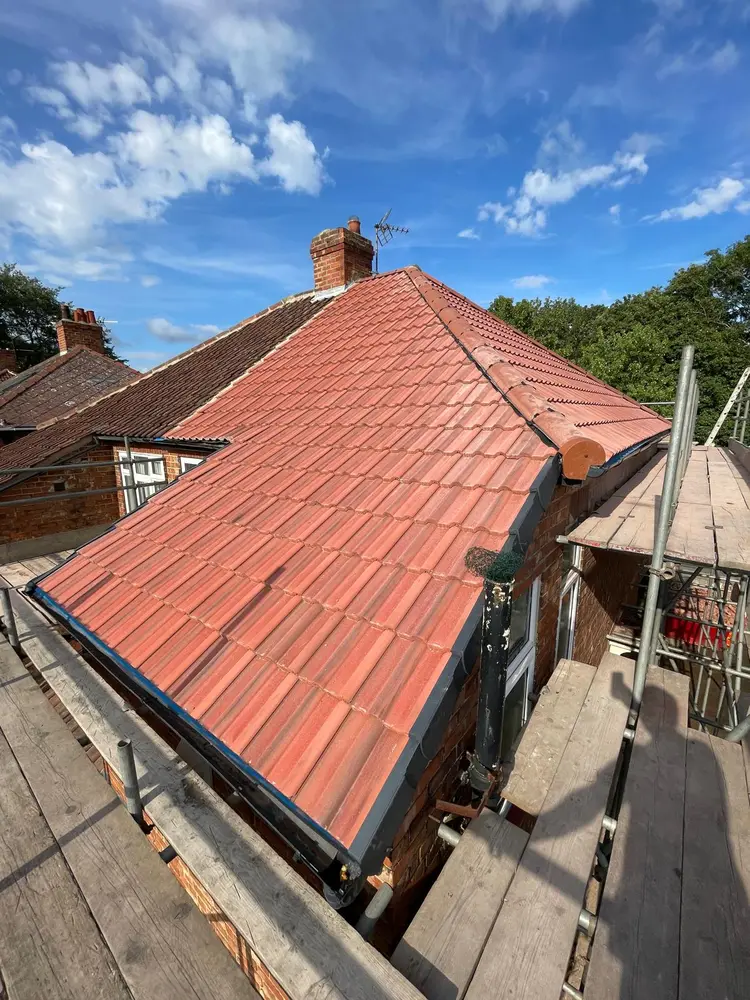
Recent F J Allan jobs across Falkirk and Central Scotland
Real jobs by our own team. Ask to see more from your area when we survey.
Storm Damage Roof Repairs in Falkirk & Central Scotland
Scottish storms lift tiles, tear flashing and bring down debris — and a damaged roof lets water in fast. F J Allan & Sons offer rapid storm-damage call-outs across Falkirk, Stirling and the Forth Valley: we make your roof safe and watertight first, then carry out the full repair — and we can help with your insurance claim.
Our storm damage services
Emergency make-safe
A fast call-out to make the roof watertight and safe — temporary cover to stop further water damage.
Lost & lifted tiles
Replacing tiles and slates stripped or lifted by high winds, and checking the rest of the roof.
Torn flashing & ridge damage
Re-dressing lead and re-fixing ridge tiles dislodged in the storm.
Debris & impact damage
Repairing damage from fallen branches, aerials or debris.
After a storm, check for
Missing or slipped tiles
Gaps on the roof or tiles in the garden — the clearest sign of storm damage.
Debris in the gutters
Bits of tile or flashing in the gutter mean something’s come loose up top.
Damp patches or drips
New stains on ceilings or walls after a storm point to water getting in.
Daylight in the loft
If you can see light through the roof from inside, water is getting in too.
Why choose F J Allan?
When your roof’s been hit, speed matters — every hour it’s open, more water gets in. We get out fast to make it safe, then repair it properly. We’ll provide the report and photos your insurer needs, and we’ll always tell you honestly what the storm has actually damaged. 10-year workmanship guarantee on our repairs.
What about insurance & cost?
Most storm damage is covered by buildings insurance — if high winds, a storm or a falling object caused it. We can:
- Make the roof safe straight away.
- Provide a report and photos of the damage for your claim.
- Give a clear, fixed price for the full repair.
Call us first — we’ll talk you through it.
Areas we cover
We cover Falkirk and within about 20 miles — Falkirk, Grangemouth, Larbert, Stenhousemuir, Bonnybridge, Denny, Bo’ness, Polmont, Linlithgow, Stirling, Dunblane, Cumbernauld, Kilsyth, Airdrie, Coatbridge, Bathgate, Livingston and Alloa. Also see our roof repairs and conservatory roof replacement services.
Storm damage repairs across the Forth Valley
We also cover the surrounding towns — find your local page: Grangemouth · Larbert · Stirling · Cumbernauld · Airdrie · Coatbridge · Kilsyth · Bo’ness · Linlithgow · Bathgate · Alloa · Bonnybridge · Denny · Polmont · Dunblane · Livingston.
More about storm damage roof repairs in Falkirk
Open any heading for the detail: what we do here, local roof types, prices, how to check a roofer, and storm claims.
Storm damage roof repair in Falkirk: what to do in the first hour
The hour after a storm is when most avoidable injuries and costs happen. If you need storm damage roof repair in Falkirk right now, do these things first, in this order.
- Stay off the roof and off ladders. Wind after a storm comes in gusts, tiles that have moved are not sitting where they appear to be, and wet slate is lethal. More people are hurt inspecting a roof than by the storm itself.
- Clear the ground below. Get people, pets and cars away from the gable and eaves, and block the path if debris is falling. A ridge tile from ten metres up will go through a windscreen.
- Check for the real dangers. If water is near a light fitting, socket or consumer unit, switch that circuit off at the board. If you smell gas, ring the Gas Emergency Service on 0800 111 999. If any part of the structure could come down onto a pavement or a neighbour’s property, ring Falkirk Council — building standards deal with dangerous buildings.
- Photograph everything before you tidy. From the ground, on your phone, timestamp on: the whole elevation, the damage, anything that landed in the garden, and any water inside. Do not move the slates until you have shot them where they fell — that photograph is worth real money in a claim.
- Deal with the water inside. Move furniture and electricals, get buckets under drips, and if a ceiling is bulging, pierce it over a bucket so it drains in a controlled way rather than coming down in one piece.
- Then call a roofer, and your insurer — in that order if water is coming in, because your policy expects you to prevent further damage.
Our posts on what to do after storm damage to a roof and what to do when a roof leaks go further, and are worth bookmarking before you need them.
Make-safe: what we actually do when we get there
A storm call-out is not the repair. It is the job of stopping the damage getting worse, and is deliberately quick and cheap next to the permanent work.
Depending on what we find, that means sheeting the exposed area with a properly battened and weighted tarpaulin rather than something thrown over and hoped for, taking down anything loose that will fall anyway, refixing slates that have slipped but are still serviceable, temporarily sealing a torn felt or flashing detail, and clearing debris from the ground. A shifted chimney pot comes down rather than being left balanced.
While we are there we photograph everything from roof level — angles you cannot get from the pavement, and neither can a loss adjuster. Dated, those images are the backbone of a claim.
Then you get a fixed written price for the permanent repair, itemised, so you or your insurer can see what is storm damage and what is not. You are under no obligation to have us do it — plenty of make-safe visits end with us telling someone their roof needs less than they feared. The permanent work is our ordinary roof repairs in Falkirk service.
How a storm claim works in Scotland, step by step
Buildings insurance covers storm damage; it does not cover a roof that was already failing. Beyond that, the process trips people up in predictable places.
- Check the excess before you claim. A typical buildings excess is £250 to £500, and some policies carry a separate, higher storm excess. If the repair is £400 and your excess £350, claiming gains you almost nothing and costs your no-claims position. We give you the fixed price first, so you decide with a number in front of you.
- Notify quickly, and mention the make-safe. Policies require prompt notification and require you to prevent further damage. Most pay the reasonable cost of emergency work — but tell them before, not after.
- Send evidence, not descriptions. Dated photographs from ground and roof level, a written report naming the cause and date, and an itemised quote. If the Met Office named the storm or issued a warning that day, say so — insurers check weather records for your postcode, and it settles the question fastest.
- Expect a loss adjuster on larger claims. Past a few thousand pounds the insurer usually appoints one. They work for the insurer, not for you. Be there if you can, have the photographs ready, and let them see the make-safe rather than a finished repair.
- Understand wear and tear, and betterment. If mortar was already failing, the insurer may decline that element or pay part. Most buildings policies are new-for-old, but where a repair upgrades something they may ask you to contribute. An itemised quote separating storm damage from optional improvement protects you.
- You can normally choose your own contractor. Insurers push their own approved network. Check the wording — most policies permit your own roofer, and you can ask for a cash settlement based on our quote.
One warning. After every big storm, cold callers appear offering to handle claims for a percentage, or promising your excess will be waived. No contractor can lawfully waive an excess, and signing your claim over to a management company is rarely in your interest. Deal directly with your insurer and a roofer you chose.
Forth Valley exposure, and what usually breaks here
Falkirk sits in a corridor between the Ochils and the Campsies with the Forth estuary open to the east, and the wind that matters here is the south-westerly that funnels along it. Storms Arwen, Malik, Isha and Éowyn all did real damage across Central Scotland. Arwen was unusual because it came from the north, hitting slopes and gable ends that had never been tested from that direction.
Exposure varies more than people expect over a few miles. Grangemouth and Bo’ness take wind straight off the water, with salt in it. Estates on high ground and long gables facing south-west catch far more than a mid-terrace in the town centre, and an end-terrace is exposed on three sides rather than one.
What we are called to, in rough order of frequency:
- Ridge and verge. Mortar-bedded ridges and gable verges are the first things a gust gets under, which is why the permanent repair is so often a conversion to dry ridge and dry verge in Falkirk rather than re-bedding what just failed.
- Slipped and missing slates. On nail-sick roofs a storm does not break slates so much as reveal the ones whose nails had already rusted through.
- Lifted felt on flat roofs. Garages, extensions and dormers — once wind gets under an edge it peels a sheet in seconds.
- Chimney pots and stacks. Tall, exposed, and often the oldest masonry on the building — see chimney repairs in Falkirk.
- Fascias, soffits and guttering. Roofline timber that was already soft gives way, and gutters fill with debris and overflow down a wall.
- TV aerials and satellite dishes. Redundant aerials do a startling amount of damage on the way down, and are worth removing before they fall.
How quickly we can get to you — and what we will not promise
We answer the phone and attend between 09:00 and 17:00, Monday to Saturday, on 01324 321018. We do not run a 24-hour service, and we would rather say so plainly than take your call at midnight and not turn up. Plenty of firms advertise round-the-clock cover after a storm; ask what actually happens at 2am and listen to the answer.
Within those hours, active water ingress goes to the front of the queue. Tell us where the water is showing, what you can see from the ground and roughly how old the roof is, and we will give you an honest arrival window based on where the team is that day. After a major named storm every roofer in the Forth Valley is on the same rota, and anyone promising same-day attendance to everyone who calls is letting somebody down. We will tell you if it is tomorrow morning.
Until we arrive, the priority is damage limitation inside: catch the water, move what you can, keep off the roof. If it is genuinely dangerous — a stack about to fall, structure over a public pavement, a smell of gas — that is an emergency-services and Falkirk Council matter, not a roofing one, and should not wait for us.
One note for tenants. If you rent, the roof is your landlord’s responsibility under the Repairing Standard, and storm damage is an emergency repair they must act on. Falkirk Council tenants should report it through the council’s housing repairs service, because a private bill will not be reimbursed.
Storm damage FAQs
How fast can you come out after a storm?
We prioritise storm call-outs to make roofs safe fast, before more water gets in. Call us and we’ll give you a realistic time.
Will my insurance cover storm damage?
Usually, yes — if a storm, high winds or a falling object caused it, buildings insurance normally covers it. We provide the report and photos you’ll need.
What should I do right after the storm?
Stay off the roof, put buckets under any drips, and call us — we’ll make it safe. Take photos from the ground for your insurer if you can.
Do you do temporary repairs?
Yes — we make the roof watertight straight away, then book the permanent repair.
How quickly can you get out to storm damage in Falkirk?
We attend between 09:00 and 17:00, Monday to Saturday, and an active leak goes to the front of that day's queue. We do not run an overnight service and will not pretend to. When you ring we give you a realistic arrival window based on where the team is, rather than a same-day promise we might break — and after a major named storm, when every roofer in the Forth Valley is on emergencies, that window may be the following morning.
Will my insurance cover storm damage to my roof?
Usually, if a storm genuinely caused it. Buildings insurance covers storm damage and excludes wear and tear, so your insurer will ask whether there was a storm, whether the damage is the type a storm causes, and whether the storm was the main reason rather than a roof already failing. Dated photographs, a written report naming the cause, and an itemised quote that separates storm damage from pre-existing wear are what settle it in your favour.
Should I get the repair done before I claim, or wait for the insurer?
Make it safe immediately, then wait before doing the permanent repair. Every policy requires you to prevent further damage, and most reimburse the reasonable cost of emergency work, so covering the roof will not prejudice your claim. What can prejudice it is completing the full repair before the insurer or a loss adjuster has seen the damage, because you have removed their evidence. Tell them what you have done and keep the invoice.
Do you charge a call-out fee for storm damage?
No separate call-out fee. Our survey and quotation are free and carry no obligation. What is chargeable is physical work — a temporary cover, taking a loose pot down, refixing slipped slates — which starts from around £150 depending on what is needed. You will be told the figure before we start, not after. If you decide to take the quote elsewhere for the permanent repair, that is entirely fine.
Is my excess worth paying, or should I just cover the repair myself?
Do the arithmetic before you notify. Buildings excesses commonly run £250 to £500, and some policies apply a higher excess specifically to storm claims. If the fixed price for your repair is £400 and your excess is £350, claiming gains you £50 and may cost you a no-claims discount and a higher premium at renewal. For a £3,000 chimney and ridge job the answer is obviously different. We give you the price first so the choice is yours.
A tile from my roof damaged my neighbour's car — am I liable?
Not automatically. In Scots law you are generally liable only if you were negligent, meaning you knew or ought to have known the roof was in a dangerous state and did nothing. Damage from a genuinely severe storm to a well-maintained roof is usually treated as an act of nature, and your neighbour claims on their own policy. Damage from a ridge that has been visibly loose for two years is a different conversation. Report it to your insurer either way and let them handle it.
Storm Damage Repairs across the whole Forth Valley
We provide storm-damage repairs in Falkirk, Grangemouth, Larbert, Stirling, Cumbernauld, Airdrie, Coatbridge, Kilsyth, Bo’ness, Linlithgow, Bathgate, Alloa, Bonnybridge, Denny, Polmont, Dunblane and Livingston, and right across Central Scotland. Wherever you are in the Forth Valley, you get the same qualified, family-run team, the same 10-year workmanship guarantee, and a clear fixed price after a free survey. See every town on our Areas We Cover page.