
Flat Roofing in Grangemouth
We install, repair and re-cover flat roofs in EPDM rubber, GRP fibreglass and felt for homes across Grangemouth and the wider area — quality work from qualified, local roofers.
Get my free quote
Leave three details and we’ll ring you back.
Free, no-obligation survey · Written quote · 10-year guarantee
Open Mon–Sat 9am–5pm
10-Year Guarantee
On all our workmanship
25+ Years
Experience in the trade
Family-Run
A local business you can trust
Flat roof costs in Grangemouth — guide prices
Realistic brackets for common Grangemouth flat roof jobs, including stripping, corrosion-resistant trims and fixings, and disposal. The right-hand column tells you why a job might sit at the top or bottom of its range.
| Job | Typical guide price | What moves the price |
|---|---|---|
| Re-fix and seal a storm-lifted edge or lap | £150–£450 | How much membrane has lifted, whether the deck got wet |
| Detached or lean-to garage, about 18 m², torch-on felt | £1,200–£1,800 | Deck boards, length of edge trim, single or double outlet |
| Same garage roof re-covered in EPDM rubber | £1,500–£2,400 | Corrosion-resistant trims, outlet detailing, disposal |
| 1960s–80s rear extension, about 25 m², EPDM | £2,000–£3,200 | Abutment flashing into the house wall, rooflights |
| Same extension converted to a warm deck | £3,000–£4,900 | Insulation thickness, raising the sill and flashing above |
| Porch roof re-covered in GRP | £450–£1,000 | Size, whether the porch deck needs replacing |
| Flat-roofed dormer re-cover | £900–£1,800 | Height, flashing into concrete tiles, cheek detailing |
Guide prices only, based on 2025/26 UK cost guides and our own recent Grangemouth work. We survey free of charge with no obligation and give you a fixed written price, which is the figure you pay.
Show my Grangemouth guide price
Pick the job and the guide range from the table above appears straight away. Leave your details and we’ll ring to book the free survey, then you get a fixed written quote — the guide range is a starting point, not the final price.
What our customers say


Recent F J Allan jobs across Falkirk and Central Scotland
Real jobs by our own team. Ask to see more from your area when we survey.
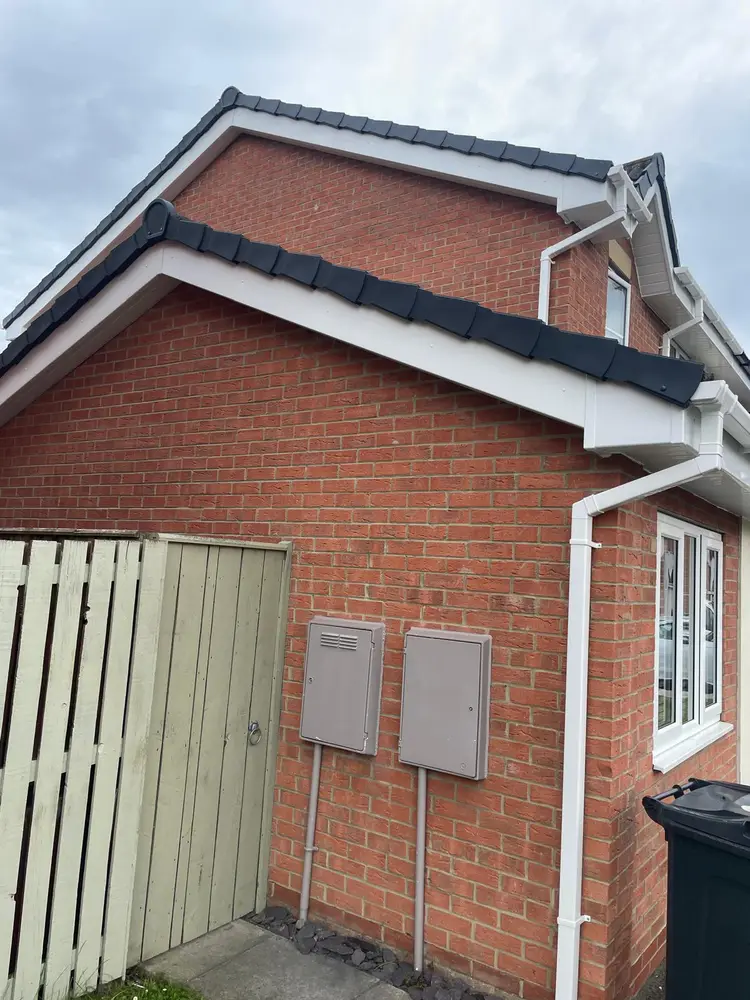
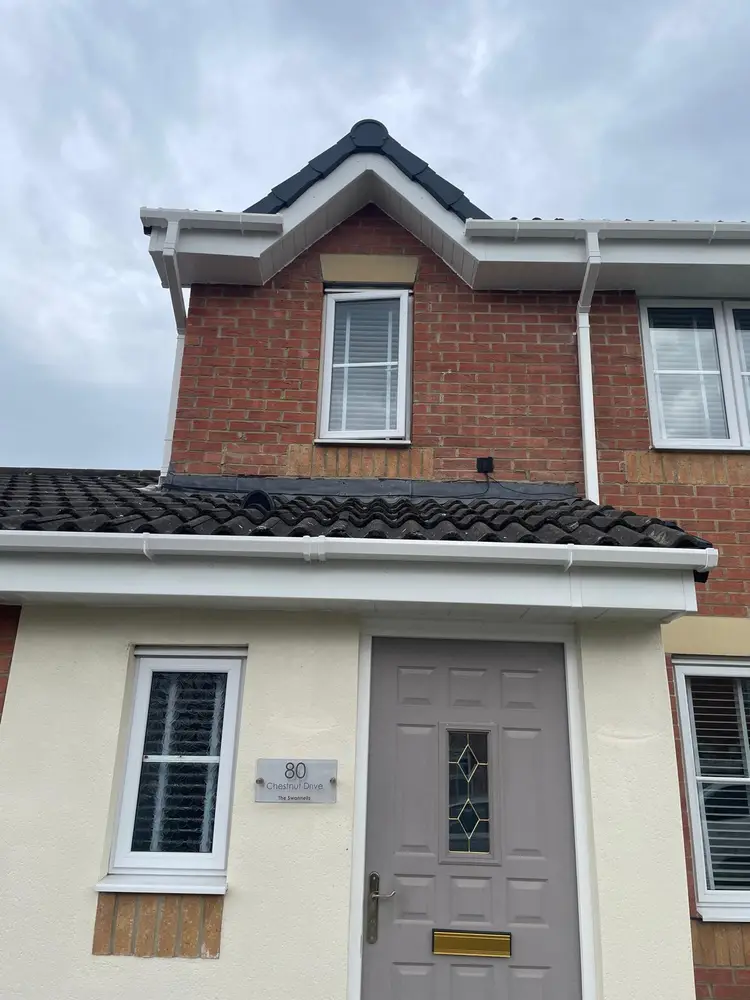
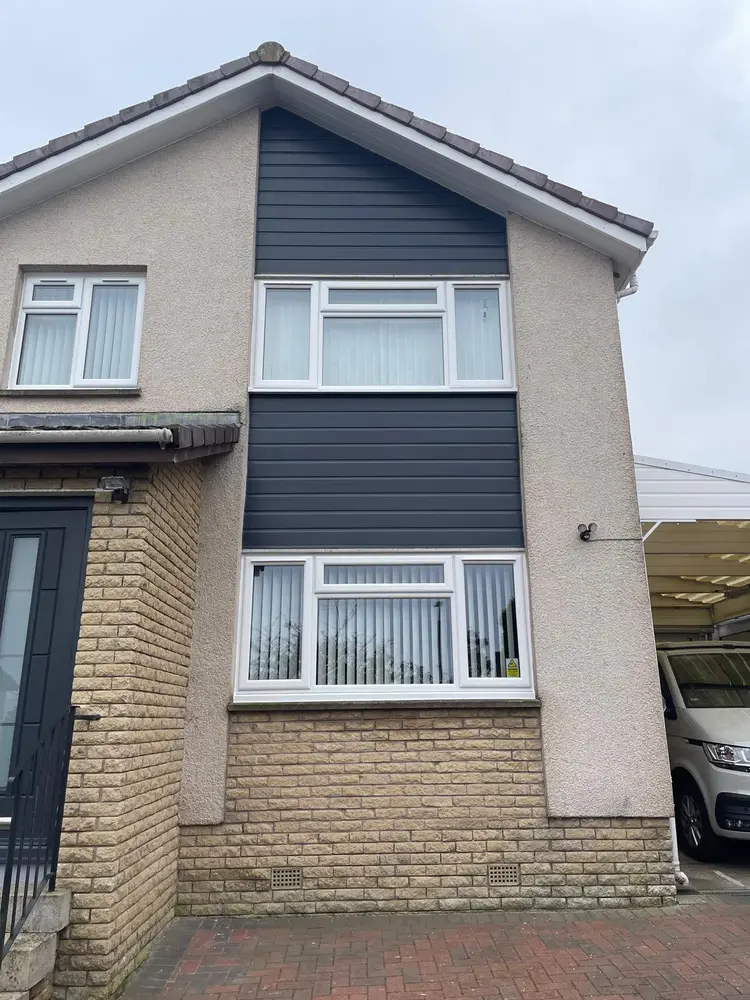
Flat Roofing in Grangemouth
Grangemouth’s exposed position by the Forth and its salty, wind-driven weather are hard on any roof. We install, repair and re-cover flat roofs in EPDM rubber, GRP fibreglass and felt in Grangemouth and the surrounding towns and villages, to a standard that lasts through a Scottish winter. As a qualified, insured, family-run team with 25+ years’ experience, we give clear fixed prices, tidy work and a 10-year workmanship guarantee.
For the full detail on our flat roofing work, see our main flat roofing service.
Flat roof systems we fit
We match the system to the roof, not the other way round.
EPDM Rubber
A single seamless sheet of rubber with no joints to fail — durable, flexible and typically lasting 30+ years. Our most popular flat-roof choice.
GRP Fibreglass
A seamless, hard-wearing fibreglass finish that’s ideal for balconies and walk-on roofs, with a neat, modern look.
Torch-on Felt
A modern high-performance felt in multiple layers — a cost-effective, reliable option done properly with heat-welded seams.
Warm-Deck Insulation
We can upgrade a cold flat roof to a warm-deck build-up, cutting heat loss and condensation on habitable rooms below.
Flat roof problems we fix
Ponding & poor drainage
Standing water that never clears points to falls that are too shallow — we correct the build-up so water runs off.
Splits, blisters & cracks
Old felt goes brittle and splits; we patch where sensible or re-cover for a lasting fix.
Failed seams & upstands
Most flat-roof leaks start at joints, upstands and where the roof meets a wall — exactly where good detailing matters.
Leaking flashings
Failed lead or trims around the edges and abutments let water track in; we re-dress and seal them properly.
Why Grangemouth chooses F J Allan
We’re qualified, insured roofers who fit flat roofs day in, day out — not a general builder having a go. That means the right system, proper falls, heat-welded or bonded seams and clean edge detailing, so your flat roof stays watertight through a Scottish winter. Clear fixed prices, tidy work, and a 10-year workmanship guarantee.
Areas we cover
As well as Grangemouth we cover the surrounding area — nearby: Falkirk · Bo’ness · Polmont · Larbert. See our full flat roofing service, our roof repairs in Grangemouth, or conservatory roof replacement in Grangemouth. Not sure if we reach your street? Give us a call.
More about a flat roof in Grangemouth
Open any heading for the detail: what we do here, local roof types, prices, how to check a roofer, and storm claims.
What a flat roof in Grangemouth costs
A flat roof in Grangemouth is usually a garage, a kitchen extension or a porch, and for those the guide price starts at around £1,200 for a small roof properly stripped, re-boarded where the timber has failed and re-covered with new trims. The two questions that decide the final figure are how big the roof is and which system goes on it. Torch-on felt supplies and fits at roughly £50–£80 per m², EPDM rubber at £70–£110 per m² and GRP fibreglass at £90–£140 per m² across the Falkirk district, with a warm-deck insulation upgrade adding £40–£70 per m².
Grangemouth adds one cost consideration of its own. Steel and plain aluminium edge trims, fixings and outlet grates corrode faster this close to the Forth, so we specify GRP or coated trims and stainless or corrosion-resistant fixings as standard here. The difference on a garage roof is small, a few tens of pounds, but it is the difference between edge trims that are still sound in year fifteen and ones that have rusted through and let the wind under the membrane.
Every quote we issue itemises the strip, deck work, membrane, trims, outlets and disposal separately. If you are comparing quotes, line them up against each other item by item; the cheapest total is often the one that has silently assumed the old deck is fine. For roofs that just need a small fix rather than a re-cover, our roof repairs in Grangemouth start from around £150.
Salt, wind and standing water: what shortens a flat roof here
On paper the three systems last about the same in Grangemouth as anywhere else: torch-on felt 10–15 years (up to 20 for high-performance grades), GRP fibreglass 20–30 years, EPDM rubber 30–50 years. Manufacturer material guarantees typically run 10–15 years on felt and 20 years or more on GRP and EPDM, and our own 10-year workmanship guarantee covers the seams, edges and upstands on every job.
In practice, Grangemouth roofs fail at the edges before they fail in the middle. The town is flat and open to the estuary, so gusts get under any trim that has lifted or any lap that was never bonded, and once the wind has a grip on a felt roof it will peel it back in a single night. Salt in the air speeds up the corrosion of nails, screws and metal trims, which loosens the very fixings that are supposed to hold the edge down. That is why our detailing in Grangemouth concentrates on the perimeter: mechanically fixed trims, fully bonded laps, and a proper drip into the gutter.
The other two enemies are the same as everywhere. Standing water that lingers two days after rain shortens felt life dramatically and finds every weak point, and moss or leaf debris in the outlets is what causes it. Freeze–thaw then splits any felt that has gone brittle. Ten minutes clearing the outlets in October and a walk round the edges in March is worth years of extra life; our post on how long a flat roof lasts explains what else to look for.
Warm deck versus cold deck on a Grangemouth extension, and the warrant question
A good number of Grangemouth homes have a single-storey rear extension added between the 1960s and the 1980s to make a bigger kitchen or a dining room. Almost all were built as cold roofs: joists, a chipboard or ply deck, felt on top, and either no insulation or a thin layer between the joists. Two things follow. The room is cold in winter, and warm air from cooking and washing rises into the roof void, condenses on the underside of the cold deck and slowly rots it. Homeowners often assume the resulting stain is a leak; sometimes it is not.
When we re-cover one of these roofs we recommend converting it to a warm deck. The old covering comes off, a vapour control layer goes down on the deck, rigid insulation boards go on top of that, and the EPDM or GRP is laid over the insulation. The whole structure now stays warm, there is nothing cold for moisture to condense on, and the room below holds its heat. The finished roof sits higher, so we check the sill of any first-floor window above it and the flashing into the house wall as part of the design.
In Scotland, a like-for-like re-cover normally needs no building warrant. Adding insulation to the current standard, changing the structure or building a new extension may bring the work under warrant, and the authority for Grangemouth is Falkirk Council. We tell you where your job sits at the survey and, if there is any doubt, a call to the council’s building standards team gives you a definitive answer before we order materials.
Grangemouth's flat roofs: post-war extensions, garages and porches
Because so much of Grangemouth was rebuilt in the twentieth century, its flat roofs follow a pattern. The council housing built between the 1930s and 1960s to the west and south of the town centre has been extended over the decades, and those single-storey extensions, along with the detached and lean-to garages beside them, are overwhelmingly felt roofs that are now on their second or third life. The private estates built from the 1970s onwards added flat-roofed porches and integral garages, often with a felt covering that the developer never expected to last beyond twenty years. On the newer developments towards Polmont the flat roofs tend to be small: porches, bay tops and the occasional single-storey link.
Each brings its own detail work. Extension roofs meet the house wall along one long edge, and that abutment flashing is where most of the leaks we trace in Grangemouth begin. Garage roofs are often long and narrow with a single outlet at one end, so the falls matter and a sagging deck will pond. Porch roofs are tiny but sit above the front door, so a failure is noticed immediately and the fix has to look neat. Whatever the roof, water that has come through it usually ends up in the gutter and fascia below, which is why we look at the guttering in Grangemouth at the same visit.
Fix it or replace it? How we decide on site
Our test is simple. A repair makes sense when there is one identifiable fault, the deck is firm and dry, and the roof clears water within a day or two of rain. A re-cover makes sense when the covering has already been patched more than once, when it is brittle enough to crack under a thumb, when the deck moves or feels spongy underfoot, or when water sits in the same place after every shower. A Grangemouth felt roof that has passed fifteen years and started leaking in two places is nearly always in the second group.
The survey itself runs in a fixed order so that nothing is missed: outlets and gutters, then falls and staining, then every seam and lap, then the upstands and abutment flashings, then the edge trims and their fixings, then the deck walked corner to corner, and finally the ceiling and walls inside for the shape of any staining. We take photographs as we go and give you the findings in writing along with a fixed price for whichever route we recommend. If a repair will genuinely see the roof through another few winters, that is what we will quote for. If it will not, we will say so plainly, because a patch that fails in December costs you twice.
After a storm off the Forth: insurance and temporary cover
When a gale lifts the edge of a garage or extension roof in Grangemouth, the first job is to stop the damage spreading. Do not climb up in the wind. Move anything valuable out from under the roof, catch water where you can, and photograph the damage from ground level with the date visible on your phone. Then call us. During our hours, Monday to Saturday 09:00–17:00, we prioritise storm damage, and the first visit is about making the roof watertight with a temporary cover so the deck and ceiling do not get worse while the permanent repair is arranged. Our step-by-step guide to storm damage covers what to do in the first hour.
Storm damage to a flat roof is normally covered by buildings insurance, less your excess, because it is sudden and accidental. What is not covered is a roof that was already at the end of its life, and insurers will look for evidence of that, so an honest written survey from us matters more than a hopeful one. Keep every receipt including the temporary cover, and check whether your policy asks you to declare a flat roof over a certain proportion of the house. Where the storm has also shifted tiles or ridge on the main roof, our storm damage roof repair service in Grangemouth deals with both under one claim.
Flat Roofing FAQs — Grangemouth
Do you provide flat roofing in Grangemouth?
Yes — we cover Grangemouth and the surrounding towns and villages. Call for a free, no-obligation quote and a clear fixed price.
How long does a flat roof last?
A modern EPDM rubber or GRP fibreglass flat roof, installed properly, typically lasts 25–30+ years — far longer than old-style felt.
EPDM vs felt vs fibreglass — which is best?
EPDM rubber is our go-to for most roofs (seamless, long-lasting, great value); GRP fibreglass suits walk-on areas and balconies; modern felt is a solid budget option. We’ll advise on the best fit.
Can you repair my flat roof or does it need replacing?
If the deck is sound and the damage is localised we’ll repair it. If the covering is at the end of its life we’ll be honest and recommend a re-cover.
Why does my flat roof keep leaking?
Most flat-roof leaks come from failed seams, upstands or flashings rather than the middle of the roof. We trace the true source and detail it properly.
How much should I budget for a flat roof repair in Grangemouth?
Re-fixing a lifted edge or sealing a split seam typically costs £150–£450. If the deck under the fault has been wet for a while the repair will not last, and we will show you why on the day. A full garage re-cover starts at around £1,200 in felt or £1,500 in EPDM.
A gale has lifted the felt on my garage. Is that an insurance claim?
Normally yes. Storm damage is sudden and accidental, so buildings insurance covers it less your excess. Photograph it from the ground, keep receipts for any temporary cover, and ask us for a written survey. If the felt was already at the end of its life the insurer may argue wear and tear, so honesty in the report helps you.
Can you lay EPDM over the old felt rather than stripping it off?
Only where the felt is a single, dry, firmly bonded layer on a deck that does not move, and where the edge heights allow. Grangemouth roofs have usually been patched more than once, so we normally strip to the deck. Overlaying a wet roof simply hides the rot underneath.
How long does a garage or extension roof take to re-cover?
A single garage is one to two days. A 25 m² extension is two to three days, or three to four if we are converting it to a warm deck. EPDM adhesive and GRP resin need dry weather above about 5°C, so in winter we may book a window and move it if the forecast turns.
Is a building warrant needed from Falkirk Council to re-cover a flat roof in Grangemouth?
Not for a straightforward like-for-like re-cover. A warrant may be needed if you alter the structure, add insulation to the current standard or build a new extension. We tell you at the survey which side of the line your job falls on, and where it is close, Falkirk Council's building standards team will confirm it before anything is ordered.
Does the salt air in Grangemouth damage a flat roof?
It does not harm the membrane itself, but it speeds up corrosion of metal trims, nails, screws and outlet grates. Once a trim rusts through the wind can get under the edge. We fit GRP or coated trims and corrosion-resistant fixings in Grangemouth as standard for that reason.
Can I walk on my extension roof to clear the gutters?
Light, occasional foot traffic is fine on GRP and acceptable on EPDM if you stay off the edges and avoid frosty or very hot days. Old felt is brittle and cracks underfoot, so use a ladder and a gutter tool from below instead. If the roof needs regular access we can fit walkway pads.