
Slate Roofing in Cumbernauld
We install, renew and repair natural and fibre-cement slate roofs for homes across Cumbernauld and the wider area — quality work from qualified, local roofers.
Get my free quote
Leave three details and we’ll ring you back.
Free, no-obligation survey · Written quote · 10-year guarantee
Open Mon–Sat 9am–5pm
10-Year Guarantee
On all our workmanship
25+ Years
Experience in the trade
Family-Run
A local business you can trust
Slate roof costs in Cumbernauld — guide prices for village and period homes
Most slate roofs around Cumbernauld are cottage or two-storey village houses, so these ranges are pitched at that size. Farmhouses and villas with several stacks sit at the upper end.
| Job | Guide price | What affects it |
|---|---|---|
| Refix wind-lifted slates (up to 5) | £200–£350 | Roof height and pitch; steep cottage roofs need a tower or scaffold |
| Replace 10–20 slates with matching reclaimed Scotch slate | £350–£750 | Slate sizes needed; big eaves slates cost more |
| Re-flash a gable chimney stack in lead | £300–£800 | Stack condition; pointing and flaunching done together |
| Renew a lead valley between roof and wing | £600–£1,400 | Length, slates re-laid on either side |
| Full re-slate, single-storey cottage | £6,000–£9,000 | Area, re-use of your slates, sarking repairs |
| Full re-slate, two-storey village house or farmhouse | £8,000–£15,000 | Area, stacks, dormers, slate choice |
| New natural slate supplied and fitted, per m² | Spanish £95–£130 · Brazilian £90–£125 · Reclaimed Scotch £110–£160 · Welsh £140–£180 | Conservation area usually expects a close match |
| Scaffolding, cottage or two-storey | £600–£1,500 | Access on narrow village lanes |
Guide prices only. Every roof is measured and priced individually, and you receive a fixed written price after a free, no-obligation survey, with our 10-year workmanship guarantee.
Show my Cumbernauld guide price
Pick the job and the guide range from the table above appears straight away. Leave your details and we’ll ring to book the free survey, then you get a fixed written quote — the guide range is a starting point, not the final price.
What our customers say


Recent F J Allan jobs across Falkirk and Central Scotland
Real jobs by our own team. Ask to see more from your area when we survey.
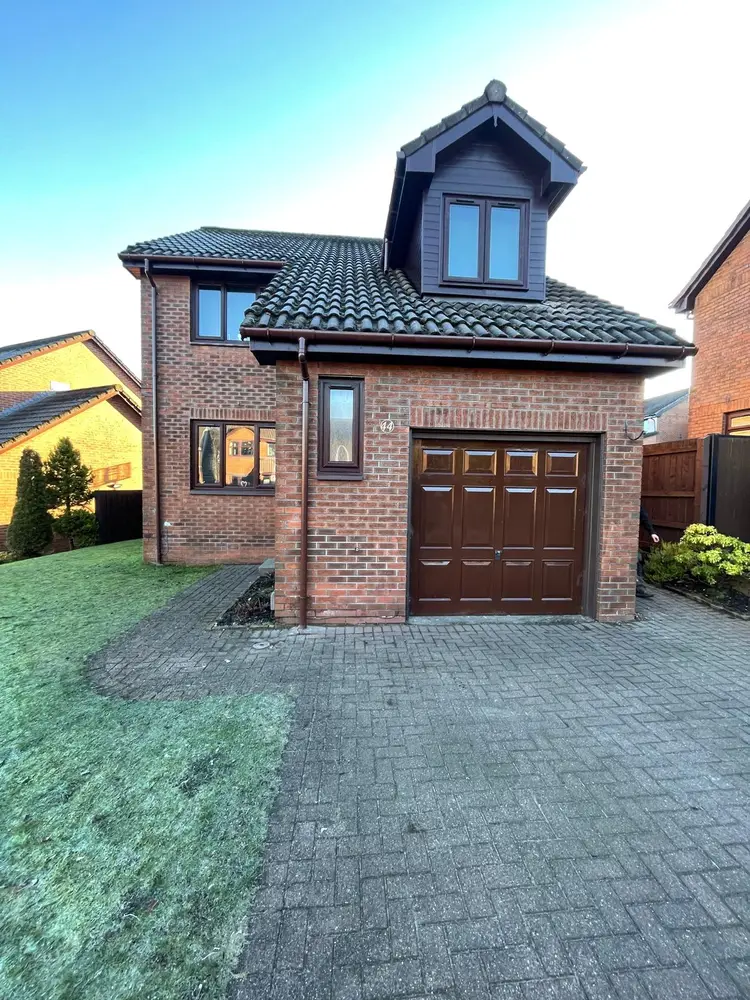
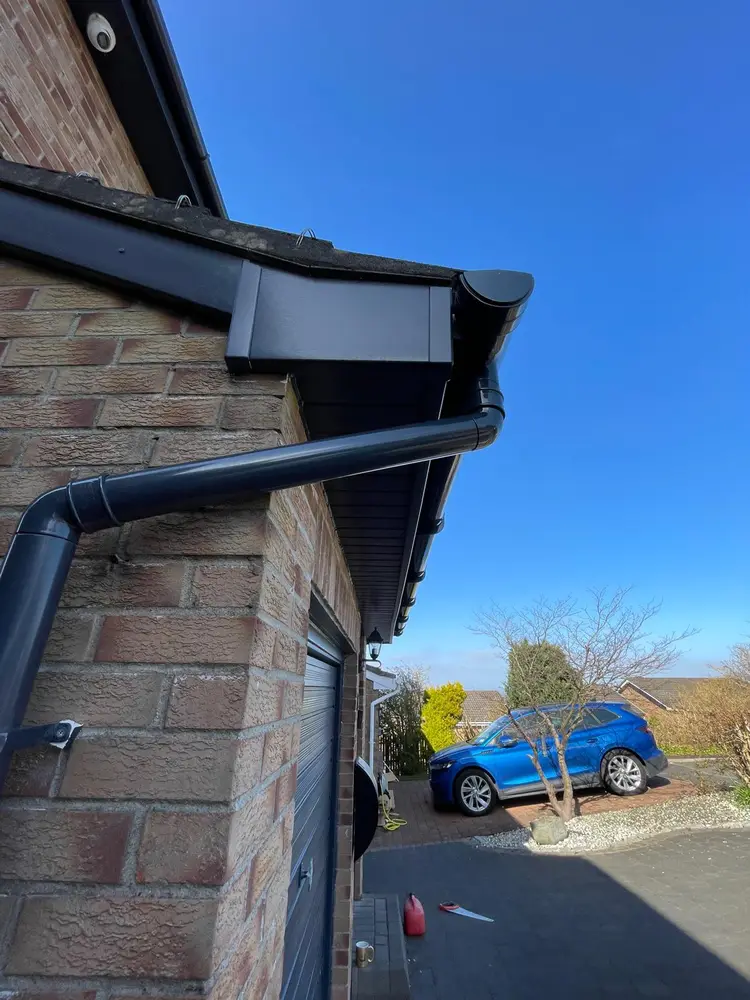
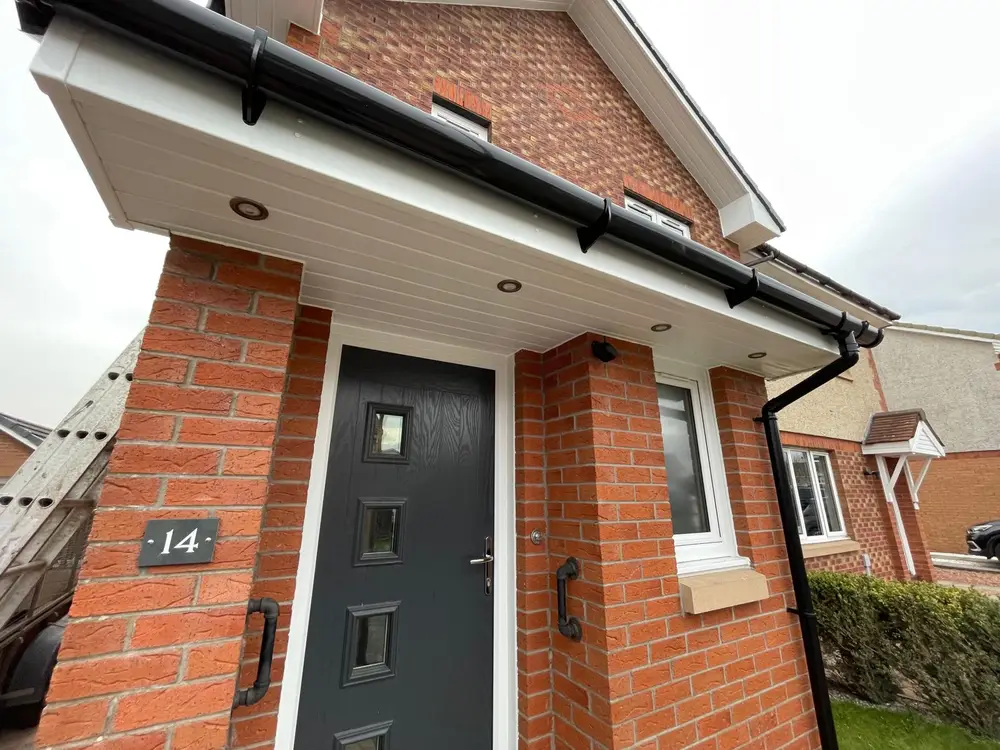
Slate Roofing in Cumbernauld
Cumbernauld has a huge number of new-town-era homes with flat and low-pitch roofs that need specialist attention. We install, renew and repair natural and fibre-cement slate roofs in Cumbernauld and the surrounding towns and villages, to a standard that lasts through a Scottish winter. As a qualified, insured, family-run team with 25+ years’ experience, we give clear fixed prices, tidy work and a 10-year workmanship guarantee.
For the full detail on our slate roofing work, see our main slate roofing service.
Our slate roofing services
New slate roofs
Full natural or fibre-cement slate roofs, laid to last, with proper underlay, battens and ventilation.
Re-slating & roof renewal
When a slate roof reaches the end of its life we strip and re-slate it — often re-using sound slates where we can.
Slate repairs
Slipped, cracked and missing slates refixed or replaced, with matching slates sourced wherever possible.
Ridge, hips & leadwork
The details that keep a slate roof watertight — re-bedded ridges, hips and precision lead flashing.
Common slate roof problems
Slipped & broken slates
The classic cause of leaks — individual slates that have slipped or cracked, letting water past the underlay.
Nail sickness
When the old fixings rust through, slates start slipping all over the roof — usually a sign it’s time to re-slate.
Failed flashings & valleys
Lead around chimneys and in valleys is a common leak point on older slate roofs.
Sagging & damaged battens
Rotten battens or sarking under the slates need addressing during a renewal for a lasting result.
Why Cumbernauld chooses F J Allan
Slate is a craft, and we treat it like one — the right slate, the right fixings, proper leadwork and ventilation. As qualified, insured roofers with 25+ years’ experience we’ll match new work to your existing roof and never sell you a full re-slate when a repair will do. 10-year workmanship guarantee, tidy work, honest advice.
Areas we cover
As well as Cumbernauld we cover the surrounding area — nearby: Kilsyth · Kirkintilloch · Airdrie. See our full slate roofing service, our roof repairs in Cumbernauld, or conservatory roof replacement in Cumbernauld. Not sure if we reach your street? Give us a call.
More about a slate roof in Cumbernauld
Open any heading for the detail: what we do here, local roof types, prices, how to check a roofer, and storm claims.
Where you find a slate roof in Cumbernauld
Cumbernauld is famous for its 1960s new town, and the new town was built without a slate in it: concrete tile on the pitched roofs, felt on the flat ones. So a slate roof in Cumbernauld almost always means one of the older places the new town grew up around. Cumbernauld Village, the original settlement, has been a conservation area since 1993, its Main Street, The Wynd and the lanes off them lined with stone cottages and houses under Scottish slate. Condorrat’s old core, the farmhouses and steadings on the edge of town, the older streets of Kilsyth and Croy, and a scattering of Victorian villas make up the rest.
These roofs are small by villa standards, often steep, and frequently 150 to 250 years old. Many have been repaired several times over, not always well, and we regularly find three or four different slates on one roof, a galvanised nail here and a dab of mortar there. Getting them right is satisfying work. This page explains what it costs, why exposure on the hill matters, how the Scottish method of slating works, what the conservation area allows, and how we decide between patching and re-slating. If your house is a new-town tile or flat roof, tiled roofing in Cumbernauld or Cumbernauld roof repairs is the right page.
Wind on the hill: exposure and slate
Cumbernauld stands on high ground with open country to the north and west, and wind is what every roof here is tested by. On a slate roof the risk is uplift: gusts get under the tail of a slate that is sitting proud, has a short head lap or has lost its nail, and once one goes the ones above it are exposed. Traditional Scottish slating answers that with heavy slates at the eaves, tight diminishing courses and a full sarking deck underneath, and the village roofs that have stood for two centuries prove it works.
What undoes it is careless repair. Slates hooked back with a bent nail, an oversized slate forced into a small course, or a mortar bedding that traps water all give the wind a grip. When we refix or re-lay slates on an exposed roof we keep the lap right, use copper or stainless nails and proper lead tingles, and make sure nothing sits proud of its neighbours. It is not complicated; it just has to be done every time.
Sarking, diminishing courses and nail sickness explained
Look up in the loft of a village cottage and you will see boards rather than slates. That deck of sarking is the Scottish way: slates were nailed once, through the head, straight into the boards, where an English roof hangs its slates on battens with two nails each. The boards brace the roof against exactly the wind Cumbernauld gets, and they are the reason many of these small roofs are still square after 200 years.
The slates were sorted by size on the ground and laid in diminishing courses, big at the bottom, smaller towards the ridge. Most of the slate on Cumbernauld’s older roofs is Scottish, from Ballachulish, the Slate Islands or the Highland Line quarries, and none of those has produced slate since the last Ballachulish quarry shut in 1955. Every matching slate we fit is therefore a reclaimed one, and part of the skill is grading it to your courses.
Nail sickness is the ageing of the single iron nail holding each slate. Once it rusts through, the slate slides. The tell-tale is slates slipping in different places on the same roof and a growing collection of lead tingles from past repairs. When that is widespread the slate needs lifting and re-fixing, and it is nearly always still good enough to go back on.
Cumbernauld Village conservation area: what you can change
Inside the conservation area, North Lanarkshire Council’s appraisal and management plan is aimed at keeping exactly the stone-and-slate character you can see on Main Street. In practical terms: repairing or re-slating like for like in natural slate needs no permission; swapping slate for concrete tile, fibre-cement slate or anything else that changes the look of the roof is likely to need planning permission, and on a listed building will need listed building consent. Rooflights, new dormers and removing a chimney can also need consent. A building warrant is not normally required to re-cover a roof in the same material, but it can be if you change to a heavier one or alter the structure. We check this with the council before we quote and tell you plainly which rules apply to your house. Outside the conservation area, in Condorrat or on a farmhouse, you have more freedom, but on a stone building slate still looks and performs best and is what a future buyer will expect to see.
Repair or re-slate a cottage roof, and what each costs
Small roofs make the decision cleaner. On a cottage, a repair is a few hundred pounds and a full re-slate is often in the £6,000 to £9,000 range rather than the five-figure sums a villa attracts, so patching year after year stops making sense sooner. We look at four things: how many slates have moved, whether the slate is still hard or has started to flake, the condition of the sarking from inside, and the lead and ridge. Fewer than one slate in ten moved and dry boards means repair. Tingles every few courses, rust marks under the slates and a soft board or two means strip, repair the sarking, membrane, and re-lay with copper nails, re-using your slates and topping up with matching reclaimed stock. Good Scotch slate lasts well over 100 years, so a re-slate done now is the last one the house will need in your lifetime. The ranges in our guide to new roof costs in Scotland apply here too, at the smaller end.
Chimneys, valleys and lead on village roofs
Village cottages usually have a stack at each gable and, on the longer buildings, a valley or two where a later wing meets the original. Stepped flashings, back gutters and valley linings in lead are where these roofs actually leak, and on a roof that has been repaired piecemeal we often find cement fillets or sealant where lead should be. We put lead back, dressed by hand, and re-point or re-flaunch the stacks while the scaffold is up. Details are on our Cumbernauld leadwork page; for the wider picture on Scottish slate see the Falkirk slate roofing page.
Slate Roofing FAQs — Cumbernauld
Do you provide slate roofing in Cumbernauld?
Yes — we cover Cumbernauld and the surrounding towns and villages. Call for a free, no-obligation quote and a clear fixed price.
How long does a slate roof last?
A well-laid natural slate roof can last 80–100 years or more; fibre-cement slates typically 30–50. The fixings and flashings usually need attention before the slate itself.
Can you match my existing slates?
Usually, yes — we source matching or close-match slates and re-use sound originals where we can, so repairs blend in.
Natural or fibre-cement slate — which should I choose?
Natural slate looks best and lasts longest; fibre-cement is lighter and lower cost. We’ll advise based on your home and budget.
Should I repair or re-slate my roof?
If the slates are sound and it’s just fixings or flashings, a repair is fine. Widespread nail sickness usually means a re-slate is the better long-term value.
How much is slate roofing per square metre in Cumbernauld?
Budget £100–£250 per square metre for a complete re-slate depending on the slate, with Spanish natural slate around £95–£130 per m² supplied and fitted, reclaimed Scotch slate £110–£160 and Welsh slate £140–£180, plus scaffold. Because village roofs are small, the total is usually more useful than the rate: a single-storey cottage typically lands at £6,000–£9,000. We confirm a fixed price after a free survey.
Can you match old slates on a Cumbernauld Village cottage?
Yes. These roofs carry Scottish slate, and although the quarries closed by 1955 there is a steady supply of reclaimed Scotch slate from roofs being stripped across the central belt. We grade it by size and thickness to sit in your courses so a repair is invisible from the street. On a re-slate your own sound slates go back first and reclaimed slate fills the gaps.
How long does re-slating a cottage take?
A single-storey cottage is usually done in a week, a two-storey village house or farmhouse in one to two weeks, weather permitting. Refixing a few wind-lifted slates takes an hour or two. You stay in the house throughout; the roof is left watertight at the end of each day and the scaffold is kept clear of the lane for neighbours.
Is scaffolding needed on a small cottage roof?
For a few slipped slates on a low roof we can often work safely from a ladder or a mobile tower, which keeps the repair near the £200 mark. For anything at the ridge or a chimney, and for every re-slate, we put up a scaffold, itemised in the quote. Narrow village lanes sometimes mean a smaller, staged scaffold, and we plan that with you before the day.
Do I need permission to work on a roof in the conservation area?
Not for like-for-like slate repair or re-slating, which is maintenance. You are likely to need planning permission from North Lanarkshire Council if you change the covering to tile or fibre-cement, add rooflights or dormers, or remove a chimney, and a listed building needs listed building consent for those. A building warrant is not usually needed to re-cover in the same material. We check what applies before quoting.
Will you reuse the slates already on the roof?
Wherever they are sound. Old Scottish slate is thick and hard, and on most cottage roofs 60% to 80% of it can be lifted, sorted, re-holed and re-laid with new copper nails. Slates that have gone soft, split around the nail hole or flaked into layers are replaced with matching reclaimed stock. It keeps the roof looking right and costs less than buying a whole new covering.
Are wind-damaged slates covered by insurance?
Slates lifted by a storm are normally covered under the storm peril of a buildings policy, less your excess. Slates that slid because the nails had rusted through are classed as wear and tear and are not. Take photographs before anything is moved, ring us to make the roof safe during our Monday to Saturday hours, and we will give you a written report and fixed quote that says honestly which it was.