
Roof Repairs in Cumbernauld
Fast, reliable roof repairs in Cumbernauld — from a single slipped tile to storm damage and stubborn leaks, fixed properly by qualified roofers.
Get my free quote
Leave three details and we’ll ring you back.
Free, no-obligation survey · Written quote · 10-year guarantee
Open Mon–Sat 9am–5pm
10-Year Guarantee
On all our workmanship
25+ Years
Experience in the trade
Family-Run
A local business you can trust
Roof Repairs in Cumbernauld
Cumbernauld has a huge number of homes with flat and low-pitch roofs from the new-town era, and they’re exactly the roofs that start leaking as they age. F J Allan & Sons trace and fix roof leaks and damage properly the first time in Cumbernauld and the surrounding area. As qualified, insured roofers we handle everything from a single slipped slate to full storm-damage repairs — and we’ll always tell you honestly whether a repair will do the job or whether it’s time to think about a new roof.
Looking for the full detail on how we work and every problem we fix? See our main roof repairs service.
Roof leaking in Cumbernauld right now?
We offer fast call-outs across Cumbernauld for urgent leaks and storm damage — a temporary make-safe today and a permanent fix booked in.
Roof problems we fix
Whatever’s letting the water in, we’ve repaired it hundreds of times.
Slipped, cracked & broken tiles
We refit or replace slipped, cracked or missing tiles and slates and check the area for hidden damage.
Leaking lead flashing
Failed flashing around chimneys, dormers and roof junctions re-dressed with proper leadwork that lasts.
Cracked & loose ridge tiles
Ridge and hip tiles re-bedded and re-pointed where the mortar has cracked and washed out.
Flat roof leaks
Splits, failed joints and worn edges on felt, EPDM or GRP flat roofs patched or re-covered.
Blocked & failed valleys
Valleys cleared and re-lined so water runs to the gutter, not into the roof.
Chimney leaks & repairs
Cracked flaunching, spalled brick and failed pointing repaired, re-pointed and re-flashed.
Storm & wind damage
Lifted tiles and torn flashing made safe fast, then fully repaired — often insurance-friendly.
Leak tracing & damp
We find the true source of a leak rather than guessing, so it’s fixed once, not patched repeatedly.
What roof repairs cost in Cumbernauld — pitched and flat
Because Cumbernauld has both flat and pitched roofs in numbers, this table covers both. Flat-roof figures assume the surrounding covering is sound enough to patch; if it is not, we will say so rather than sell you a patch.
| Repair | Guide price | What affects it |
|---|---|---|
| Patch a split or blister on a felt, EPDM or GRP flat roof | £150–£450 | Size of the damage, condition of the rest of the covering, ponding |
| Renew a flat-roof upstand or edge trim where it meets a wall | £200–£500 | Length, whether the wall flashing must be redone as well |
| Replace or refix 1–5 cracked or slipped tiles | £150–£350 | Tile profile availability, ladder or tower access |
| Ridge tiles re-bedded and repointed (part run) | £200–£450 | Length; wind exposure may make a dry-ridge system the better choice |
| Lead flashing renewed at chimney or abutment | £250–£600 | Length, lead code, stack height |
| Chimney flaunching and repointing | £300–£500 | Stack size, pots, whether the stack is redundant and better removed |
| Gutter or flat-roof outlet cleared and resealed | £80–£200 | Internal or external gutter, height, how many outlets |
| Storm make-safe and temporary sheeting | from £150 | Area exposed, wind on the day, whether the insurer wants to inspect first |
Guide prices only, from 2025/26 UK cost guides and adjusted for what we find on Cumbernauld roofs. They are not a quotation. Your fixed written price comes after a free, no-obligation survey and is the price you pay.
Show my Cumbernauld guide price
Pick the job and the guide range from the table above appears straight away. Leave your details and we’ll ring to book the free survey, then you get a fixed written quote — the guide range is a starting point, not the final price.
What our customers say


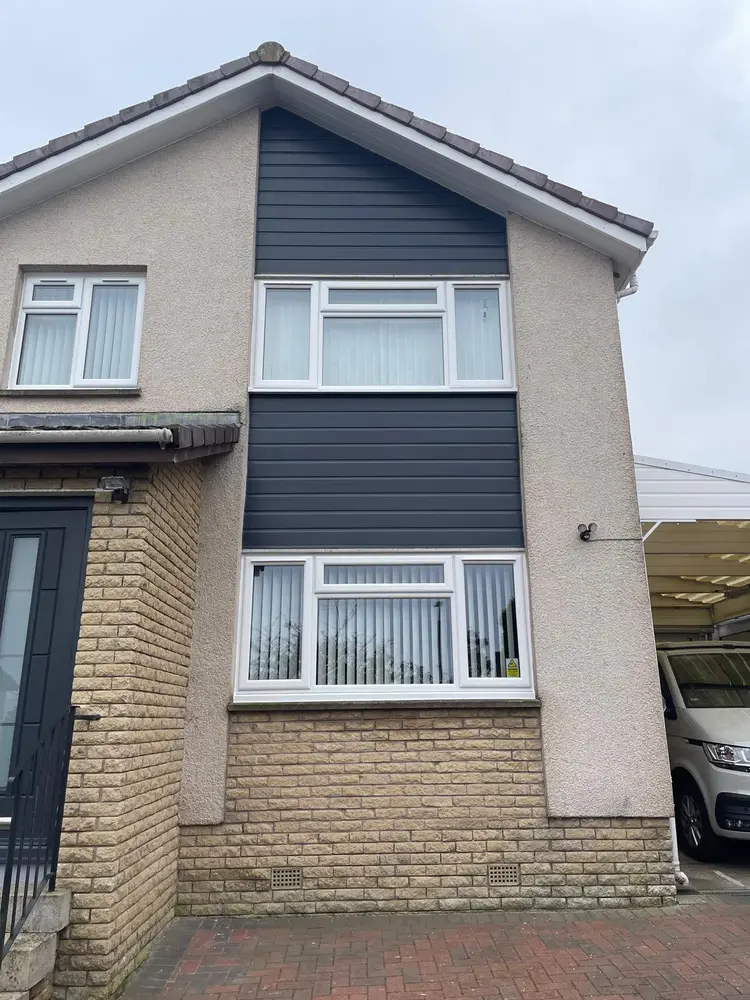
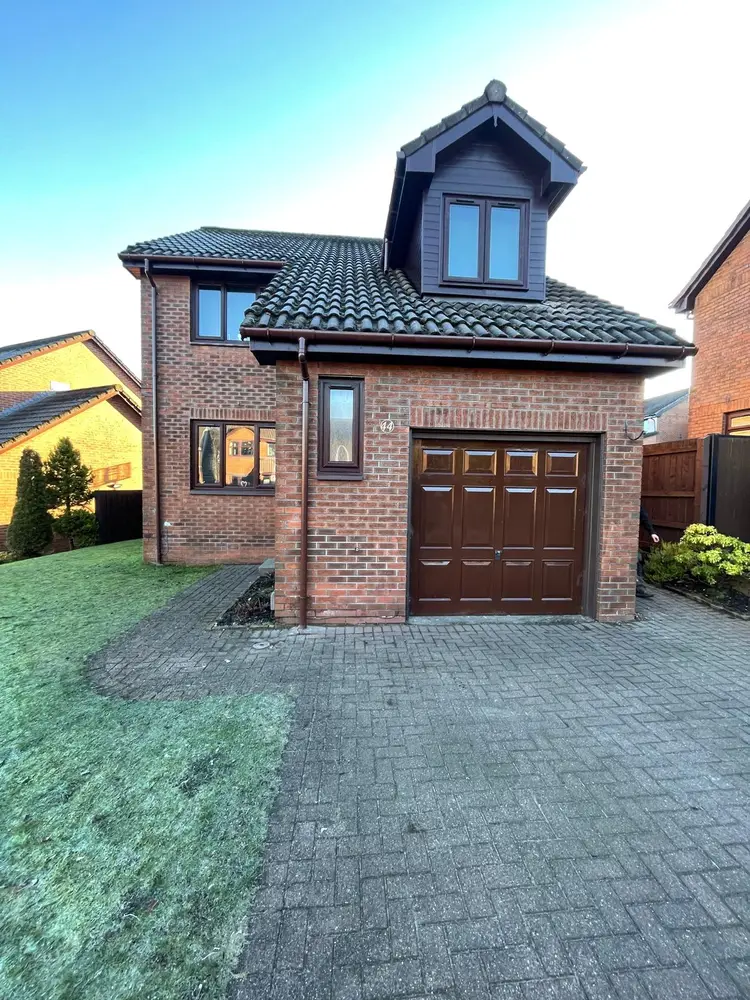
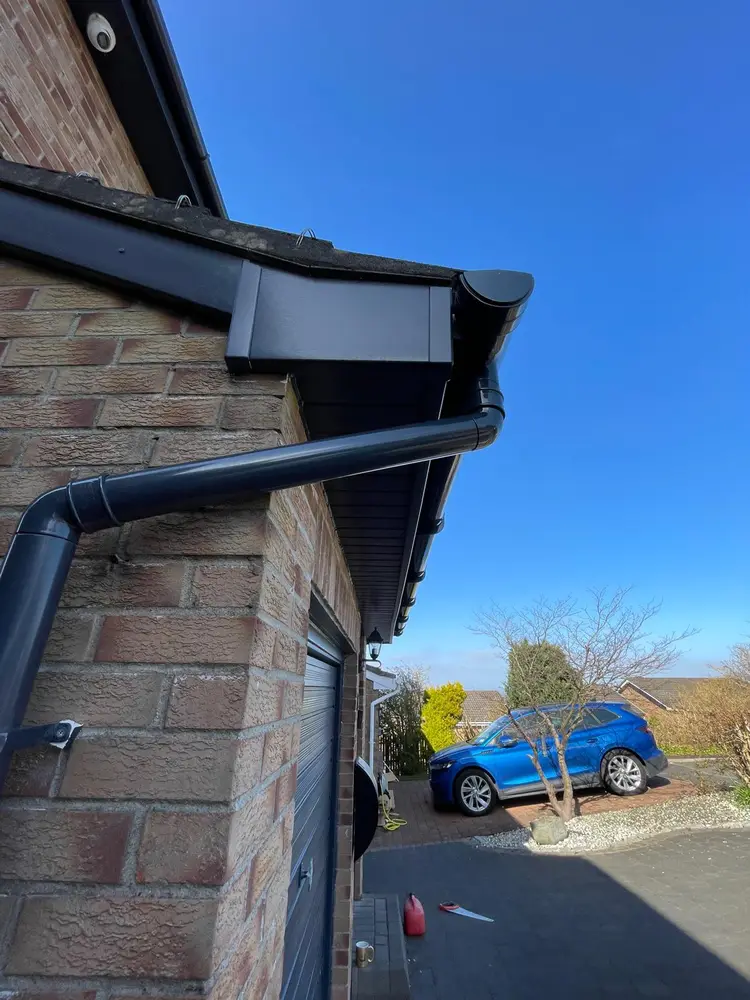
Recent F J Allan jobs across Falkirk and Central Scotland
Real jobs by our own team. Ask to see more from your area when we survey.
Why Cumbernauld chooses F J Allan
We’re qualified, insured roofers — not a handyman with a ladder. Proper leadwork, the right materials, and repairs that last through a Scottish winter. Clear fixed prices, no call-out gimmicks, tidy work, and a 10-year workmanship guarantee. 25+ years keeping Cumbernauld and Forth Valley roofs weathertight.
Areas we cover
As well as Cumbernauld we cover the surrounding towns and villages — nearby: Kilsyth · Kirkintilloch · Airdrie. See our full roof repairs service or our conservatory roof replacement in Cumbernauld. Not sure if we reach your street? Give us a call.
On the roofs of Cumbernauld & nearby
Cumbernauld’s roofs are unlike anywhere else we cover. As a post-war new town, whole neighbourhoods were built in the 1960s with flat or near-flat roofs: Kildrum was the first area completed, and the hillside housing at Seafar and the terraces of Carbrain still carry the low, modernist rooflines they were designed with. Those original coverings are decades past their intended life, so we see a steady run of ponding, blistered felt and leaking joints. Cumbernauld Village and Condorrat are older and traditional, while newer estates like Craigmarloch and Westerwood have conventional pitched, tiled roofs.
The town also sits on a hilltop, open to the wind, which drives rain into any weak seam. On flat roofs we will tell you honestly whether a patch will hold or whether it is time to re-cover in modern EPDM rubber or GRP fibreglass, which last far longer than the original felt.
If you own one of Cumbernauld’s flat-roofed houses, the honest position is this: 1960s felt was never meant to last sixty years. Small blisters and soft spots are the early warnings. Caught early, a repair or partial re-cover is straightforward; left alone, water tracks along the deck and the damage spreads. We repair felt, EPDM and GRP flat roofs across Kildrum, Seafar and Carbrain, and give you a clear fixed price either way.
More about roof repairs in Cumbernauld
Open any heading for the detail: what we do here, local roof types, prices, how to check a roofer, and storm claims.
Roofers in Cumbernauld — everything we do
Roof repair in Cumbernauld covers more ground than in most towns, because Cumbernauld has more kinds of roof: 1960s flat roofs in Kildrum, Seafar and Carbrain, traditional pitches in the Village and Condorrat, and modern tiled estates at Craigmarloch and Westerwood. We repair all of them, and because we are full roofers rather than a flat-roof specialist or a tile-only firm, one visit can cover whatever combination your house has. Each service below has its own Cumbernauld page.
- Flat roofing in Cumbernauld — felt, EPDM rubber and GRP fibreglass on the town’s original flat-roofed homes and later extensions.
- Tiled roofing in Cumbernauld — concrete-tiled pitched roofs repaired or re-tiled.
- Slate roofing in Cumbernauld — the older Village and Condorrat roofs, matched like for like.
- Chimney repairs in Cumbernauld — stacks repointed, re-flaunched or taken down where redundant.
- Leadwork in Cumbernauld — flashings and upstands where flat roofs meet walls, the commonest leak point in town.
- Guttering in Cumbernauld — including the internal and parapet gutters on flat-roofed blocks.
- Fascias and soffits in Cumbernauld — roofline renewed, with care taken over suspected asbestos-cement boards.
- Dry ridge and dry verge in Cumbernauld — wind-rated fixings for a hilltop town.
- Storm damage roof repair in Cumbernauld — make-safe, photographs and insurer paperwork.
- Damp and water ingress in Cumbernauld — tracking water that has travelled along a flat deck before it shows.
- Roof cleaning in Cumbernauld — moss and debris cleared so flat roofs drain and outlets stay open.
- Rendering and roughcasting in Cumbernauld — the roughcast that clads so many of the town’s houses.
- Velux and skylight installation in Cumbernauld — roof windows and flat-roof lights.
- Conservatory roof replacement in Cumbernauld — insulated tiled roofs built for wind.
All of it carries a 10-year workmanship guarantee; the gallery shows recent jobs.
Roofing cold-callers in Cumbernauld: a checklist before you say yes
Flat-roofed streets attract a particular kind of caller: the one who offers to seal your roof with a liquid coating for a few hundred pounds, cash, today. Some coatings have their place; painted over saturated felt they achieve nothing except hiding the problem until the coating fails. Before you agree to any roofing work from someone you did not call, run these checks.
- Companies House. Search the name; a genuine limited company shows its number, directors and accounts. Ask a sole trader for a permanent address and how long they have traded.
- Insurance. Ask to see public liability cover in the same name as the quote, and in date.
- A fixed written price. Scope, product names, price, guarantee, payment terms. For a flat roof, it should say which system is being used and how the edges and upstands are being finished.
- No cash up front. Payment when finished, after you have seen photographs.
- Reviews you can check. Google, MyBuilder and Facebook histories that stretch back years and mention North Lanarkshire.
- Fourteen days. A contract made at your door can be cancelled within 14 days under the Consumer Contracts Regulations 2013 unless you asked in writing for urgent work immediately.
Questions to ask a roofer covers what to ask once you have a shortlist.
Storm claims for Cumbernauld roofs: felt, tiles and what insurers accept
Cumbernauld’s hilltop position means storms arrive with full force, and the insurance question is complicated by the town’s flat roofs. A ridge tile that leaves a pitched roof in a gale is an easy claim. A felt roof that starts leaking after the same gale is a harder one, because insurers will ask whether the wind tore sound felt or simply finished off a covering that was already perished, and only the first is a storm claim. The three-part test used by insurers and the Financial Ombudsman is whether a storm occurred, whether the damage is what storms do, and whether the storm rather than age was the main cause.
Evidence decides it, so we collect it. After making the roof safe, which your policy requires and normally pays for, we give you dated photographs from roof level, a written note of the cause and the storm date to match against Met Office records, a quote that separates storm damage from wear so a fair claim is not dragged down by an unrelated fault, and an invoice for the emergency work. On a flat roof we photograph the tear, the exposed deck and the condition of the surrounding felt, because that is precisely what the adjuster will ask about. You can usually use your own roofer rather than the insurer’s; confirm first. Start with what to do after storm damage.
Repairing or replacing a Cumbernauld roof: an honest timeline
How long a repair lasts depends on what it is attached to. A patch on a felt roof that is otherwise sound will see out the felt; a patch on 1960s felt that is blistering everywhere buys you a year. The working lives are blunt: built-up felt 10 to 20 years, EPDM rubber 30 to 50, GRP fibreglass 25 to 30 or more, concrete tiles 40 to 60, ridge mortar 15 to 25. If your flat roof is original or a 1980s re-felt, a repair is a stopgap and we will say so; a re-cover in EPDM or GRP with proper upstands and outlets is the fix that ends the cycle.
Two Cumbernauld-specific points. Some 1960s soffit boards and garage roof sheets are asbestos cement, so we do not cut or break suspect material without testing, and we tell you if we find it. And because North Lanarkshire Council still owns many homes on the older estates, ex-council houses often have a maintenance history you can ask about. Like-for-like repairs and same-material re-covers need no building warrant; switching a flat roof to a pitched one, or changing structure, does, and the council’s building standards team will confirm. For the lifespan detail, see how long a flat roof lasts.
Terraces, ex-council rows and shared roofs in Cumbernauld
A lot of Cumbernauld housing was built in rows, and on the flat-roofed terraces the covering runs continuously from one house to the next with only a party wall beneath it. Water that enters over one house can travel along the deck and appear in a neighbour’s ceiling, which makes finding the fault and agreeing who pays harder than it should be. Where the roof is genuinely shared, as in the cottage flats and maisonettes of Carbrain and Seafar, the Tenements (Scotland) Act 2004 applies: repairs by majority decision, emergency work by any owner with the right to recover shares, and costs split by title deeds or equally.
Where North Lanarkshire Council owns a flat or house in the block, it is a co-owner and pays its share, though it may want to inspect and approve the work first. Our contribution is a clear, itemised fixed quote that shows exactly which section of roof is being worked on and why, with photographs that make the source of the water plain to every household involved. If a neighbour will not pay, the council has a discretionary power under the Housing (Scotland) Act 2006 to pay a missing share and recover it. The way we work is built for exactly this kind of job.
Roof repair FAQs — Cumbernauld
How quickly can you get to a leak in Cumbernauld?
For urgent leaks and storm damage in Cumbernauld we aim to get out fast to make the roof safe, then book the permanent repair. Call us and we’ll give you a realistic time.
Can you find a leak you can’t see?
Yes — water often travels a long way before it drips inside. We trace leaks back to the true source rather than guessing, so the repair actually works.
Will my insurance cover storm damage?
Often, yes. If a storm, high winds or a falling branch caused the damage, your buildings insurance usually covers it — we can provide the report and photos you’ll need.
Do you charge a call-out fee?
No gimmicks — we give you a clear, fixed price for the work after we’ve assessed the roof.
How much should a roof repair in Cumbernauld cost?
For pitched roofs, a small repair is typically £150 to £500: a few tiles from around £150, ridge repointing £200 to £450, a flashing £250 to £600, chimney flaunching from £300. Flat-roof patches on felt, EPDM or GRP run £150 to £450 depending on the tear and the state of the rest of the covering. If the covering is perished, a patch is poor value and we will say so. Fixed written prices only, after a free survey.
Should I pay a Cumbernauld roofer by the hour or a fixed price?
A fixed price every time. Hourly roofing rates of £25 to £45 leave you exposed on a roof you cannot inspect yourself, and a flat roof in particular can hide problems that stretch a job. A written fixed quote states the scope, the system being used and the total, and the roofer carries the risk of overrunning. If someone will only quote hourly, it usually means they have not worked out what the job involves.
Does North Lanarkshire Council give grants for roof repairs?
Not for private homeowners' ordinary roof repairs. The council's Scheme of Assistance offers advice and information on property maintenance, and its grant funding is for disabled adaptations. Home Energy Scotland covers insulation and heating rather than roof coverings. Where the council owns a flat or house in a shared block, it pays its share of a common repair as a co-owner, but that is not a grant. Budget to pay for the work yourself.
How quickly do you respond to a roof leak in Cumbernauld?
Our hours are 09:00 to 17:00, Monday to Saturday, and an active leak is prioritised over everything else that day. When you call 01324 321018 we tell you frankly when we can be there rather than promising same-day and missing. We do not offer a night service. On a flat roof, clear leaves from the outlet if you can reach it safely from a window, catch the drip inside and leave the rest to us.
Will insurance cover a leaking flat roof on a 1960s Cumbernauld house?
Only if the leak was caused by a storm or another sudden insured event, not by the felt reaching the end of its life. Insurers exclude wear and tear, and a 1960s or 1980s felt roof is an obvious target for that exclusion. If a gale tore sound felt, dated photographs of the tear and the surrounding covering support a claim, and we provide them. If the felt has simply perished, the honest route is a re-cover, not a claim.