
Slate Roofing in Grangemouth
We install, renew and repair natural and fibre-cement slate roofs for homes across Grangemouth and the wider area — quality work from qualified, local roofers.
Get my free quote
Leave three details and we’ll ring you back.
Free, no-obligation survey · Written quote · 10-year guarantee
Open Mon–Sat 9am–5pm
10-Year Guarantee
On all our workmanship
25+ Years
Experience in the trade
Family-Run
A local business you can trust
Slate roof repair and re-slating costs in Grangemouth — guide prices
Grangemouth’s slate roofs are mostly modest in size, so the totals are often lower than in Stirling or Falkirk’s villa streets, but the fixings we use are specified for salt air. These ranges assume that.
| Job | Guide price | What moves the price |
|---|---|---|
| Refix storm-slipped slates (up to 5) with copper nails and tingles | £200–£350 | Height, access, whether replacement slates are needed |
| Make safe after a storm plus written report for your insurer | £150–£400 | Usually absorbed into the permanent repair if we carry it out |
| Replace 10–20 slates with matching reclaimed Scotch slate | £350–£750 | Slate size, matching stock, access |
| Chimney flashing and back gutter renewed in lead | £300–£900 | Stack size; pointing and flaunching done at the same time |
| Strip and re-lay the weather-facing elevation | £3,000–£7,000 | Area, how many slates are salvageable, sarking repairs, scaffold |
| Full re-slate, older terrace or cottage | £6,000–£11,000 | Roof area, re-use of your slates, number of chimneys |
| Full re-slate, pre-war semi or villa | £8,000–£15,000 | Complexity and slate choice; villas sit at the top of the range |
| New natural slate supplied and fitted, per m² | Spanish £95–£130 · Brazilian £90–£125 · Reclaimed Scotch £110–£160 · Welsh £140–£180 | Always with copper or stainless fixings on the estuary |
Guide prices only. We confirm a fixed written price after a free, no-obligation survey, and every job carries our 10-year workmanship guarantee.
Show my Grangemouth guide price
Pick the job and the guide range from the table above appears straight away. Leave your details and we’ll ring to book the free survey, then you get a fixed written quote — the guide range is a starting point, not the final price.
What our customers say


Recent F J Allan jobs across Falkirk and Central Scotland
Real jobs by our own team. Ask to see more from your area when we survey.
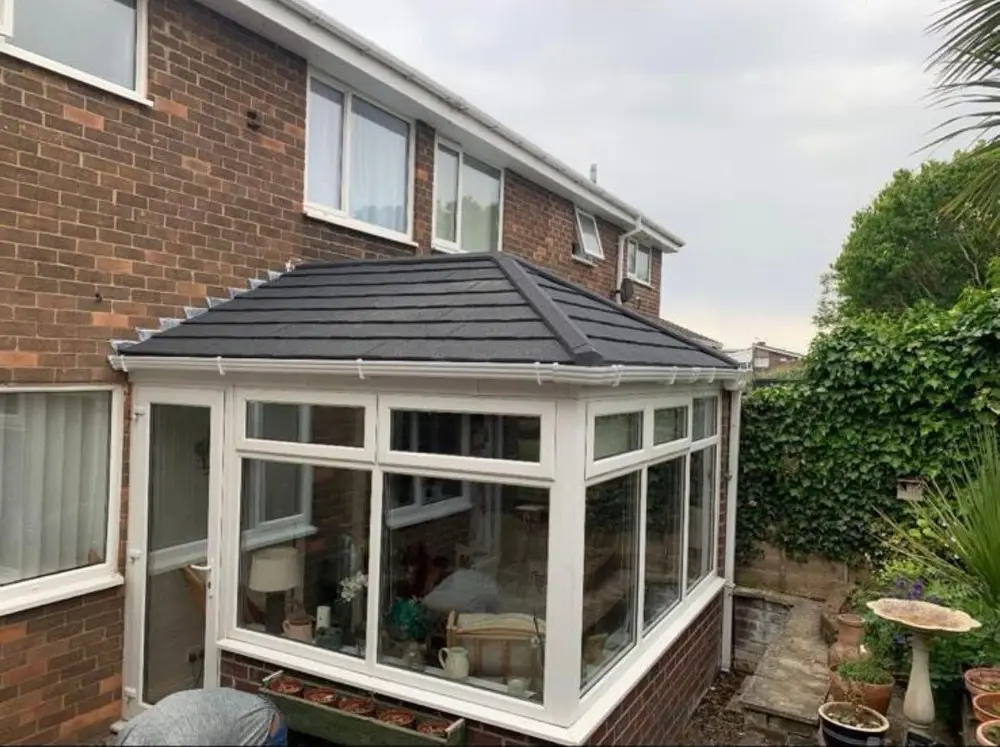
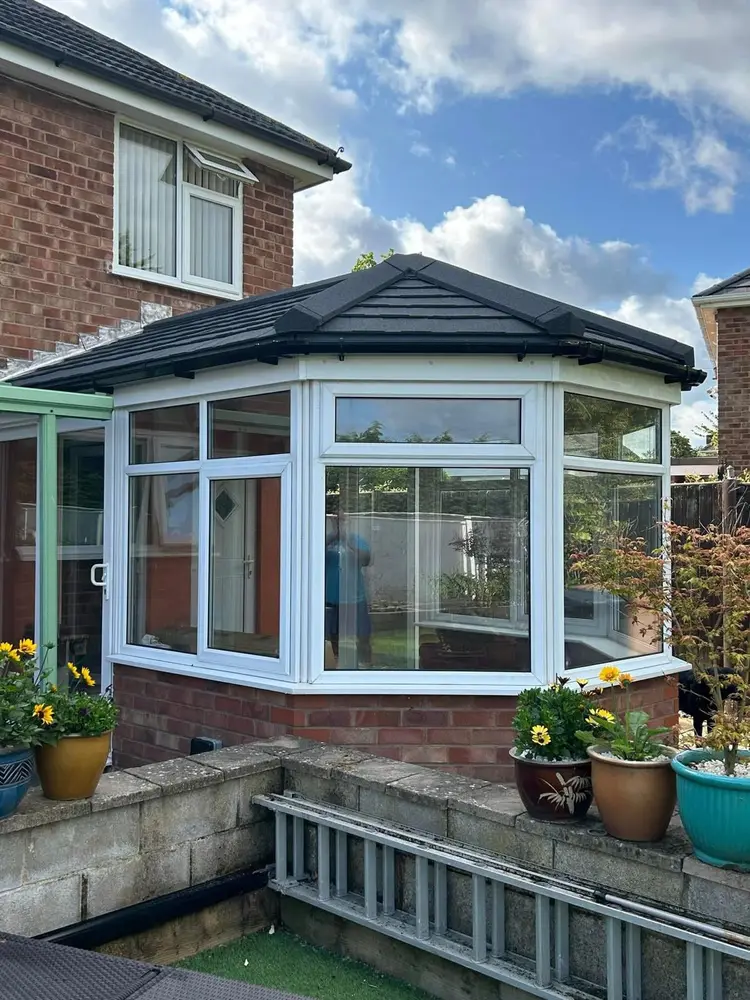
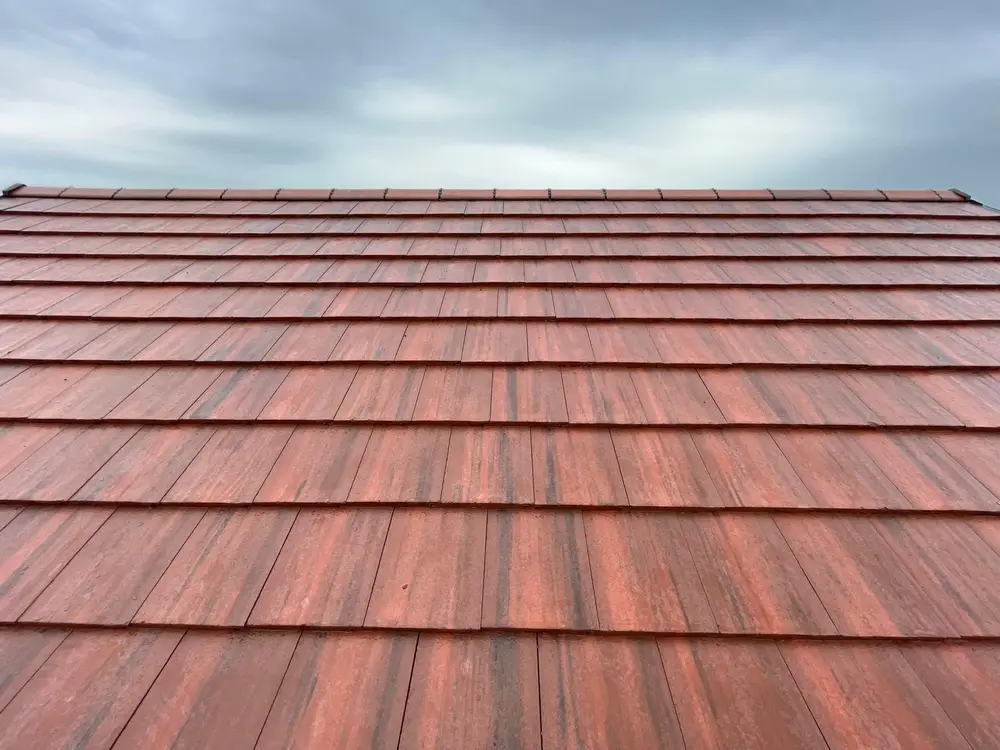
Slate Roofing in Grangemouth
Grangemouth’s exposed position by the Forth and its salty, wind-driven weather are hard on any roof. We install, renew and repair natural and fibre-cement slate roofs in Grangemouth and the surrounding towns and villages, to a standard that lasts through a Scottish winter. As a qualified, insured, family-run team with 25+ years’ experience, we give clear fixed prices, tidy work and a 10-year workmanship guarantee.
For the full detail on our slate roofing work, see our main slate roofing service.
Our slate roofing services
New slate roofs
Full natural or fibre-cement slate roofs, laid to last, with proper underlay, battens and ventilation.
Re-slating & roof renewal
When a slate roof reaches the end of its life we strip and re-slate it — often re-using sound slates where we can.
Slate repairs
Slipped, cracked and missing slates refixed or replaced, with matching slates sourced wherever possible.
Ridge, hips & leadwork
The details that keep a slate roof watertight — re-bedded ridges, hips and precision lead flashing.
Common slate roof problems
Slipped & broken slates
The classic cause of leaks — individual slates that have slipped or cracked, letting water past the underlay.
Nail sickness
When the old fixings rust through, slates start slipping all over the roof — usually a sign it’s time to re-slate.
Failed flashings & valleys
Lead around chimneys and in valleys is a common leak point on older slate roofs.
Sagging & damaged battens
Rotten battens or sarking under the slates need addressing during a renewal for a lasting result.
Why Grangemouth chooses F J Allan
Slate is a craft, and we treat it like one — the right slate, the right fixings, proper leadwork and ventilation. As qualified, insured roofers with 25+ years’ experience we’ll match new work to your existing roof and never sell you a full re-slate when a repair will do. 10-year workmanship guarantee, tidy work, honest advice.
Areas we cover
As well as Grangemouth we cover the surrounding area — nearby: Falkirk · Bo’ness · Polmont · Larbert. See our full slate roofing service, our roof repairs in Grangemouth, or conservatory roof replacement in Grangemouth. Not sure if we reach your street? Give us a call.
More about a slate roof in Grangemouth
Open any heading for the detail: what we do here, local roof types, prices, how to check a roofer, and storm claims.
Slate roofs in Grangemouth: fewer of them, and worth keeping
Be honest about Grangemouth and you have to say it is not a slate town. Most of the housing went up after the war under concrete tile, and the Victorian streets that carried slate largely came down in the redevelopment of the 1960s and 70s. A slate roof in Grangemouth is therefore something of a survivor: the older stone houses around the original town and Zetland Park, a few pre-war villas and cottages, churches and public buildings, and the older roofs in Polmont, Bo’ness and the villages along the Forth that we cover from the same base.
That scarcity cuts two ways. Your roof is part of what is left of the old town, and it is worth looking after. But it also means fewer local roofers see enough slate to be good at it, and we hear about repairs done with the wrong slate, the wrong nails or a tube of sealant. This page sets out how we approach a Grangemouth slate roof: what it costs, why the estuary is hard on it, what to do when a storm lifts it, and how we decide with you between repair and re-slating. For concrete-tiled homes on the post-war estates, start with roof repairs in Grangemouth instead.
Salt, wind and nails: what the Forth does to slate fixings
Slate does not care about salt. Iron and galvanised steel do. Grangemouth sits low and open on the estuary, and the air carries enough salt to speed up corrosion of everything metallic on a roof: the original iron nails, later galvanised nails and clips, steel gutter brackets and the screws holding the ridge. On a slate roof that shows up as nail sickness arriving earlier than it would inland. The slate is fine; the nail holding it has rusted to a stub, and one gale is enough to send it down the roof.
That is why we specify copper or stainless-steel nails and lead or copper tingles for anything we fix in Grangemouth, never galvanised. It costs a little more per slate and it means the repair outlasts the roof around it. It also means that when you compare quotes it is worth asking what nails the other roofer intends to use.
Wind is the other factor. With nothing between the houses and the water, gusts get under the tails of slates, especially where an earlier repair has left one sitting proud or the head lap is short. Slates that survive a century of estuary wind do so because they were laid tight in diminishing courses on a boarded roof. We keep to that when we re-lay them.
Storm-lifted slates: making safe, claiming and fixing properly
After a bad night off the Forth, this is the sequence that saves you money.
- Stay off the roof and away from the ground beneath it. Slate falling from two storeys is dangerous. Move cars, keep people off the path, and ring us; we answer Monday to Saturday, 9 to 5, and we prioritise making roofs safe during those hours.
- Photograph everything before it is touched. Slates on the lawn, the gap in the roof, any water inside. Your insurer will want dated pictures.
- Temporary cover, then a written report. We make the roof watertight, then give you a report and a fixed price for the permanent repair, which is what most insurers ask for.
- Check your policy wording. Storm damage is a standard buildings-insurance peril and is normally covered, less your excess. Insurers will not pay for slates that slipped because of old nails, so the report needs to say clearly which is which. We write it straight.
The full sequence, including what to say to your insurer, is in our post on what to do after storm damage to a roof, and our storm damage repairs in Grangemouth page explains how we handle the paperwork.
Repair or re-slate? What we look for on a Grangemouth roof
Nail sickness on the estuary tends to hit the weather-facing elevation first and hardest, so a Grangemouth roof is often half good, half finished. We check four things and photograph them for you: how many slates have moved and where; whether the slate is still hard or is delaminating into layers; the condition of the sarking boards from inside the loft; and the state of the lead and ridge. A handful of slipped slates with tight neighbours is a repair from around £200. A weather side with tingles every few courses and rust streaks under the slates is due a strip and re-lay of that elevation, keeping the sheltered side. When both sides have gone, a full re-slate is the honest answer, and because good Scotch slate lasts 100 years and more, it should be the last time the roof needs it. Our post on what a new roof costs in Scotland sets out the ranges by house type.
How the older roofs here were built, and how we match them
Grangemouth’s surviving slate roofs are Scottish in construction: a deck of sarking boards over the rafters, and slates in diminishing courses nailed once through the head into the boards. Much of the slate on the Forth’s older buildings would have arrived by sea and canal from Ballachulish and the Slate Islands; those quarries closed by the mid-twentieth century, the last in 1955, so matching slate today means reclaimed Scotch stock, graded to your sizes. Where a whole roof is being renewed and the original slate is beyond saving, Spanish natural slate is the usual choice on price and consistency, Welsh slate the premium option, and Brazilian slate the budget one with more variation between batches. We bring samples so you can see the colour and thickness against your own roof before deciding. If your property is listed, or you are unsure whether conservation-area rules apply (Bo’ness town centre, for instance, is a conservation area), we check with Falkirk Council before quoting. The main slate roofing page has more on Scottish slate and how we grade it.
While the scaffold is up: lead, chimneys and gutters
Scaffolding is the fixed cost in slate work, so we make it earn its keep. On a re-slate we renew the flashings, valleys and ridge as standard, re-point or re-flaunch chimney stacks that need it, and check the gutters and brackets, which on an estuary roof are often rusting from the back where you cannot see them. On a repair we will at least tell you what else is coming so you can plan for it rather than paying for access twice. See guttering in Grangemouth for the roofline side of that.
Slate Roofing FAQs — Grangemouth
Do you provide slate roofing in Grangemouth?
Yes — we cover Grangemouth and the surrounding towns and villages. Call for a free, no-obligation quote and a clear fixed price.
How long does a slate roof last?
A well-laid natural slate roof can last 80–100 years or more; fibre-cement slates typically 30–50. The fixings and flashings usually need attention before the slate itself.
Can you match my existing slates?
Usually, yes — we source matching or close-match slates and re-use sound originals where we can, so repairs blend in.
Natural or fibre-cement slate — which should I choose?
Natural slate looks best and lasts longest; fibre-cement is lighter and lower cost. We’ll advise based on your home and budget.
Should I repair or re-slate my roof?
If the slates are sound and it’s just fixings or flashings, a repair is fine. Widespread nail sickness usually means a re-slate is the better long-term value.
How does slate repair cost compare with a full re-slate per square metre?
Small repairs are priced by the job, from around £200 for a few slipped slates. Once you are re-laying an area, think in square metres: roughly £120–£200 per m² for a partial re-slate plus scaffold, and £100–£250 per m² all in for a complete re-slate depending on the slate chosen. On a Grangemouth cottage or terrace that usually means £6,000–£11,000 for the whole roof, confirmed as a fixed price after a free survey.
Can you match the slate on an older Grangemouth house?
Yes. The older roofs here carry Scottish slate, and although no Scottish quarry has worked since 1955, reclaimed Scotch slate is available from roofs being stripped across the central belt. We size it to your courses so the repair blends in. If the roof is being renewed and the original slate is past saving, we bring Spanish and Welsh samples so you can compare colour and thickness against what is there now.
How quickly can a storm-damaged slate roof be made safe?
We take calls Monday to Saturday between 9 and 5 and give storm damage priority during those hours, so in most cases we can get to you the same or next working day to make the roof watertight. We do not offer a 24-hour service, so if slates come down overnight, keep people and cars clear of the drop zone and ring us first thing. The permanent repair follows once you have our report and price.
Will my insurer cover slates blown off in a gale off the Forth?
Storm damage is a standard peril on buildings insurance, so slates genuinely lifted by wind are normally covered, minus your excess. What is not covered is slates that slid because their nails had rusted through, which insurers class as wear and tear. Our report says clearly which happened. Photograph the damage before anything is moved, keep the fallen slates, and send our written quote with your claim.
Do you need scaffolding to replace a few slates?
Often not on a two-storey house: where it is safe we work from a ladder or a mobile tower, which keeps a small repair near the £200 mark. Chimney work, ridge work, anything above two storeys and every re-slate needs a scaffold, and we show that as a separate line in the quote. On the exposed side of the estuary we will also not work at height in high wind, so timing can shift a day or two.
Will you re-use my slates if the roof is re-slated?
Wherever they are sound, yes. Scottish slate is thick and hard, and on a typical re-slate 60% to 80% of it can be lifted, sorted, re-holed and re-laid with new copper nails. Slates that are flaking, cracked or soft at the nail hole are discarded and replaced with matching reclaimed stock. Re-using your own slate keeps the roof looking right and saves you the cost of a completely new covering.
How long does a re-slate take on a Grangemouth semi or terrace?
One to two weeks for a full strip and re-slate, weather allowing, and three to five days to re-lay a single elevation. Refixing a few slates is done in an hour or two. You stay in the house throughout; we leave the roof watertight every evening, which matters here because the weather can change quickly, and we keep the scaffold area tidy for neighbours in terraced streets.