
Tiled Roofing in Grangemouth
We install new tiled roofs, re-roof tired ones and carry out tile repairs for homes across Grangemouth and the wider area — quality work from qualified, local roofers.
Get my free quote
Leave three details and we’ll ring you back.
Free, no-obligation survey · Written quote · 10-year guarantee
Open Mon–Sat 9am–5pm
10-Year Guarantee
On all our workmanship
25+ Years
Experience in the trade
Family-Run
A local business you can trust
Tiled roofing prices in Grangemouth — what to budget
Guide ranges for 2025/26 on the kind of houses Grangemouth has most of: post-war semis and terraces with straightforward roofs. Scaffold, skip and dry-fix ridge and verge are inside the re-roof figures. Non-ferrous fixings for the coastal air add very little to the total and we include them as standard.
| Job | Typical guide price | What affects it |
|---|---|---|
| Replace a few storm-slipped or cracked tiles | £200–£450 | Ladder or tower access, tile match, whether verge or ridge mortar needs making good at the same time |
| Re-bed a full mortar ridge line, semi-detached | £350–£700 | Ridge length, number of cracked ridge tiles, access |
| Dry ridge system, semi-detached | £900–£1,600 | Ridge length, ventilated or standard, reuse of existing ridge tiles |
| Dry verge to both gables | £500–£1,200 | Verge length, tile profile, whether a tower or scaffold is needed |
| Strip, new membrane and battens, re-lay existing tiles | £50–£80 per m² | Sarking repairs, share of tiles that need replacing, chimney |
| Full re-roof, concrete interlocking tiles | Terrace £4,500–£7,500 · Semi £5,500–£9,500 | Roof area, sarking condition, chimney and leadwork, gutter renewal |
| Both halves of a pair of semis re-roofed together | £10,000–£17,000 for the pair, each owner paying their side | Shared scaffold and skip, single tile batch, whether one or both gables need dry verge |
Guide prices only, based on 2025/26 UK cost guides and recent local work. Your roof is priced after a free, no-obligation survey, and the written figure we give you is fixed.
Show my Grangemouth guide price
Pick the job and the guide range from the table above appears straight away. Leave your details and we’ll ring to book the free survey, then you get a fixed written quote — the guide range is a starting point, not the final price.
What our customers say


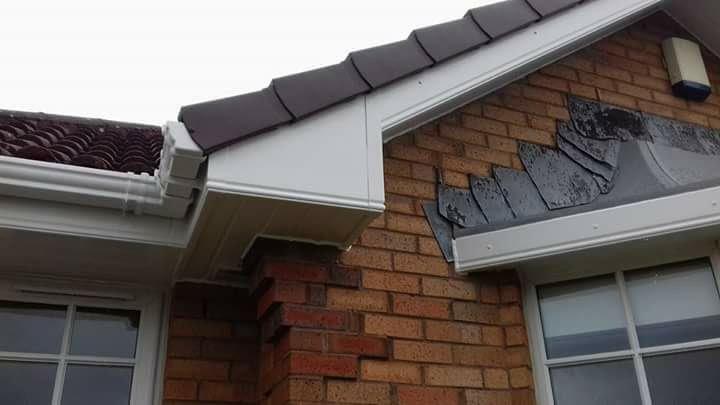
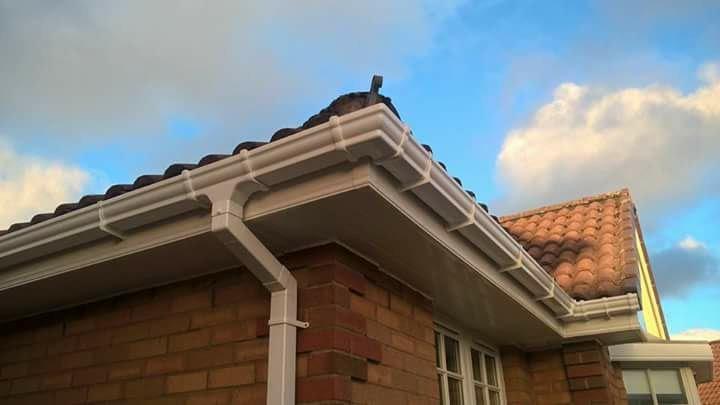
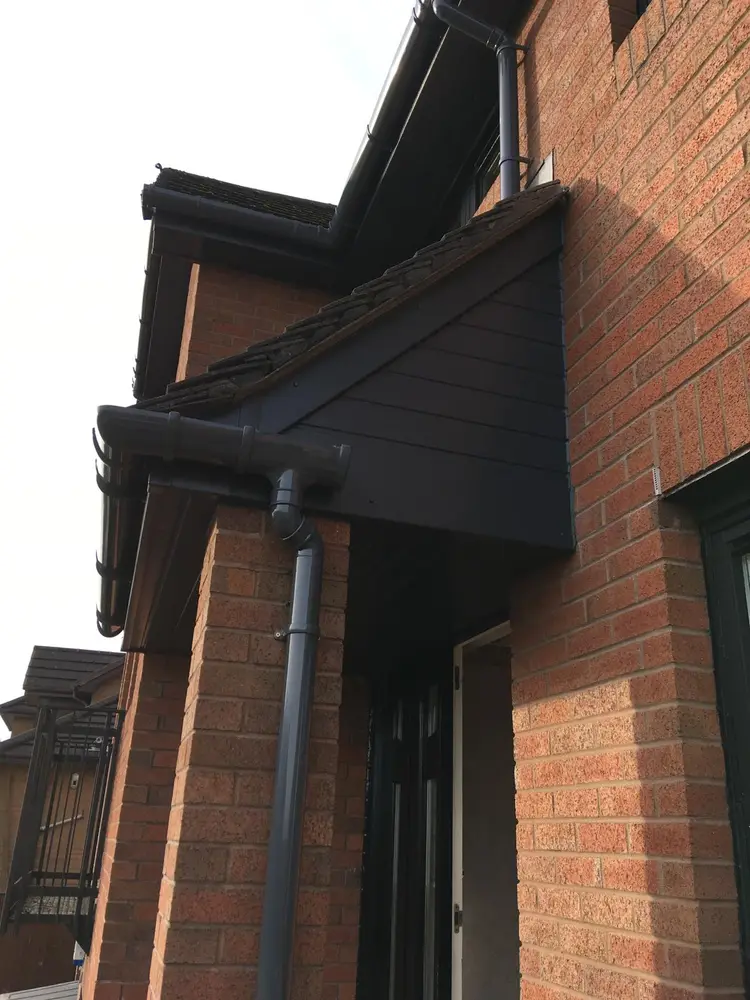
Recent F J Allan jobs across Falkirk and Central Scotland
Real jobs by our own team. Ask to see more from your area when we survey.
Tiled Roofing in Grangemouth
Grangemouth’s exposed position by the Forth and its salty, wind-driven weather are hard on any roof. We install new tiled roofs, re-roof tired ones and carry out tile repairs in Grangemouth and the surrounding towns and villages, to a standard that lasts through a Scottish winter. As a qualified, insured, family-run team with 25+ years’ experience, we give clear fixed prices, tidy work and a 10-year workmanship guarantee.
For the full detail on our tiled roofing work, see our main tiled roofing service.
Our tiled roofing services
New tiled roofs
Complete concrete or clay tiled roofs with breathable underlay, correct battens, ventilation and secure fixings.
Re-roofing
Strip and re-cover a worn-out roof — new underlay, battens and tiles for decades more service.
Tile repairs
Slipped, cracked and missing tiles refixed or replaced, with matching tiles wherever possible.
Ridge, hip & leadwork
Re-bedded and mechanically-fixed ridge and hip tiles plus precision lead flashing at the details.
Common tiled roof problems
Slipped & cracked tiles
Individual tiles that have moved or broken leave the underlay exposed and let water in.
Failed underlay / felt
When the felt beneath the tiles perishes, water gets past — often only fixed by re-roofing.
Cracked ridge mortar
Loose ridge and hip tiles from washed-out mortar are a top cause of leaks in wind-driven rain.
Moss & blocked details
Heavy moss holds moisture and blocks drainage; we clear it and check the tiles underneath.
Why Grangemouth chooses F J Allan
A tiled roof is only as good as its weakest detail. We fit the right tiles with proper underlay, ventilation and mechanically-fixed ridges, and we get the leadwork right where the roof meets walls and chimneys. Qualified, insured roofers, 25+ years’ experience, 10-year workmanship guarantee and honest advice on repair vs re-roof.
Areas we cover
As well as Grangemouth we cover the surrounding area — nearby: Falkirk · Bo’ness · Polmont · Larbert. See our full tiled roofing service, our roof repairs in Grangemouth, or conservatory roof replacement in Grangemouth. Not sure if we reach your street? Give us a call.
More about a tiled roof in Grangemouth
Open any heading for the detail: what we do here, local roof types, prices, how to check a roofer, and storm claims.
A tiled roof in Grangemouth: why so many are failing at the same time
Grangemouth’s housing was built in bursts rather than gradually, and its roofs are wearing out the same way. The council estates that replaced the old town, Bowhouse in the 1950s and the streets built for refinery and dock workers through the 1950s and 60s, all went up with concrete tiles on bitumen felt within a couple of decades of each other. Those tiles are now between 60 and 70 years old, the earlier inter-war stock older still, and a tiled roof in Grangemouth from that period has reached the age where whole streets start to go together.
The pattern is familiar. First-generation concrete tiles had no protective coating, so decades of rain and frost have worn the surface down to bare aggregate, and a tile that has gone porous holds water and splits in the cold. The felt beneath has gone brittle; lift a tile and it crumbles rather than flexes. Mortar ridges and verges have been patched two or three times. Once a couple of houses in a street have been re-roofed, the neighbours’ roofs are usually within a few years of the same decision, and it is worth knowing that before the first winter leak forces it.
The other thing that shapes roofing here is ownership. Right to Buy turned much of the estate stock into a mix of owner-occupiers and council tenants sharing the same continuous roof on a pair of semis or a terrace. That is workable, but it needs handling; see the section on shared roofs below. Small, urgent problems such as a slipped tile or a lifted ridge are covered on our roof repairs in Grangemouth page.
Salt, wind and the estuary: specifying a re-roof that lasts here
Grangemouth is flat, low and open to the Forth, and the weather arrives sideways. A tiled roof here has two enemies the inland towns do not have to the same degree: salt in the air, which attacks metal, and wind-driven rain that gets under tiles and finds every gap in the underlay. A re-roof has to be specified for both, and cheap fixings are where it goes wrong.
- Non-ferrous fixings throughout. Aluminium or stainless nails and stainless tile clips, not galvanised steel that will be rust-streaked in a decade. The same goes for the fixings in dry ridge and dry verge kits, and for gutter brackets.
- Every tile fixed on the exposed slopes. The estuary side of a roof takes the brunt. We nail and clip every tile there, and every perimeter tile everywhere, rather than the one-in-three that some quotes assume.
- Membrane laps and eaves detail. Wind-driven rain works its way up under tiles, so the breathable membrane is lapped generously, taped where the manufacturer requires, and carried into the gutter over an eaves support tray so water cannot back up behind the fascia.
- Dry ridge and dry verge with UV-stable components. Mortar does not survive the salt-and-frost cycle here; dry-fix systems do, provided the plastic parts are the good grade.
- Ventilation that works in a gale. Eaves and ridge vents sized so the loft breathes without letting rain in on a bad night.
Because the scaffold is already up, a re-roof is the moment to renew tired gutters and fascias in one go rather than paying for access twice; our guttering in Grangemouth page covers that side of the job.
What happens on a Grangemouth re-roof, day by day
People worry most about the week itself, so here is how a typical three-bedroom Grangemouth semi actually runs.
- Day before. Scaffold erected, protection over paths, conservatory and any cars we cannot move, skip delivered.
- Day one. Strip the first elevation: tiles, ridge, battens, felt. Inspect the sarking boards and mark what needs replacing. Replace boards, lay membrane and counter-battens, and felt the slope so it is watertight before dark.
- Day two. Set out and fix tiling battens, load out tiles, start laying from the eaves up. Renew the leadwork at the chimney as we reach it.
- Day three. Finish tiling the first slope, fit the dry verge, start stripping the second elevation and repeat the sarking, membrane and batten sequence.
- Days four and five. Tile the second slope, fit the dry ridge, fit vents, dress lead at abutments, hang or refix gutters, clear the roof and gutters of debris.
- Day six. Snagging walk-round with you, photographs of the finished detail, scaffold down, skip away.
Add a day or two for a detached house or one with hips and valleys, and expect a weather day or two in winter. Nothing is left exposed overnight at any stage. If you are considering a roof window, that is fitted on days two or four while the slope is open; adding one later means paying for access again.
Sharing a roof with the neighbour without falling out
Most Grangemouth houses share their roof with at least one other. On a pair of semis the roof runs straight across the party wall; on a terrace it may run across four or six homes. When one owner wants to re-roof and the others do not, there are three ways it can go.
Do both halves together. The best outcome by some distance. One scaffold, one skip, one set of ridge and verge kits, tiles from the same batch so the colour matches, and no junction between new and old for water to find. It is also cheaper per house: the pair typically costs noticeably less than two separate jobs a year apart, and each owner pays their own side. We are happy to quote each household separately for their half so nobody feels they are paying for the neighbour.
Do one half only. Perfectly possible and we do it often. The new tiles are cut and finished in a straight line above the party wall, the new membrane is lapped under the neighbour’s felt, and the new dry ridge is stopped and sealed against the old mortar ridge. The result is sound, but there will be a visible line where new meets old, and a small risk of movement at the joint over the years. We explain this before you commit, not after.
Council or association tenant next door. If your neighbour rents from Falkirk Council or a housing association, their landlord is responsible for that half. Tell them what you are planning; sometimes the landlord has the same roof on a programme and will do their side at the same time, which suits everyone.
Whichever route, we put the specification in writing so each party can see exactly what is being done on their side of the line.
Repair, re-lay or re-roof: an honest guide for Grangemouth homeowners
There are three sensible answers to a tired tiled roof, and the survey tells us which applies.
- Repair when the damage is local: a few tiles, a length of ridge, a verge. The felt must still be flexible when we lift a tile, and the loft must be dry. Repairs from around £200 buy years if the rest of the roof is sound.
- Strip and re-lay when the tiles are still dense but the felt has gone. We take the tiles off, replace the sarking that needs it, fit a breathable membrane and new battens, and put your tiles back with reclaimed matches. Common on the 1960s stock where the tiles were a better grade than the felt.
- Full re-roof when the tiles themselves are porous, flaking or splitting. Once the surface has gone, no amount of felt underneath saves them, and each frost takes more. Most 1950s Bowhouse-era roofs are here or close to it.
On paperwork: a like-for-like re-cover in the same type and weight of tile is treated as repair and maintenance, so Falkirk Council does not normally require a building warrant. Changing to a heavier tile, altering the roof timbers, or adding a dormer does need one, and the work must meet the Scottish building standards either way. We tell you at the survey which category your job is in. A mortar ridge that has failed on an otherwise sound roof is a smaller job; see dry ridge and verge in Grangemouth. For a fuller picture of costs across Scotland, read how much a new roof costs in Scotland, and for the complete range of tiled work we do, our main tiled roofing page.
Tiled Roofing FAQs — Grangemouth
Do you provide tiled roofing in Grangemouth?
Yes — we cover Grangemouth and the surrounding towns and villages. Call for a free, no-obligation quote and a clear fixed price.
How long does a tiled roof last?
Concrete tiles typically last 40–50 years and clay tiles 50+; the underlay and fixings usually need attention first.
Concrete or clay tiles — what’s the difference?
Clay keeps its colour and lasts longer but costs more; concrete is hard-wearing and better value. We’ll match whatever’s on your home.
Can you match my existing tiles?
In most cases, yes — we source matching or close-match tiles so repairs and new sections blend in.
Do I need a full re-roof or just repairs?
If the tiles and underlay are sound, repairs are enough. Perished underlay or widespread slipping usually means a re-roof is the better long-term option.
How much will a new tiled roof cost on a Grangemouth semi?
Budget £5,500 to £9,500 for a full re-roof of a three-bedroom semi in concrete interlocking tiles, including scaffold, new breathable membrane, battens, dry ridge and verge, coastal-grade fixings and disposal. A terrace is usually £4,500 to £7,500. If you and your neighbour do the pair together the combined cost is lower than two separate jobs. We fix the written price after a free survey.
How many days will my house be scaffolded for?
For a semi, usually seven or eight days in total: one for the scaffold to go up, five or six working days for the roof, and one for it to come down. Detached houses and roofs with hips and valleys run to two weeks. Winter weather off the Forth can add a day. We keep the roof weathertight every night, so there is no point during the job where rain can get into the house.
Does my neighbour have to agree before you re-roof my side?
No. You can re-roof your own half of a semi or your section of a terrace without the neighbour's consent, and we finish the new work cleanly above the party wall. It is courteous to tell them, and worth asking whether they want to do their side at the same time, because the pair done together is cheaper and avoids a join. If they rent, their landlord is responsible for that half.
Can my old tiles be used again?
Sometimes. If the tiles are still dense and ring when tapped, with no flaking or soft edges, we can strip them, replace the felt and battens underneath and re-lay them, topping up with reclaimed matches. That is the strip-and-re-lay option in our price table. If the tiles have gone porous, which is common on the 1950s stock, re-laying them just moves the problem, and we will say so at the survey.
Do coastal-grade fixings cost a lot more?
No. Stainless or aluminium nails and stainless clips add a small amount to the materials on a whole roof, a fraction of a percent of the total, and they are the difference between fixings that last as long as the tiles and fixings that rust through in ten or fifteen years in Grangemouth's salty air. We include them as standard on every re-roof here and list them on the quote so you can see it.
Tiles blew off in the last storm. Is that an insurance job?
Often, yes. Buildings insurance normally covers damage from a sudden storm, less your excess, though not a roof that was already worn out. Take photographs before anything is moved, get the roof made safe, and keep our survey notes and quote as evidence for the claim. If the insurer's assessor decides the tiles failed through age, the claim may be reduced, so it helps to be honest about the roof's condition.
What does your guarantee cover, and what does the tile maker's cover?
Our 10-year workmanship guarantee covers the way we built the roof: fixing, membrane, ridge, verge and leadwork. The manufacturer's guarantee, typically up to 15 years from Marley or BMI Redland when their full system is used, covers the tiles and components against defects. You receive both in writing. Neither covers storm damage or a lack of maintenance, which is where buildings insurance and a periodic moss treatment come in.