
Tiled Roofing in Falkirk & Central Scotland
New tiled roofs, re-roofing and tile repairs in concrete and clay — built to shrug off the Scottish weather.
Get my free quote
Leave three details and we’ll ring you back.
Free, no-obligation survey · Written quote · 10-year guarantee
Open Mon–Sat 9am–5pm
Rated 5 stars by local homeowners
Don’t just take our word for it — see our reviews across Google, Facebook and MyBuilder.
10-Year Guarantee
On all our workmanship
25+ Years
Experience in the trade
Family-Run
A local business you can trust
Guide price: tile repairs from around £200, re-roofing from £5,000 · Free, no-obligation survey and a clear fixed price
Tiled roof costs in Falkirk — guide prices
These are the ranges we see across Falkirk for 2025/26, with scaffold and waste included in the re-roof figures. Access, roof shape, the number of chimneys and how many sarking boards need replacing move the price more than the choice of tile does. A Velux roof window is cheapest to add while the scaffold is already up.
| Job | Typical guide price | What affects it |
|---|---|---|
| Replace up to five slipped or cracked tiles | £200–£450 | Ladder or tower access, finding a matching tile, whether ridge or verge mortar needs touching up |
| Re-bed or re-point a mortar ridge line (semi-detached) | £350–£700 | Ridge length, hips, condition of the ridge tiles, access |
| Dry ridge system, semi-detached | £900–£1,600 | Ridge length, hips, ventilated or plain ridge, whether existing ridge tiles can be reused |
| Strip, new breathable membrane and battens, re-lay existing tiles | £50–£80 per m² | Sarking repairs, share of tiles needing replacement, counter-battens, chimneys |
| Full re-roof, concrete interlocking tiles | Terrace £4,500–£7,500 · Semi £5,500–£9,500 · Detached £8,000–£13,500 | Roof area and pitch, sarking condition, chimneys and valleys, leadwork, tile grade |
| Full re-roof, slate-effect concrete tiles | Semi £6,000–£10,500 | Tile brand, low-pitch detailing, verge and ridge accessories |
| Full re-roof, clay pantile or plain tile | Semi £7,000–£12,000 | Tile cost and weight, steeper pitch needed, closer batten gauge for plain tiles |
| Velux roof window fitted during a re-roof | £700–£1,300 per window | Window size and type, trimming rafters, flashing kit; fitting one on its own later costs more |
Guide prices only, based on 2025/26 UK cost guides and what we see locally. Every roof is different, so we confirm a fixed written price after a free, no-obligation survey.
Show my Falkirk guide price
Pick the job and the guide range from the table above appears straight away. Leave your details and we’ll ring to book the free survey, then you get a fixed written quote — the guide range is a starting point, not the final price.
What our customers say


Recent F J Allan jobs across Falkirk and Central Scotland
Real jobs by our own team. Ask to see more from your area when we survey.
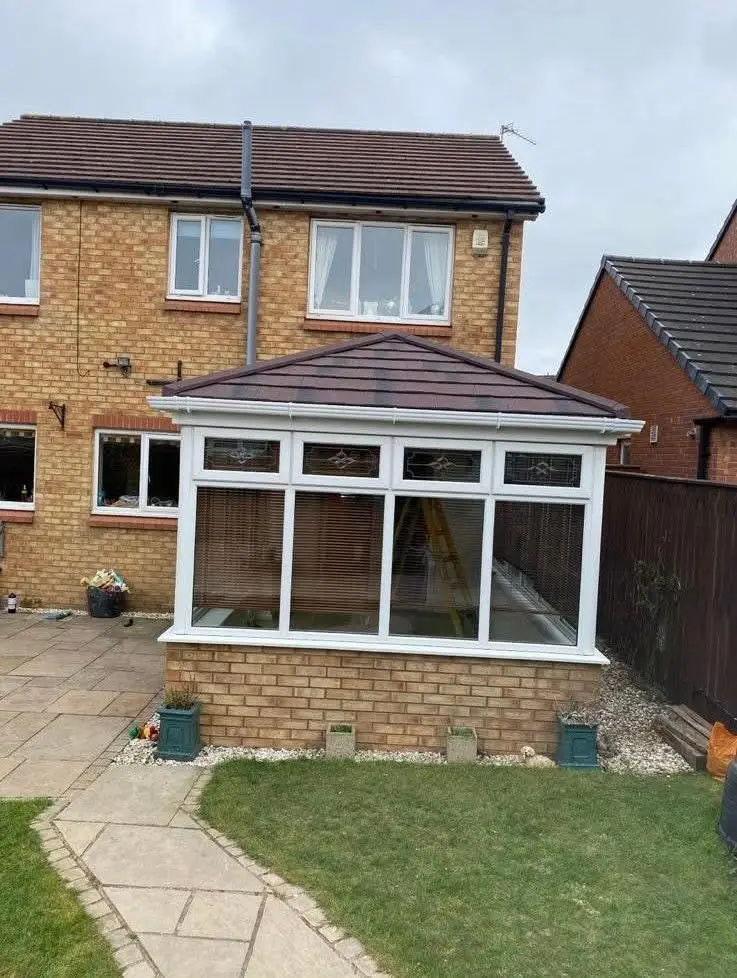
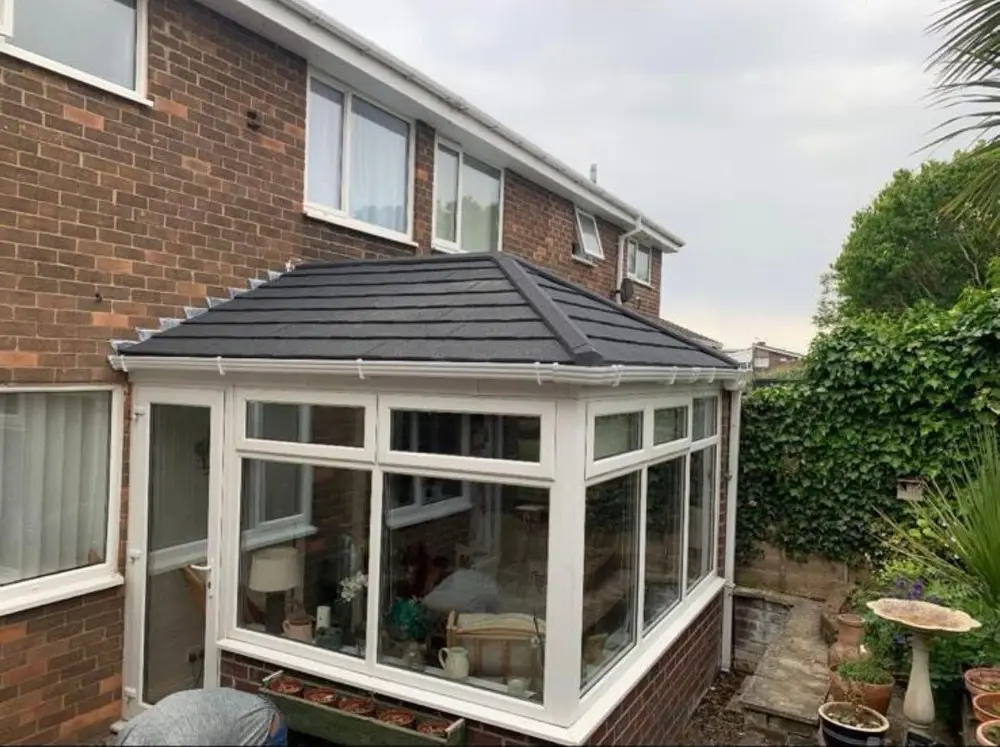
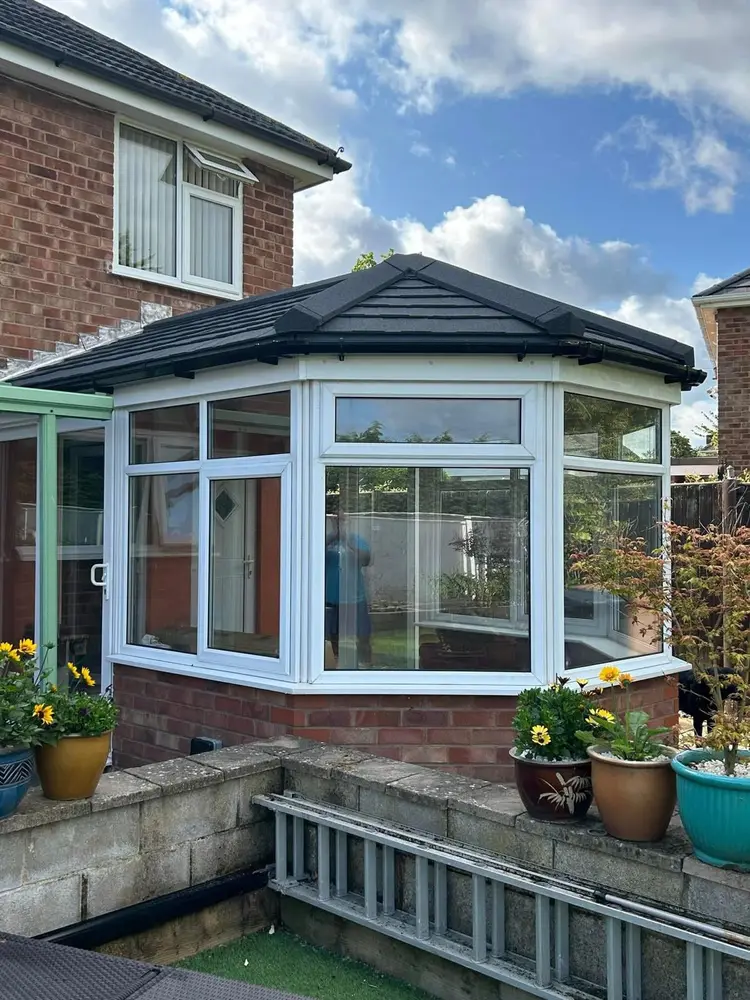
Tiled Roofing in Falkirk & Central Scotland
Concrete and clay tiles make a strong, long-lasting roof — as long as the underlay, fixings and ridge work are done right. F J Allan & Sons install new tiled roofs, re-roof tired ones and carry out tile repairs across Falkirk, Grangemouth, Stirling, Cumbernauld and the Forth Valley.
Whatever the job, you get proper materials, proper detailing and a clear fixed price.
Our tiled roofing services
New tiled roofs
Complete concrete or clay tiled roofs with breathable underlay, correct battens, ventilation and secure fixings.
Re-roofing
Strip and re-cover a worn-out roof — new underlay, battens and tiles for decades more service.
Tile repairs
Slipped, cracked and missing tiles refixed or replaced, with matching tiles wherever possible.
Ridge, hip & leadwork
Re-bedded and mechanically-fixed ridge and hip tiles plus precision lead flashing at the details.
Common tiled roof problems
Slipped & cracked tiles
Individual tiles that have moved or broken leave the underlay exposed and let water in.
Failed underlay / felt
When the felt beneath the tiles perishes, water gets past — often only fixed by re-roofing.
Cracked ridge mortar
Loose ridge and hip tiles from washed-out mortar are a top cause of leaks in wind-driven rain.
Moss & blocked details
Heavy moss holds moisture and blocks drainage; we clear it and check the tiles underneath.
Why choose F J Allan?
A tiled roof is only as good as its weakest detail. We fit the right tiles with proper underlay, ventilation and mechanically-fixed ridges, and we get the leadwork right where the roof meets walls and chimneys. Qualified, insured roofers, 25+ years’ experience, 10-year workmanship guarantee and honest advice on repair vs re-roof.
What affects the cost of a tiled roof?
We price each tiled roof on what it needs:
- Repair vs re-roof — a few tiles vs a full strip-and-recover.
- Tile type — concrete vs clay, plain vs interlocking.
- Roof size, pitch and access.
- Underlay, battens and ventilation included in a re-roof.
You’ll get a clear, fixed price after we survey the roof.
Areas we cover
We cover Falkirk and within about 20 miles — Falkirk, Grangemouth, Larbert, Stenhousemuir, Bonnybridge, Denny, Bo’ness, Polmont, Linlithgow, Stirling, Dunblane, Cumbernauld, Kilsyth, Airdrie, Coatbridge, Bathgate, Livingston and Alloa. Also see our roof repairs and conservatory roof replacement services.
Tiled roofing across the Forth Valley
We also cover the surrounding towns — find your local page: Grangemouth · Larbert · Stirling · Cumbernauld · Airdrie · Coatbridge · Kilsyth · Bo’ness · Linlithgow · Bathgate · Alloa · Bonnybridge · Denny · Polmont · Dunblane · Livingston.
More about a tiled roof in Falkirk
Open any heading for the detail: what we do here, local roof types, prices, how to check a roofer, and storm claims.
A tiled roof in Falkirk: what we find street by street
Most of the roofs we work on around Falkirk are concrete-tiled, and the age of the tiles tells you a great deal about what will fail first. If you are weighing up repairs against a new tiled roof in Falkirk, it helps to know which era your house belongs to.
- Hallglen and the 1970s schemes. Hallglen was built as one Scottish Special Housing Association development in the early 1970s, around 1,200 homes with harled walls under grey concrete tiles. Those tiles are now past 50 years old, and the bitumen felt beneath them is usually brittle and torn, which is why leaks appear even when the roof looks tidy from the street.
- Tamfourhill, Camelon and Carron. Council-built stock from the 1950s to the early 1970s, mostly semis and four-in-a-block cottage flats. Ridge mortar and verges here have often been patched several times over, and because the roofs are shared you will usually need to agree work with a neighbour.
- Bainsford, Grahamston and Arnothill. Older tenements and villas, many still under slate. Where a previous owner has swapped slate for concrete tiles we check the roof timbers, because the extra weight was not always allowed for.
- The newer private estates out towards Redding, Reddingmuirhead and Maddiston: thin interlocking tiles at low pitch, dry verges and very little mortar. Failures here are usually a snapped verge clip or a tile cracked by someone fitting an aerial or solar panels.
Knowing the era means we turn up with the right tiles on the van, and it means we can be straight with you when a roof has simply reached the end of its life rather than selling you another patch. For isolated leaks and slipped tiles, our roof repairs in Falkirk page covers the smaller jobs.
What a full re-roof includes in Scotland, and how long it takes
A Scottish re-roof is built differently from one south of the border. Most roofs here have sarking, a continuous layer of timber boards fixed over the rafters, rather than open rafters with felt draped between them. That changes the job, and a quote that never mentions sarking has probably been lifted from an English template. On a typical Falkirk semi the sequence runs:
- Scaffold and protection. Full scaffold to the working elevations, normally erected the day before we start, with boards over conservatories, paths and planting.
- Strip. Old tiles, ridges, battens and felt come off into the skip. Sound tiles are sometimes set aside if a neighbour on the same roof wants matches for a repair.
- Sarking check. We replace any boards that are rotten, split or nail-sick, most often along the eaves, in valleys and around chimneys.
- Breathable membrane and counter-battens. A vapour-permeable membrane goes over the boards, then counter-battens so that any water getting under the tiles can drain away and the roof space can breathe.
- Tiling battens set out to the gauge the tile manufacturer specifies for the pitch of your roof.
- Tiles, with every perimeter tile and every tile on exposed slopes mechanically fixed. Falkirk sits in a higher wind zone than most of England, so clips and nails are not optional extras.
- Dry ridge and dry verge in place of mortar, plus ventilation at the eaves or ridge so the loft does not sweat.
- Leadwork renewed at chimneys, abutments and valleys, gutters checked and re-hung where needed, then the scaffold comes down.
Allow five to eight working days on site for a three-bedroom semi, one to two weeks for a detached house, and add a few days if the weather turns. We never leave a roof open overnight; whatever we strip in a day is felted before we go home.
Choosing tiles that suit Central Scotland weather
Falkirk gets wind-driven rain off the Forth and hard frosts on clear winter nights, and that freeze-thaw cycle is what kills a tile. Water soaks into the surface, freezes, expands and lifts a sliver off the face. Repeat it for enough winters and the tile goes chalky, then porous, then cracks.
- Concrete interlocking tiles, the Marley and Redland type profiles most Falkirk estates were built with, remain the workhorse: economical, quick to lay, approved down to low pitches and good for 40 to 60 years. Modern versions have a denser face that shrugs off frost far better than 1960s tiles ever did.
- Slate-effect concrete tiles are thinner, flatter interlocking tiles that read as slate from the pavement. They suit Victorian villas in Arnothill or Bantaskine where the budget will not stretch to natural slate but a chunky profiled tile would look wrong.
- Clay pantiles are the traditional covering along the Forth. You see the orange roofs of Culross across the water and along the Fife and East Lothian coasts, and a handful of older properties around Falkirk and Bo’ness still carry them. Clay outlasts concrete but costs more and needs a steeper pitch.
- Natural slate is a trade of its own with its own page: see slate roofing in Falkirk.
Whatever the tile, moss is the local enemy. North-facing slopes and roofs shaded by trees, around Callendar Wood for instance, stay damp, and moss holds that moisture against the tile going into every frost. A moss treatment every few years is a lot cheaper than a re-roof ten years early.
Repair or re-roof? How we make the call
Nobody wants to be sold a new roof when a few tiles would do, and nobody wants to pay for a third patch on a roof that is finished. Our rule of thumb after a survey:
- Fewer than about one tile in ten damaged, felt intact when we lift a tile, dry timbers underneath: repair, and expect it to hold.
- Felt brittle or torn, daylight showing in the loft, tiles crumbling at the edges when handled, a ridge that has already been re-bedded more than once: re-roof, because every repair from here is money you will not see again.
- In between, we often suggest a middle path: strip, new membrane and battens, then re-lay your own tiles topped up with reclaimed matches. It costs well under a full re-roof and buys another 20 years if the tiles themselves are sound.
Age is the biggest single factor. Concrete tiles laid in the 1960s and 70s are at or beyond their design life right across Falkirk, and when one house in a street goes, its neighbours usually follow within a few years. Our post on the signs your roof needs replacing walks through what to look for from the ground before you call anyone out.
Building warrants, planning and what a proper quote should list
Two questions come up on almost every Falkirk re-roof. First, do you need a building warrant? Re-covering a roof like for like, with the same type and weight of tile, is treated as repair and maintenance, and Falkirk Council does not normally ask for a warrant. Change the covering to something heavier (slate to concrete, or a thin interlocking tile to a heavy plain tile), alter the roof structure, add a dormer or turn a flat roof into a pitched one, and a warrant is needed before work starts. The work must still meet the Scottish building standards either way, so the fixing specification and ventilation are not optional just because there is no paperwork. If you are unsure, a call to Falkirk Council Building Standards settles it in minutes, and we will tell you at the survey which side of the line your job falls.
Second, planning permission. For an ordinary house outside a conservation area, re-roofing does not need it. Listed buildings and conservation areas are different, and a change of material visible from the street can need consent.
A written quote you can compare should list: the tile make, profile and colour; the membrane type; whether sarking repairs are priced in or charged extra; battens and counter-battens; the fixing specification; dry ridge and verge; leadwork; ventilation; scaffold and skip; and the guarantee terms for workmanship and materials separately. Ours does, and the price is fixed once you accept it. If only the ridge is the problem, that is a smaller job covered under dry ridge and verge in Falkirk, and our guide to how much a new roof costs in Scotland explains where the money goes.
Tiled roofing FAQs
How long does a tiled roof last?
Concrete tiles typically last 40–50 years and clay tiles 50+; the underlay and fixings usually need attention first.
Concrete or clay tiles — what’s the difference?
Clay keeps its colour and lasts longer but costs more; concrete is hard-wearing and better value. We’ll match whatever’s on your home.
Can you match my existing tiles?
In most cases, yes — we source matching or close-match tiles so repairs and new sections blend in.
Do I need a full re-roof or just repairs?
If the tiles and underlay are sound, repairs are enough. Perished underlay or widespread slipping usually means a re-roof is the better long-term option.
How much does a new tiled roof cost in Falkirk?
For a full re-roof in concrete interlocking tiles, most Falkirk semis come in between £5,500 and £9,500 including scaffold, new membrane, battens, dry ridge and waste. Terraces are less, detached houses and bungalows with big roof areas more. Clay tiles or slate-effect concrete add to that. Small repairs start from around £200. We confirm a fixed written price after a free survey, so the figure you agree is the figure you pay.
How long does it take to re-roof a semi-detached house in Falkirk?
Plan for five to eight working days on site for a typical three-bedroom semi, plus a day for the scaffold to go up beforehand and come down afterwards. Detached houses take one to two weeks. Wind and heavy rain can stop tiling for a day, so we build a little slack into the programme, and we never leave a stripped roof uncovered overnight.
Do you strip the old tiles off, or can you tile over them?
We strip them. Laying new tiles over old is not a recognised method for a pitched roof: it doubles the weight on the timbers, hides rotten sarking and leaves the perished felt in place, which is usually the real cause of the leak. Stripping lets us inspect and repair the boards, fit a new breathable membrane and fix the new tiles properly. Sound old tiles can be kept for a neighbour's repairs.
Will you need scaffolding on my house?
For a full re-roof, yes, on every elevation we are working on. It is a legal requirement for work at height and it is what lets us work safely and tidily for a week. Small repairs to a handful of tiles can often be done from a roof ladder or a mobile tower, which is why they cost a fraction of the price. The scaffold is included in our re-roof quotes rather than added on afterwards.
Will my home insurance pay for a new tiled roof?
Usually only for damage from a sudden event, such as tiles ripped off in a named storm, not for a roof that has worn out. Insurers exclude wear and tear and will often ask for photographs and a roofer's written findings before agreeing a claim, and you will pay your policy excess. Our survey report and fixed quote can support a claim where the damage is genuinely storm-related.
What is the difference between your guarantee and the tile manufacturer's guarantee?
Our 10-year workmanship guarantee covers how the roof was put together: the fixing, the membrane laps, the ridge, the leadwork. The tile manufacturer's guarantee covers the tiles themselves against defects; Marley and BMI Redland system guarantees typically run to 15 years when the full system is used and fitted to their specification. They are separate documents and you should be given both in writing.
Do I need a building warrant from Falkirk Council to re-roof?
Not for a straightforward like-for-like re-cover using the same type and weight of tile; that is classed as repair and maintenance. You will need one if you change to a heavier covering, alter the roof structure, add a dormer or convert a flat roof to pitched. Conservation-area or listed properties may also need planning consent for a visible change of material. We flag this at the survey before any work is booked.
Tiled Roofing across the whole Forth Valley
We provide tiled roofing in Falkirk, Grangemouth, Larbert, Stirling, Cumbernauld, Airdrie, Coatbridge, Kilsyth, Bo’ness, Linlithgow, Bathgate, Alloa, Bonnybridge, Denny, Polmont, Dunblane and Livingston, and right across Central Scotland. Wherever you are in the Forth Valley, you get the same qualified, family-run team, the same 10-year workmanship guarantee, and a clear fixed price after a free survey. See every town on our Areas We Cover page.